Duke University Press Forlag
Visning: Type : Alle | Sprog : Alle | Format : Alle
-
How We Make Each Other: Trans Life at the Edge of the University (Bog, Paperback / softback, Engelsk)
Using the Five Colleges in Massachusetts as a case study, Zurn draws on archival work and oral histories to outline how trans students, faculty, and staff make and live their lives at the edges of higher education.
Levering: 6 - 9 hverdage -
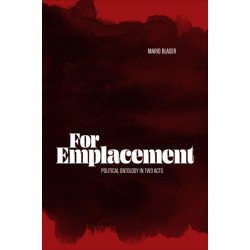
For Emplacement: Political Ontology in Two Acts (Bog, Paperback / softback, Engelsk)
Drawing on decades of ethnographic experience, Blaser proposes a new lens for combatting the momentous challenges the world currently faces, arguing that... Læs mere
Levering: 6 - 9 hverdage -
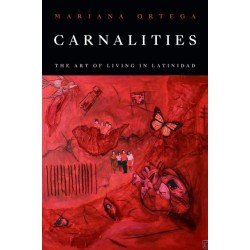
Carnalities: The Art of Living in Latinidad (Bog, Paperback / softback, Engelsk)
Mariana Ortega presents a phenomenological study of aesthetics grounded in the work of primarily Latinx artists. Motivated by her experience of loss and exile,... Læs mere
Levering: 6 - 9 hverdage -
The Aesthetics of Resistance, Volume III: A Novel (Bog, Paperback / softback, Engelsk)
A major literary event, the publication of the final volume of Peter Weiss’s three-volume novel The Aesthetics of Resistance makes one of the towering works of twentieth-century German literature available to English-speaking readers for the first time.
Levering: 6 - 9 hverdage -
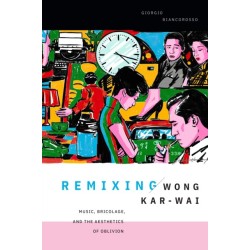
Remixing Wong Kar-wai: Music, Bricolage, and the Aesthetics of Oblivion (Bog, Paperback / softback, Engelsk)
Examines how filmmaker Wong Kar-wai’s use of pre-existing music to create the soundtracks for his films constitutes a practice of musical remixing that challenges conventional notions of musical composition.
Levering: 6 - 9 hverdage -
Carnalities: The Art of Living in Latinidad (Bog, Hardback, Engelsk)
Mariana Ortega presents a phenomenological study of aesthetics grounded in the work of Latinx artists, theorizing that photography is an affective medium crucial for processes of self-formation, resistance, and mourning in Latinx life.
Levering: Skaffevare (forvent 14 - 30 hverdage) -
Poetics of Repair: Contemporary Arts and Afterlives of Colonial-Era Mass Housing in the Maghreb (Bog, Hardback, Engelsk)
Katarzyna Pieprzak examines how contemporary visual, literary, and performance art of the Maghreb has the potential to change the terms, histories, and imagined futures of mass housing in North Africa.
Levering: Skaffevare (forvent 14 - 30 hverdage) -
Workers and the 'Golden Age' of Social Democracy? (Bog, Paperback / softback, Engelsk)Levering: 6 - 9 hverdage
-
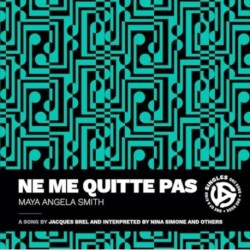
Ne Me Quitte Pas: A Song by Jacques Brel and Interpreted by Nina Simone and Others (Bog, Paperback / softback, Engelsk)
Smith follows the classic song’s long and varied journey, from Brel’s iconic 1966 performance on French television to Simone’s cover to Shirley Bassey’s English-language version (“If You Go Away”) to its contemporary manifestations in popular culture.
Levering: 6 - 9 hverdage -
The Time Beneath the Concrete: Palestine Between Camp and Colony (Bog, Paperback / softback, Engelsk)
Taking as his primary object Palestinian refugee camps, created in the fallout of the eliminatory violence of Israel’s founding, Abourahme shows how these camps become the primary place where settler colonial attempts to dominate space and time encounter Indigenous refusal.
Levering: 6 - 9 hverdage -
Bad Medicine: Settler Colonialism and the Institutionalization of American Indians (Bog, Paperback / softback, Engelsk)
Sarah A. Whitt exposes how Native American boarding schools and other settler institutions like asylums, factories, and hospitals during the late-nineteenth and early-twentieth centuries worked together as a part of an interconnected system of settler domination.
Levering: 6 - 9 hverdage -
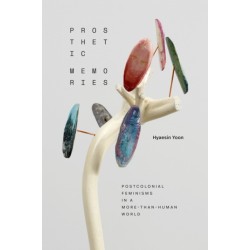
Prosthetic Memories: Postcolonial Feminisms in a More-Than-Human World (Bog, Paperback / softback, Engelsk)
Examines the entanglements of humans, animals, and technologies across South Korea and the United States at the turn of the... Læs mere
Levering: 6 - 9 hverdage