GINGKO Forlag
-
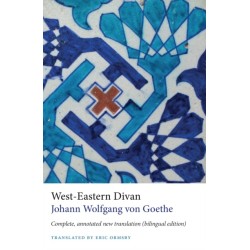
West-Eastern Divan: Complete, Annotated New Translation (bilingual edition) (Bog, Paperback / softback, Engelsk)
The West-Eastern Divan is one of the world's great works of literature, an inspired masterpiece, and a poetic linking of European... Læs mere
Levering: 6 - 9 hverdage -
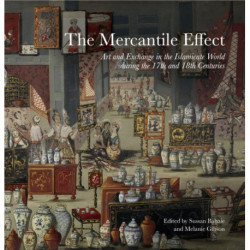
The Mercantile Effect: Art and Exchange in the Islamicate World During the 17th and 18th Centuries (Bog, Paperback / softback, Engelsk)
The introduce us on how the movement of Armenian, Indian, Chinese, Persian, Turkish and European merchants and their trade goods during the 17th and 18th centuries spread new ideas and new technologies across Western Asia in the early modern era.
Levering: Skaffevare (forvent 14 - 30 hverdage) -
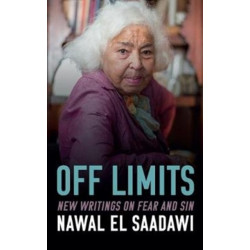
Off Limits: New Writings on Fear and Sin (Bog, Paperback / softback, Engelsk)
This series of essays form a selection of El Saadawi's most recent musings, memories and reflections, considering the role of women in Egyptian and wider Islamic... Læs mere
Levering: 6 - 9 hverdage -
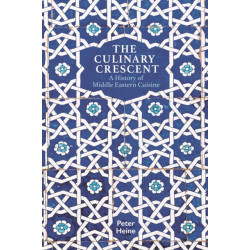
The Culinary Crescent: A History of Middle Eastern Cuisine (Bog, Paperback / softback, Engelsk)
A culinary history of the Middle East and beyond, revealing the origins of the region's many dishes and delicacies we enjoy today.
Levering: 6 - 9 hverdage -
The Making the Modern Middle East (Bog, Paperback / softback, Engelsk)
In 1914 the Middle East was still dominated, as it had been for some four centuries, by the Ottoman Empire; by 1923, its political shape had changed beyond recognition as the result of the insistent claims of Arab and Turkish nationalism and of Zionism.
Levering: Skaffevare (forvent 14 - 30 hverdage) -
Architectural Heritage of Yemen: Buildings that Fill My Eye (Bog, Paperback / softback, Engelsk)
Twenty chapters, authored by leading scholars from around the world, explore the astonishing variety of building styles and traditions that have evolved over millennia in a region of diverse terrains, extreme climates and distinctive local histories.
Levering: Skaffevare (forvent 14 - 30 hverdage) -
You Can Crush the Flowers: A Visual Memoir of the Egyptian Revolution (Bog, Paperback / softback, Engelsk)
Part visual history, part memoir, You Can Crush the Flowers is the celebrated Egyptian-Lebanese artist Bahia Shehab's chronicle of... Læs mere
Levering: Skaffevare (forvent 14 - 30 hverdage) -
Poet and Businessman: Abd al-Aziz al-Babtain and the Formation of Modern Kuwait (Bog, Paperback / softback, Engelsk)
This book reviews and analyses the modern history of Kuwait by telling the story of Abd al-Aziz Sa'ud al-Babtain (b. 1936), a businessman, philanthropist, and poet whose own story closely interweaves with the history of the state.
Levering: 6 - 9 hverdage -
They All Made Peace – What is Peace?: The 1923 Lausanne Treaty and the New Imperial Order (Bog, Paperback / softback, Engelsk)
They All Made Peace- What is Peace? is the first publication to consider the Treaty of Lausanne in 1923 and its legacy a century on. A stellar group of historians present a contrapuntal, multi-perspective analysis of the events.
Levering: 6 - 9 hverdage -
The Age of Aryamehr: Late Pahlavi Iran and its Global Entanglements (Bog, Paperback / softback, Engelsk)
Engaging with a national historical narrative, The Age of Aryamehr writes Iran into the global history of the 1960s and 1970s, so as to understand the transnational connections that in many ways formed modern Iran.
Levering: 6 - 9 hverdage -
Mary in the Qur'an: Friend of God, Virgin, Mother (Bog, Paperback / softback, Engelsk)
In this ground-breaking study, Muna Tatari and Klaus von Stosch painstakingly reconstruct the picture of Mary that is presented in the Qur’an and show how veneration of the Blessed Virgin Mary in the Roman Catholic Church intersects and interacts with the testimony of the Qur’an.
Levering: 6 - 9 hverdage -
The Other Prophet: Jesus in the Qur'an (Bog, Paperback / softback, Engelsk)
The Other Prophet is an unprecedented attempt to investigate the Qur’anic Jesus from both Muslim and Christian perspectives, and allows us to extend our understanding of Jesus and his message.
Levering: 6 - 9 hverdage