Harvard University Press Forlag
-
Memorable Doings and Sayings, Volume II: Books 6–9 (Bog, Hardback, Engelsk)
Valerius Maximus compiled his handbook of notable deeds and sayings in the reign of Tiberius (AD 14–37). His professedly practical work contains a clear moral element and is informative about first-century AD Roman attitudes toward religion and morality.
Levering: 6 - 9 hverdage -
History of the Wars, Volume I: Books 1–2 (Bog, Hardback, Engelsk)
History of the Wars by Procopius (late fifth century to after AD 558) consists largely of sixth-century military history, with much information about peoples,... Læs mere
Levering: 6 - 9 hverdage -
Epistles, Volume I: Epistles 1–65 (Bog, Hardback, Engelsk)
In 124 epistles Seneca (ca. 4 BC–AD 65) writes to Lucilius, occasionally about technical problems of philosophy, but more often in a relaxed style about moral and ethical... Læs mere
Levering: 6 - 9 hverdage -
History of the Wars, Volume IV: Books 6.16–7.35 (Bog, Hardback, Engelsk)
History of the Wars by Procopius (late fifth century to after AD 558) consists largely of sixth-century military history, with much information about peoples,... Læs mere
Levering: 6 - 9 hverdage -
Isocrates, Volume I: To Demonicus. To Nicocles. Nicocles or the Cyprians. Panegyricus. To Philip. Archidamus (Bog, Hardback, Engelsk)
The importance of Isocrates (436–338 BC) for the study of Greek civilization of the fourth century BC is indisputable.... Læs mere
Levering: 6 - 9 hverdage -
Attic Nights, Volume III: Books 14–20 (Bog, Hardback, Engelsk)
Aulus Gellius in Attic Nights (Gellius began to write these pieces during stays in Athens) composed a collection of short chapters about notable events, words and... Læs mere
Levering: 6 - 9 hverdage -
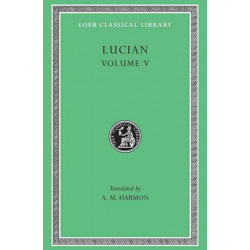
The Lucian, Volume V: The Passing of Peregrinus. The Runaways. Toxaris or Friendship. The Dance. Lexiphanes. The Eunuch. Astrology. The Mistaken Critic. The Parliament of the Gods. The Tyrannicide. Disowned (Bog, Hardback, Engelsk)
Lucian (ca. AD 120–190), apprentice sculptor then traveling rhetorician,... Læs mere
Levering: 6 - 9 hverdage -
Natural History, Volume IV: Books 12–16 (Bog, Hardback, Engelsk)
Pliny the Elder produced in his Natural History a vast compendium of Roman knowledge. Topics included are the mathematics and metrology of the universe; world... Læs mere
Levering: 6 - 9 hverdage -
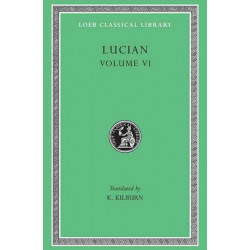
Lucian (ca. AD 120–190), apprentice sculptor then traveling rhetorician,... Læs mere
Levering: 6 - 9 hverdage -
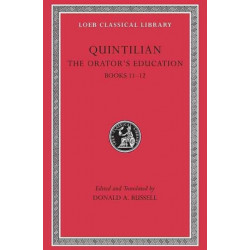
The The Orator’s Education, Volume V: Books 11–12 (Bog, Hardback, Engelsk)
Quintilian, born in Spain about AD 35, became a renowned and successful teacher of rhetoric in Rome. In The Orator’s Education (Institutio Oratoria), a... Læs mere
Levering: 6 - 9 hverdage -
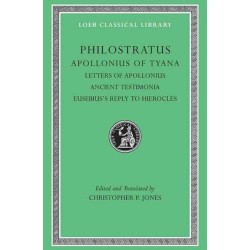
Apollonius of Tyana, Volume III: Letters of Apollonius. Ancient Testimonia. Eusebius’s Reply to Hierocles (Bog, Hardback, Engelsk)
In his Life of Apollonius Philostratus (second to third century AD) chronicles the miracles of first-century AD teacher, religious reformer, and perceived rival to Jesus of Nazareth, Apollonius of Tyana.
Levering: 6 - 9 hverdage -
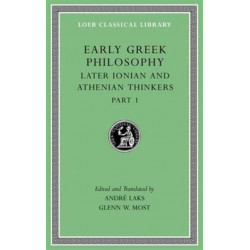
Early Greek Philosophy, Volume VI: Later Ionian and Athenian Thinkers, Part 1 (Bog, Hardback, Engelsk)
Volume VI of the nine-volume Loeb edition of Early Greek Philosophy includes the later Ionian and Athenian thinkers Anaxagoras, Archelaus, and Diogenes of Apollonia, along with chapters on early Greek medicine and the Derveni Papyrus.
Levering: 6 - 9 hverdage