Harvard University Press Forlag
-
Punica, Volume I: Books 1–8 (Bog, Hardback, Engelsk)
Silius Italicus composed an epic Punica in 17 books on the Second Punic War. His poem relies largely on Livy’s prose for facts. It also echoes poets, especially Virgil, and employs techniques traditional in Latin epic.
Levering: 6 - 9 hverdage -
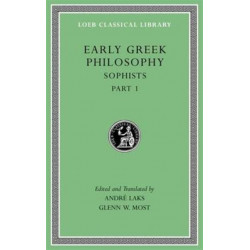
Early Greek Philosophy, Volume VIII: Sophists, Part 1 (Bog, Hardback, Engelsk)
Volume VIII of the nine-volume Loeb edition of Early Greek Philosophy includes the so-called sophists Protagoras, Gorgias, Prodicus, Thrasymachus, and Hippias, along with testimonia relating to the life, views, and argumentative style of Socrates.
Levering: 6 - 9 hverdage -
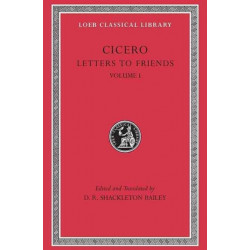
Letters to Friends, Volume I: Letters 1–113 (Bog, Hardback, Engelsk)
Cicero’s letters to friends span the period from 62 BC, when his political career was at its peak, to 43 BC, when he was put to death by the victorious Triumvirs.
Levering: 6 - 9 hverdage -
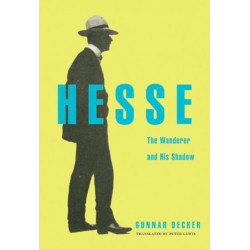
Hesse: The Wanderer and His Shadow (Bog, Hardback, Engelsk)
Against Nazi dictatorship,the disillusionment of Weimar, and Christian austerity, Hermann Hesse’s stories inspired a nonconformist yearning for universal values to... Læs mere
Levering: 6 - 9 hverdage -
The Picture of Dorian Gray: An Annotated, Uncensored Edition (Bog, Hardback, Engelsk)
The Picture of Dorian Gray altered the way Victorians understood the world they inhabited, heralding the end of a repressive era. Now, more than 120 years after Wilde handed... Læs mere
Levering: 6 - 9 hverdage -
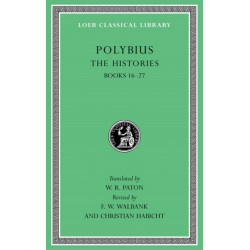
The Histories, Volume V: Books 16–27 (Bog, Hardback, Engelsk)
Polybius’ theme is how and why the Romans spread their power as they did. The main part of his history covers the years 264–146 BC, describing the rise of Rome, the... Læs mere
Levering: 6 - 9 hverdage -
Theogony. Works and Days. Testimonia (Bog, Hardback, Engelsk)
The two extant poems of Hesiod (eighth or seventh century BC) are Theogony, in which he charts the history of the divine world, and Works and Days, in which he delivers moral precepts and practical advice for the world of men.
Levering: 6 - 9 hverdage -
The Origin of Others (Bog, Hardback, Engelsk)
What is race and why does it matter? Why does the presence of Others make us so afraid? America’s foremost novelist reflects on themes that preoccupy her work and dominate politics:... Læs mere
Levering: 6 - 9 hverdage -
What the Best College Teachers Do (Bog, Hardback, Engelsk)
What makes a great teacher great? Which professors do students remember long after graduation? This book, based on a 15-year study of nearly 100 college teachers,... Læs mere
Levering: 6 - 9 hverdage -
Sense and Sensibility: An Annotated Edition (Bog, Hardback, Engelsk)
Patricia Meyer Spacks guides readers to a deeper appreciation of Elinor and Marianne Dashwood as they experience love, romance, and heartbreak. Sense and... Læs mere
Levering: 6 - 9 hverdage -
Who Needs a World View? (Bog, Hardback, Engelsk)
Philosophers—professionals and the armchair variety—are given to defending comprehensive world views. Raymond Geuss, one of the most celebrated thinkers of our time, dispenses... Læs mere
Levering: 6 - 9 hverdage -
History of Rome, Volume III: Books 5–7 (Bog, Hardback, Engelsk)
The only extant work by Livy is part of his history of Rome from the foundation of the city to 9 BC. Of its 142 books, 1–10, 21–45 (except parts of 41 and 43–45), fragments, and short summaries remain.
Levering: 6 - 9 hverdage