Harvard University Press Forlag
-
Chinese History: A New Manual, Enlarged Sixth Edition (Fiftieth Anniversary Edition), Volume 2 (Bog, Paperback / softback, Engelsk)
The sixth edition of Chinese History: A New Manual, revised and expanded to two volumes, includes the latest developments in digital tools and the... Læs mere
Levering: 6 - 9 hverdage -
Haunted by Chaos: China’s Grand Strategy from Mao Zedong to Xi Jinping, With a New Afterword (Bog, Paperback / softback, Engelsk)
Before the Communists came to power, China lay broken. Today it is a global force, but its leaders are haunted... Læs mere
Levering: 6 - 9 hverdage -
Katrina: A History, 1915–2015 (Bog, Paperback / softback, Engelsk)
The Katrina disaster was not a weather event of summer 2005. It was a disaster a century in the making, a product of lessons learned from previous floods, corporate and... Læs mere
Levering: 6 - 9 hverdage -
The Perfect Fascist: A Story of Love, Power, and Morality in Mussolini’s Italy (Bog, Paperback / softback, Engelsk)
Attilio Teruzzi, Mussolini’s commander of the Black Shirts, exemplified fascism’s obsession with male strength. Through the... Læs mere
Levering: 6 - 9 hverdage -
In Isolation: Dispatches from Occupied Donbas (Bog, Paperback / softback, Engelsk)
In this collection of dispatches, Stanislav Aseyev attempts to understand the reasons behind the success of Russian propaganda among the residents of the... Læs mere
Levering: 6 - 9 hverdage -
Poland Between East and West: The Controversies over Self-Definition and Modernization in Partitioned Poland (Bog, Paperback / softback, Engelsk)
Andrzej Walicki examines Poland’s entry into the modern age as it sought to reinvent its concept of... Læs mere
Levering: Skaffevare (forvent 14 - 30 hverdage) -
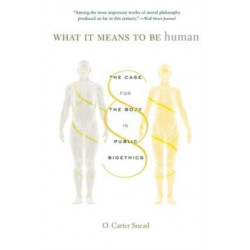
What It Means to Be Human: The Case for the Body in Public Bioethics (Bog, Paperback / softback, Engelsk)
American law assumes that individuals are autonomous, defined by their capacity to choose, and not obligated to each other. But our... Læs mere
Levering: 6 - 9 hverdage -
Virtue Politics: Soulcraft and Statecraft in Renaissance Italy (Bog, Paperback / softback, Engelsk)
James Hankins challenges the view that the Renaissance was the seedbed of modern republicanism, with Machiavelli as exemplary thinker. What... Læs mere
Levering: 6 - 9 hverdage -
Smellosophy: What the Nose Tells the Mind (Bog, Paperback / softback, Engelsk)
For decades neuroscientists understood sensory perception as a matter of external stimuli “sparking” regions of the brain. But this view has a key flaw: odors... Læs mere
Levering: 6 - 9 hverdage -
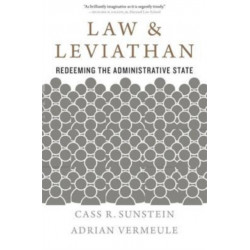
Law and Leviathan: Redeeming the Administrative State (Bog, Paperback / softback, Engelsk)
Many Americans fear the power of unelected, unaccountable bureaucrats—the “deep state.” Cass Sunstein and Adrian Vermeule seek to calm those fears by... Læs mere
Levering: 6 - 9 hverdage -
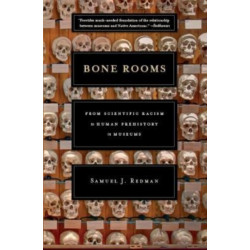
Bone Rooms: From Scientific Racism to Human Prehistory in Museums (Bog, Paperback / softback, Engelsk)
In the bone rooms of the Smithsonian Institution and other museums in the late nineteenth century, a scientific revolution was unfolding,... Læs mere
Levering: 6 - 9 hverdage -
The Horde: How the Mongols Changed the World (Bog, Paperback / softback, Engelsk)
The Mongols are universally known as conquerors, but they were more than that: influential thinkers, politicians, engineers, and merchants. Challenging the... Læs mere
Levering: 6 - 9 hverdage