Harvard University Press Forlag
-
Tragedies, Volume II: Oedipus. Agamemnon. Thyestes. Hercules on Oeta. Octavia (Bog, Hardback, Engelsk)
Seneca (ca. AD 4 65) authored verse tragedies that strongly influenced Shakespeare and other Renaissance dramatists. Plots are... Læs mere
Levering: 6 - 9 hverdage -
Early Greek Philosophy, Volume IX: Sophists, Part 2 (Bog, Hardback, Engelsk)
Volume IX of the nine-volume Loeb edition of Early Greek Philosophy includes the so-called sophists Antiphon, Lycophron, and Xeniades, along with the... Læs mere
Levering: 6 - 9 hverdage -
Writings on Church and Reform (Bog, Hardback, Engelsk)
Nicholas of Cusa (1401–1464), a student of canon law who became a Catholic cardinal, was widely considered the most important original philosopher of the Renaissance. He... Læs mere
Levering: 6 - 9 hverdage -
On Agriculture (Bog, Hardback, Engelsk)
Cato’s second century BC De agricultura is our earliest complete Latin prose text, recommends farming for its security and profitability, and advises on management of labor and resources.... Læs mere
Levering: 6 - 9 hverdage -
Enquiry into Plants, Volume I: Books 1–5 (Bog, Hardback, Engelsk)
Enquiry into Plants and De Causis Plantarum by Theophrastus (ca. 370–ca. 285 BC) are a counterpart to Aristotle’s zoological work and the most important botanical... Læs mere
Levering: 6 - 9 hverdage -
The Library, Volume II: Books 3.10–End. Epitome (Bog, Hardback, Engelsk)
Attributed to Apollodorus of Athens (born ca. 180 BC) but probably composed in the first or second century AD, the Library provides an expansive summary of Greek myths and heroic legends about the origin and early history of the world.
Levering: 6 - 9 hverdage -
Moral Essays, Volume I: De Providentia. De Constantia. De Ira. De Clementia (Bog, Hardback, Engelsk)
In Moral Essays, Seneca expresses his Stoic philosophy on providence, steadfastness, anger, forgiveness, consolation, the happy life, leisure, tranquility, the brevity of life, and gift-giving.
Levering: Skaffevare (forvent 14 - 30 hverdage) -
Tragedies, Volume I: Hercules. Trojan Women. Phoenician Women. Medea. Phaedra (Bog, Hardback, Engelsk)
Seneca (ca. AD 4 65) authored verse tragedies that strongly influenced Shakespeare and other Renaissance dramatists. Plots are... Læs mere
Levering: 6 - 9 hverdage -
Cold War Crucible: The Korean Conflict and the Postwar World (Bog, Hardback, Engelsk)
After World War II, the major powers faced social upheaval at home and anticolonial wars around the globe. Alarmed by conflict in Korea that... Læs mere
Levering: Skaffevare (forvent 14 - 30 hverdage) -
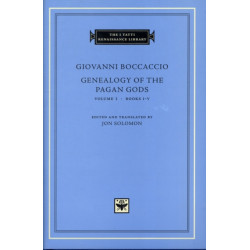
Genealogy of the Pagan Gods: Books I-V (Bog, Hardback, Engelsk)
The goal of Boccaccio’s Genealogy of the Pagan Gods is to plunder ancient and medieval literary sources to create a massive synthesis of Greek and Roman mythology. This is... Læs mere
Levering: 6 - 9 hverdage -
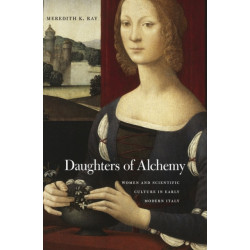
Daughters of Alchemy: Women and Scientific Culture in Early Modern Italy (Bog, Hardback, Engelsk)
Meredith Ray shows that women were at the vanguard of empirical culture during the Scientific Revolution. They experimented with... Læs mere
Levering: 6 - 9 hverdage