Harvard University Press Forlag
-
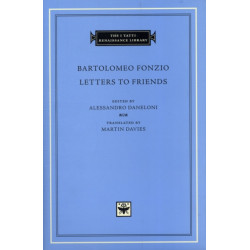
Letters to Friends (Bog, Hardback, Engelsk)
The letters of Bartolomeo Fonzio—a leading literary figure in Florence of the time of Lorenzo de’ Medici and Machiavelli—are a window into the world of Renaissance humanism and... Læs mere
Levering: 6 - 9 hverdage -
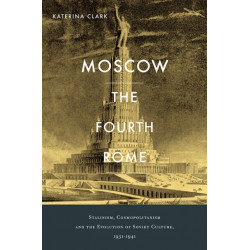
Moscow, the Fourth Rome: Stalinism, Cosmopolitanism, and the Evolution of Soviet Culture, 1931–1941 (Bog, Hardback, Engelsk)
The sixteenth-century monk Filofei proclaimed Moscow the Third Rome. By the 1930s, intellectuals and... Læs mere
Levering: Skaffevare (forvent 14 - 30 hverdage) -
On Dionysius the Areopagite: The Divine Names, Part II (Bog, Hardback, Engelsk)
In 1490/92 the Florentine Platonist Marsilio Ficino made new translations of two treatises he believed were the work of Dionysius the... Læs mere
Levering: 6 - 9 hverdage -
The Global Transformation of Time: 1870–1950 (Bog, Hardback, Engelsk)
As railways, steamships, and telegraph communications brought distant places into unprecedented proximity, previously minor discrepancies in local... Læs mere
Levering: 6 - 9 hverdage -
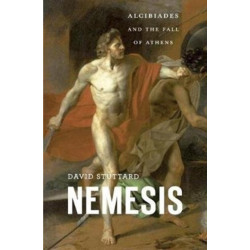
Nemesis: Alcibiades and the Fall of Athens (Bog, Hardback, Engelsk)
Alcibiades was one of the most dazzling figures of Athens's Golden Age. A friend of Socrates, he was spectacularly rich, bewitchingly handsome and charismatic,... Læs mere
Levering: 6 - 9 hverdage -
The History (Bog, Hardback, Engelsk)
In 1039 Byzantium was the most powerful empire in Europe and the Near East. By 1079 it was a politically unstable state half the size, menaced by enemies on all sides. The History of Michael... Læs mere
Levering: 6 - 9 hverdage -
Literary Works (Bog, Hardback, Engelsk)
Alan of Lille was renowned for his learning, his contributions to systematic theology, and his Latin poetry. The works included in this volume give imaginative expression to the main... Læs mere
Levering: 6 - 9 hverdage -
Legal Orientalism: China, the United States, and Modern Law (Bog, Hardback, Engelsk)
After the Cold War, how did China become a global symbol of disregard for human rights, while the U.S. positioned itself as the chief exporter of... Læs mere
Levering: Skaffevare (forvent 14 - 30 hverdage) -
From the Tree to the Labyrinth: Historical Studies on the Sign and Interpretation (Bog, Hardback, Engelsk)
How we create and organize knowledge is the theme of this major achievement by Umberto Eco. Demonstrating once again his... Læs mere
Levering: Skaffevare (forvent 14 - 30 hverdage) -
Justice among Nations: A History of International Law (Bog, Hardback, Engelsk)
Stephen Neff tells the story of how international law has been formulated, debated, contested, and put into practice from ancient times to the... Læs mere
Levering: 6 - 9 hverdage -
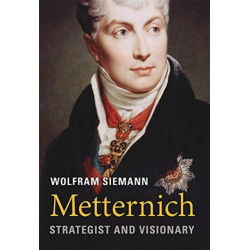
Metternich: Strategist and Visionary (Bog, Hardback, Engelsk)
Wolfram Siemann tells a new story of Clemens von Metternich, the Austrian at the center of nineteenth-century European diplomacy. Known as a conservative and an... Læs mere
Levering: 6 - 9 hverdage -
Power after Carbon: Building a Clean, Resilient Grid (Bog, Hardback, Engelsk)
The electricity sector is facing its toughest test: eliminate carbon emissions while meeting much larger demands for power and adjusting to massive... Læs mere
Levering: 6 - 9 hverdage