Harvard University Press Forlag
-
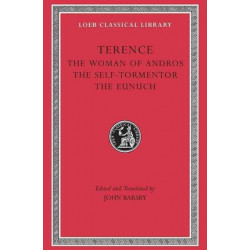
The Woman of Andros. The Self-Tormentor. The Eunuch (Bog, Hardback, Engelsk)
The six plays by Terence (d. 159 BC), all extant, imaginatively reformulate Greek New Comedy in realistic scenes and refined Latin. They include... Læs mere
Levering: 6 - 9 hverdage -
Lessons from Plants (Bog, Hardback, Engelsk)
What would a plant do? It is an unusual question. But, as Beronda L. Montgomery shows, humans can learn a great deal from these organisms. Lessons from Plants unpacks the “senses” and skills of highly adaptive organisms that overcome immense challenges en route to flourishing.
Levering: 6 - 9 hverdage -
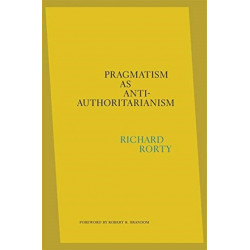
Pragmatism as Anti-Authoritarianism (Bog, Hardback, Engelsk)
In his final work, Richard Rorty provides the definitive statement of his political thought. Rorty equates pragmatism with anti-authoritarianism, arguing that because... Læs mere
Levering: 6 - 9 hverdage -
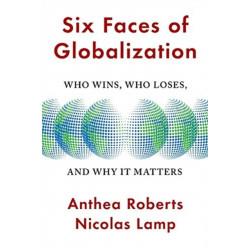
Six Faces of Globalization: Who Wins, Who Loses, and Why It Matters (Bog, Hardback, Engelsk)
Does globalization help everyone or just the rich? Is it the enemy of sustainability or the only hope against climate change? Rival camps... Læs mere
Levering: 6 - 9 hverdage -
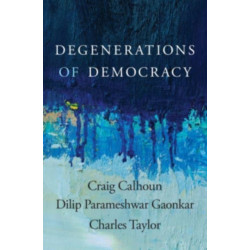
Degenerations of Democracy (Bog, Hardback, Engelsk)
Craig Calhoun, Dilip Gaonkar, and Charles Taylor argue that democracies have embraced individual freedom at the expense of equality and solidarity, economic growth at the... Læs mere
Levering: 6 - 9 hverdage -
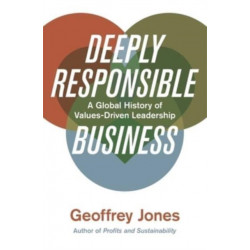
Deeply Responsible Business: A Global History of Values-Driven Leadership (Bog, Hardback, Engelsk)
Deeply Responsible Business profiles corporate leaders of the past two centuries who made social missions vital to their... Læs mere
Levering: 6 - 9 hverdage -
The World of Sugar: How the Sweet Stuff Transformed Our Politics, Health, and Environment over 2,000 Years (Bog, Hardback, Engelsk)
Traversing 2,500 years of global history, Ulbe Bosma shows how sugar, once a luxury reserved for... Læs mere
Levering: 6 - 9 hverdage -
Nihilistic Times: Thinking with Max Weber (Bog, Hardback, Engelsk)
Wendy Brown diagnoses a late-modern nihilism that trivializes values—including truth itself—and reduces politics to narcissism and power-mongering. Rereading Max... Læs mere
Levering: 6 - 9 hverdage -
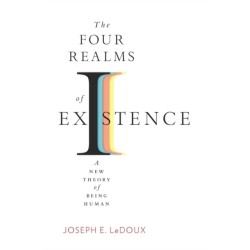
The Four Realms of Existence: A New Theory of Being Human (Bog, Hardback, Engelsk)
Joseph LeDoux argues that ideas like the self are increasingly barriers to discovery and understanding. He offers a new framework, theorizing... Læs mere
Levering: 6 - 9 hverdage -
Made in China: When US-China Interests Converged to Transform Global Trade (Bog, Hardback, Engelsk)
Elizabeth Ingleson explores the roots of bilateral trade between the United States and China. Telling the story of the 1970s US... Læs mere
Levering: 6 - 9 hverdage -
Entangled Worlds: 600–1350 (Bog, Hardback, Engelsk)
Far from a stagnant “Middle Ages,” the years 600–1350 witnessed globalization and social innovation. Entangled Worlds explores long-distance trade in the Americas, cosmopolitan... Læs mere
Levering: 6 - 9 hverdage -
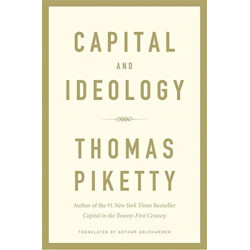
Capital and Ideology (Bog, Hardback, Engelsk)
Thomas Piketty’s Capital in the Twenty-First Century showed that capitalism, left to itself, generates deepening inequality. In this audacious follow-up, he challenges us to... Læs mere
Levering: 6 - 9 hverdage