Harvard University Press Forlag
Visning: Type : Alle | Sprog : Engelsk | Format : Paperback / softback Der vises kun varer på engelsk
-
Algerian Chronicles (Bog, Paperback / softback, Engelsk)
More than 50 years after independence, "Algerian Chronicles, " with its prescient analysis of the dead end of terrorism, appears here in English for the first time. Published in... Læs mere
Levering: 6 - 9 hverdage -
Give and Take: Poverty and the Status Order in Early Modern Japan (Bog, Paperback / softback, Engelsk)
Give and Take offers a new history of government in Tokugawa Japan (1600–1868), one that focuses on ordinary subjects: merchants, artisans, villagers, and people at... Læs mere
Levering: 6 - 9 hverdage -
Under the Starry Flag: How a Band of Irish Americans Joined the Fenian Revolt and Sparked a Crisis over Citizenship (Bog, Paperback / softback, Engelsk)Levering: 6 - 9 hverdage
-
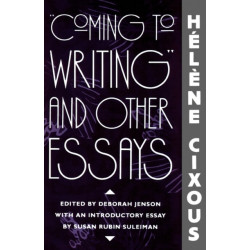
“Coming to Writing” and Other Essays (Bog, Paperback / softback, Engelsk)
This collection presents six essays by one of France’s most remarkable contemporary authors. A notoriously playful stylist, Cixous here explores how the problematics... Læs mere
Levering: 6 - 9 hverdage -
Hierarchy in the Forest: The Evolution of Egalitarian Behavior (Bog, Paperback / softback, Engelsk)
The political flexibility of our species is formidable: we can be quite egalitarian, we can be quite despotic. This book traces the roots of... Læs mere
Levering: 6 - 9 hverdage -
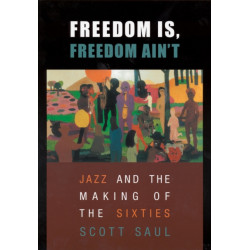
Freedom Is, Freedom Ain’t: Jazz and the Making of the Sixties (Bog, Paperback / softback, Engelsk)
The age of Roach’s Freedom Now Suite, Coltrane’s A Love Supreme, and Mingus’s The Black Saint and the Sinner Lady was a time when jazz became... Læs mere
Levering: Skaffevare (forvent 14 - 30 hverdage) -
Mao’s Last Revolution (Bog, Paperback / softback, Engelsk)
The authors explain why Mao launched the Cultural Revolution, and show his Machiavellian role in masterminding it (which Chinese publications conceal). In its critical analysis of... Læs mere
Levering: 6 - 9 hverdage -
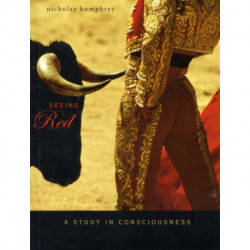
Seeing Red: A Study in Consciousness (Bog, Paperback / softback, Engelsk)
Humphries offers an explanation of why consciousness makes compelling evolutionary sense. From sensations that probably began in bodily expression to evolutionary... Læs mere
Levering: Skaffevare (forvent 14 - 30 hverdage) -
Legalism: Law, Morals, and Political Trials (Bog, Paperback / softback, Engelsk)
Incisively and stylishly written, this book constitutes an open challenge to reconsider the fundamental question of the relationship of law to society.
Levering: 6 - 9 hverdage -
Kistiakovsky: The Struggle for National and Constitutional Rights in the Last Years of Tsarism (Bog, Paperback / softback, Engelsk)
Kistiakovsky railed against Lenin’s concept of a vanguard party to lead the revolution and advocated a... Læs mere
Levering: 6 - 9 hverdage -
Slavery and Social Death: A Comparative Study, With a New Preface (Bog, Paperback / softback, Engelsk)
Patterson discusses the internal dynamics of slavery in 66 societies over time. These include Greece and Rome, medieval Europe, China,... Læs mere
Levering: Skaffevare (forvent 14 - 30 hverdage) -
Racing the Enemy: Stalin, Truman, and the Surrender of Japan (Bog, Paperback / softback, Engelsk)
Hasegawa rewrites the history of the end of World War II in the Pacific by integrating the key actors in the story—the US, the USSR, and Japan.... Læs mere
Levering: 6 - 9 hverdage