Harvard University Press Forlag
-
Ukrainian Futurism, 1914–1930: A Historical and Critical Study (Bog, Paperback / softback, Engelsk)
Oleh Ilnytzkyj seeks to rectify the misinterpretations surrounding the Futurists and their leader Mykhail Semenko by providing the first major English-language monograph on this vibrant literary movement and its charismatic leader.
Levering: 6 - 9 hverdage -
Odessa: A History, 1794–1914 (Bog, Paperback / softback, Engelsk)
By the late 19th century Odessa was the most polyglot and cosmopolitan city in the empire. In the first decades of the 20th century, however, strikes, revolutionary... Læs mere
Levering: 6 - 9 hverdage -
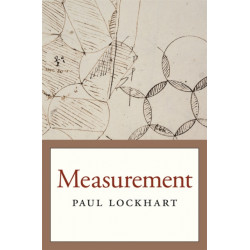
Measurement (Bog, Paperback / softback, Engelsk)
Lockhart’s Mathematician’s Lament outlined how we introduce math to students in the wrong way. Measurement explains how math should be done. With plain English and pictures, he makes complex... Læs mere
Levering: 6 - 9 hverdage -
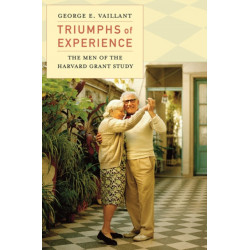
Triumphs of Experience: The Men of the Harvard Grant Study (Bog, Paperback / softback, Engelsk)
At a time when people are living into their tenth decade, the longest longitudinal study of human development ever undertaken offers welcome... Læs mere
Levering: 6 - 9 hverdage -
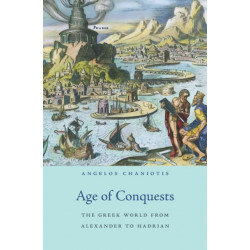
Age of Conquests: The Greek World from Alexander to Hadrian (Bog, Hardback, Engelsk)
The world that Alexander remade in his lifetime was transformed once again by his death in 323 BCE. Over time, trade and intellectual... Læs mere
Status: Kan forudbestilles -
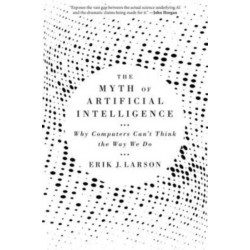
The Myth of Artificial Intelligence: Why Computers Can’t Think the Way We Do (Bog, Paperback / softback, Engelsk)
Futurists are certain that humanlike AI is on the horizon, but in fact engineers have no idea how to program human reasoning.... Læs mere
Levering: 6 - 9 hverdage -
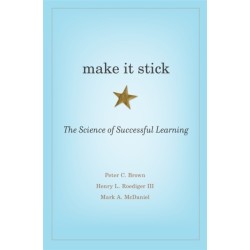
Make It Stick: The Science of Successful Learning (Bog, Hardback, Engelsk)
Drawing on cognitive psychology and other fields, Make It Stick offers techniques for becoming more productive learners, and cautions against study habits... Læs mere
Levering: 6 - 9 hverdage -
The Uncensored Picture of Dorian Gray (Bog, Paperback / softback, Engelsk)
Over 120 years after Oscar Wilde submitted The Picture of Dorian Gray for publication, the uncensored version of his novel appears here for the first time in a... Læs mere
Levering: 6 - 9 hverdage -
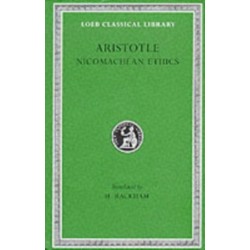
Nicomachean Ethics (Bog, Hardback, Engelsk)
Nearly all the works that Aristotle (384–322 BC) prepared for publication are lost; the priceless ones extant are lecture-materials, notes, and memoranda (some are spurious). Nicomachean Ethics is antiquity's most influential account of life's Supreme Good.
Levering: 6 - 9 hverdage -
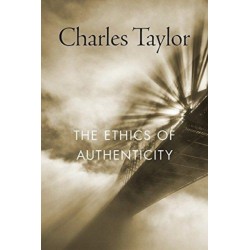
The Ethics of Authenticity (Bog, Paperback / softback, Engelsk)
Everywhere we hear of decline, of a world that was better before the influence of modernity. While some lament Western culture’s slide into relativism and nihilism and others... Læs mere
Levering: 6 - 9 hverdage -
Born to Rule: The Making and Remaking of the British Elite (Bog, Hardback, Engelsk)
This data-rich sociological study uses everything from census figures to Who’s Who to analyze how, over 125 years, the British elite have used... Læs mere
Levering: 6 - 9 hverdage -
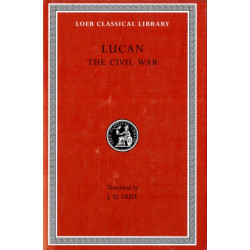
The Civil War (Bog, Hardback, Engelsk)
In his epic The Civil War, Lucan (AD 39–65) carries us from Caesar’s fateful crossing of the Rubicon, through the Battle of Pharsalus, Pompey’s death, and Cato’s leadership in Africa, to Caesar victorious in Egypt. The poem is also called Pharsalia.
Levering: 6 - 9 hverdage