Harvard University Press Forlag
-
Orations, Volume II: Orations 18–19: De Corona. De Falsa Legatione (Bog, Hardback, Engelsk)
Demosthenes (384–322 BC), orator at Athens, was a pleader in law courts who also became a champion of Athenian greatness and Greek... Læs mere
Levering: 6 - 9 hverdage -
Geography, Volume III: Books 6–7 (Bog, Hardback, Engelsk)
In his seventeen-book Geography, Strabo (ca. 64 BC–ca. AD 25) discusses geographical method, stresses the value of geography, and draws attention to the physical,... Læs mere
Levering: Skaffevare (forvent 14 - 30 hverdage) -
Geography, Volume VI: Books 13–14 (Bog, Hardback, Engelsk)
In his seventeen-book Geography, Strabo (ca. 64 BC–ca. AD 25) discusses geographical method, stresses the value of geography, and draws attention to the physical,... Læs mere
Levering: Skaffevare (forvent 14 - 30 hverdage) -
Select Letters (Bog, Hardback, Engelsk)
Letters are important for the study of ecclesiastical history and Augustine’s relations with other theologians.
Levering: 6 - 9 hverdage -
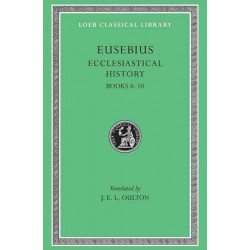
Ecclesiastical History, Volume II: Books 6–10 (Bog, Hardback, Engelsk)
Eusebius, Bishop of Caesarea from about AD 314, was the most important writer in the age of Constantine. His history of the Christian church from the ministry of Jesus to AD 324 is a treasury of information, especially on the Eastern centers.
Levering: 6 - 9 hverdage -
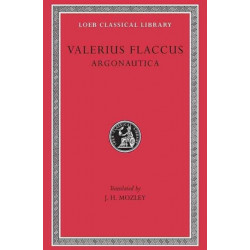
Argonautica (Bog, Hardback, Engelsk)
Valerius Flaccus flourished ca. AD 70–90 and composed an incomplete epic Argonautica in eight books, on the quest for the golden fleece. Valerius effectively rehandles the story already told... Læs mere
Levering: 6 - 9 hverdage -
History, Volume I: Books 14–19 (Bog, Hardback, Engelsk)
Ammianus, a Greek from Antioch, served many years as an officer in the Roman army, then settled in Rome, where he wrote a Latin history of the Roman Empire. The portion that... Læs mere
Levering: 6 - 9 hverdage -
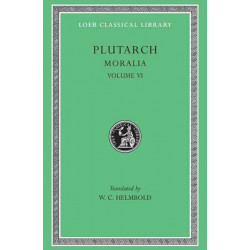
Moralia, Volume IV: Roman Questions. Greek Questions. Greek and Roman Parallel Stories. On the Fortune of the Romans. On the Fortune or the Virtue of Alexander. Were the Athenians More Famous in War or in Wisdom? (Bog, Hardback, Engelsk)
Plutarch (ca. AD 45–120) wrote on many subjects. His extant works other... Læs mere
Levering: 6 - 9 hverdage -
Plutarch (ca. AD 45–120) wrote on many subjects. His extant works other... Læs mere
Levering: 6 - 9 hverdage -
Roman Antiquities, Volume II: Books 3–4 (Bog, Hardback, Engelsk)
The main aim of Roman Antiquities, which began to appear in 7 BC, was to reconcile Greeks to Roman rule. Of the twenty books (from the earliest times to 264 BC) we have the first nine complete; most of 10 and 11; extracts; and an epitome of the whole.
Levering: 6 - 9 hverdage -
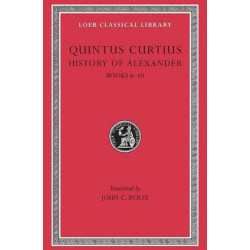
History of Alexander, Volume II: Books 6–10 (Bog, Hardback, Engelsk)
Quintus Curtius wrote a history of Alexander the Great. The first two of ten books have not survived and material is missing from books 5, 6, and 10. Curtius... Læs mere
Levering: 6 - 9 hverdage