Harvard University Press Forlag
-
The Ordinary Virtues: Moral Order in a Divided World (Bog, Paperback / softback, Engelsk)Levering: 6 - 9 hverdage
-
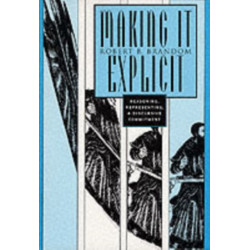
Making It Explicit: Reasoning, Representing, and Discursive Commitment (Bog, Paperback / softback, Engelsk)
Where accounts of the relation between language and mind often rest on the concept of representation, Brandom sets out an approach... Læs mere
Levering: 6 - 9 hverdage -
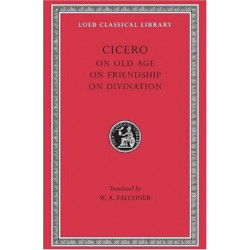
On Old Age. On Friendship. On Divination (Bog, Hardback, Engelsk)
We know more of Marcus Tullius Cicero (106–43 BC), lawyer, orator, politician and philosopher, than of any other Roman. Besides much else, his work conveys the... Læs mere
Levering: 6 - 9 hverdage -
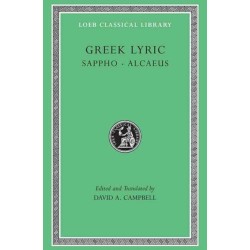
Greek Lyric, Volume I: Sappho. Alcaeus (Bog, Hardback, Engelsk)
Sappho, the most famous woman poet of antiquity, whose main theme was love, and Alcaeus, poet of wine, war, and politics, were two illustrious singers of sixth-century BC Lesbos.
Levering: 6 - 9 hverdage -
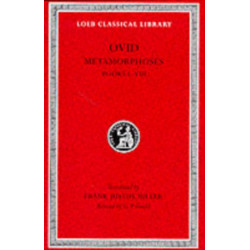
Metamorphoses, Volume I: Books 1–8 (Bog, Hardback, Engelsk)
In his most influential work, the Metamorphoses, Ovid (43 BC–AD 17) weaves a hexametric whole from a huge range of myths, which are connected by the theme of change and ingeniously linked as the narrative proceeds from earliest creation to transformation in Ovid’s own time.
Levering: 6 - 9 hverdage -
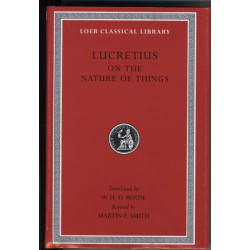
On the Nature of Things (Bog, Hardback, Engelsk)
Lucretius lived ca. 99–ca. 55 BC, but the details of his career are unknown. In his didactic poem De Rerum Natura (On the Nature of Things) he expounds Epicurean philosophy so as to dispel fear of the gods and death, and promote spiritual tranquility.
Levering: 6 - 9 hverdage -
The Black Death and the Transformation of the West (Bog, Paperback / softback, Engelsk)
Looking beyond the view of the plague as unmitigated catastrophe, Herlihy finds evidence for its role in the advent of new population controls, the... Læs mere
Levering: 6 - 9 hverdage -
Dancing in the Street: Motown and the Cultural Politics of Detroit (Bog, Paperback / softback, Engelsk)
Detroit in the 1960s was a city with a pulse: people were marching in step with Martin Luther King, Jr.; dancing in the street with... Læs mere
Levering: Skaffevare (forvent 14 - 30 hverdage) -
The Collapse of the Fact/Value Dichotomy and Other Essays (Bog, Paperback / softback, Engelsk)
In this book, one of the world’s preeminent philosophers takes issue with an idea that has found an all-too-prominent place in popular culture... Læs mere
Levering: 6 - 9 hverdage -
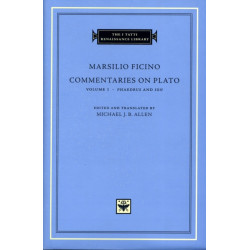
Commentaries on Plato (Bog, Hardback, Engelsk)
Marsilio Ficino (1433–1499), the Florentine scholar-philosopher-magus, was largely responsible for the Renaissance revival of Plato. This volume contains Ficino’s extended analysis and commentary on the Phaedrus.
Levering: 6 - 9 hverdage -
Constitutional Construction: Divided Powers and Constitutional Meaning (Bog, Paperback / softback, Engelsk)
The American Constitution has a dual nature. The first aspect is the degree to which it acts as a binding set of rules that can be... Læs mere
Levering: 6 - 9 hverdage -
Constitutional Identity (Bog, Hardback, Engelsk)
Jacobsohn argues that a constitution acquires an identity through experience—from a mix of the political aspirations and commitments that express a nation’s past and the desire... Læs mere
Levering: Skaffevare (forvent 14 - 30 hverdage)