Harvard University Press Forlag
Visning: Type : Alle | Sprog : Alle | Format : Alle
-
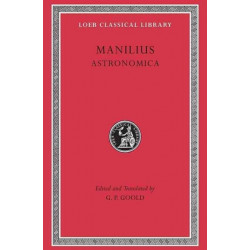
Astronomica (Bog, Hardback, Engelsk)
In Astronomica (first century AD), the earliest extant treatise we have on astrology, Manilius provides a poetic account of celestial phenomena and the signs of the zodiac. He also gives witty character sketches of persons born under certain stars.
Levering: 6 - 9 hverdage -
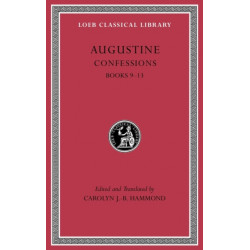
Confessions, Volume II: Books 9–13 (Bog, Hardback, Engelsk)
Confessions is a spiritual autobiography of Augustine’s early life, family, associations, and explorations of alternative religious and theological viewpoints as he... Læs mere
Levering: 6 - 9 hverdage -
History of Rome, Volume VI: Books 23–25 (Bog, Hardback, Engelsk)
Livy (Titus Livius, 64 or 59 BC–AD 12 or 17), the great Roman historian, presents a vivid narrative of Rome’s rise from the traditional foundation of the city in... Læs mere
Levering: 6 - 9 hverdage -
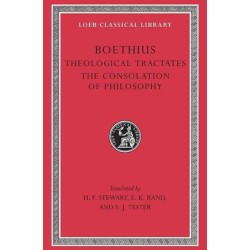
Theological Tractates. The Consolation of Philosophy (Bog, Hardback, Engelsk)
The classical and Christian worlds meet in Boethius (ca. AD 480–524), the last writer of purely literary Latin from antiquity. His Tractates examine... Læs mere
Levering: 6 - 9 hverdage -
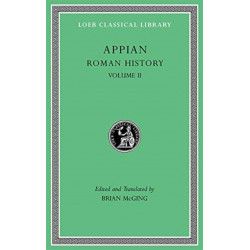
Roman History, Volume II (Bog, Hardback, Engelsk)
Appian (ca. AD 95–161) is a principal source for the history of the Roman Republic. His theme is the process by which Rome achieved her contemporary prosperity, and his method is... Læs mere
Levering: 6 - 9 hverdage -
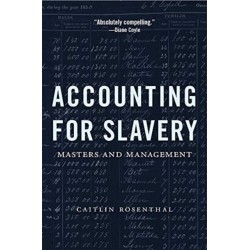
Accounting for Slavery: Masters and Management (Bog, Paperback / softback, Engelsk)Levering: 6 - 9 hverdage
-
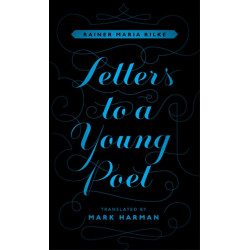
Letters to a Young Poet (Bog, Hardback, Engelsk)
These ten letters by Rainer Maria Rilke speak directly to the young, offering unguarded thoughts on such diverse subjects as creativity, solitude, self-reliance, living with... Læs mere
Levering: 6 - 9 hverdage -
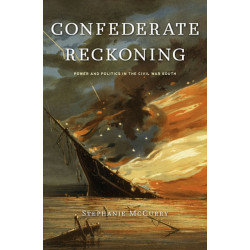
Confederate Reckoning: Power and Politics in the Civil War South (Bog, Paperback / softback, Engelsk)
The attempt to repress a majority of its own population backfired on the Confederate States of America as the disenfranchised demanded to... Læs mere
Levering: 6 - 9 hverdage -
Six Drawing Lessons (Bog, Hardback, Engelsk)
Art, William Kentridge says, is its own form of knowledge. It does not simply supplement the real world, and cannot be purely understood in the rational terms of academic... Læs mere
Levering: 6 - 9 hverdage -
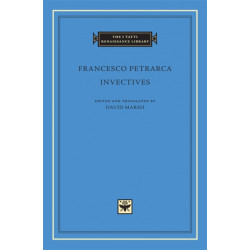
Invectives (Bog, Hardback, Engelsk)
Francesco Petrarca (1304–1374), one of the greatest Italian poets, was also a leader in the Renaissance movement to revive ancient Roman language and literature. This new critical edition of... Læs mere
Levering: 6 - 9 hverdage -
The Generalissimo: Chiang Kai-shek and the Struggle for Modern China, With a New Postscript (Bog, Paperback / softback, Engelsk)
One of the most momentous stories of the last century is China’s rise from a self-satisfied, anti-modern, decaying society into a global power that promises to one day rival the United States. Chiang Kai-shek, an autocratic, larger-than-life figure, dominates this story.
Levering: 6 - 9 hverdage