Harvard University Press Forlag
Visning: Type : Alle | Sprog : Alle | Format : Alle
-
Stealing My Religion: Not Just Any Cultural Appropriation (Bog, Hardback, Engelsk)
Liz Bucar navigates the thorny terrain of religious appropriation, from yoga classes to non-Muslims who signal allyship by donning hijabs.... Læs mere
Levering: 6 - 9 hverdage -
A Greeting of the Spirit: Selected Poetry of John Keats with Commentaries (Bog, Hardback, Engelsk)
Renowned scholar Susan J. Wolfson assembles seventy-eight selections—some beloved, others less well known—that illuminate the... Læs mere
Levering: 6 - 9 hverdage -
Philosophy as Dialogue (Bog, Hardback, Engelsk)
During his long career, Hilary Putnam repeatedly revised his philosophical positions. This unique volume is a window into his intellectual humility and breadth of interests, as... Læs mere
Levering: 6 - 9 hverdage -
What It Means to Be Human: The Case for the Body in Public Bioethics (Bog, Paperback / softback, Engelsk)
American law assumes that individuals are autonomous, defined by their capacity to choose, and not obligated to each other. But our... Læs mere
Levering: 6 - 9 hverdage -
Virtue Politics: Soulcraft and Statecraft in Renaissance Italy (Bog, Paperback / softback, Engelsk)
James Hankins challenges the view that the Renaissance was the seedbed of modern republicanism, with Machiavelli as exemplary thinker. What... Læs mere
Levering: 6 - 9 hverdage -
Smellosophy: What the Nose Tells the Mind (Bog, Paperback / softback, Engelsk)
For decades neuroscientists understood sensory perception as a matter of external stimuli “sparking” regions of the brain. But this view has a key flaw: odors... Læs mere
Levering: 6 - 9 hverdage -
Law and Leviathan: Redeeming the Administrative State (Bog, Paperback / softback, Engelsk)
Many Americans fear the power of unelected, unaccountable bureaucrats—the “deep state.” Cass Sunstein and Adrian Vermeule seek to calm those fears by... Læs mere
Levering: 6 - 9 hverdage -
Bone Rooms: From Scientific Racism to Human Prehistory in Museums (Bog, Paperback / softback, Engelsk)
In the bone rooms of the Smithsonian Institution and other museums in the late nineteenth century, a scientific revolution was unfolding,... Læs mere
Levering: 6 - 9 hverdage -
The Horde: How the Mongols Changed the World (Bog, Paperback / softback, Engelsk)
The Mongols are universally known as conquerors, but they were more than that: influential thinkers, politicians, engineers, and merchants. Challenging the... Læs mere
Levering: 6 - 9 hverdage -
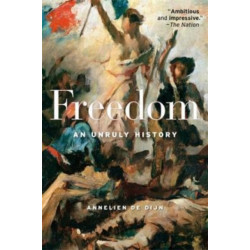
Freedom: An Unruly History (Bog, Paperback / softback, Engelsk)
Many Americans assume that the country was founded by skeptics of “big government,” who saw minimal state power as freedom’s prerequisite. Annelien de Dijn takes on this myth.... Læs mere
Levering: 6 - 9 hverdage -
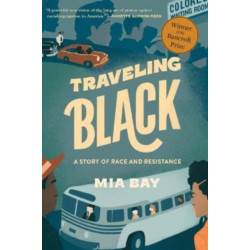
Traveling Black: A Story of Race and Resistance (Bog, Paperback / softback, Engelsk)
What was it like to travel while Black under Jim Crow? Mia Bay brings this dramatic history to life. With gripping stories and a close eye on the rail,... Læs mere
Levering: 6 - 9 hverdage -
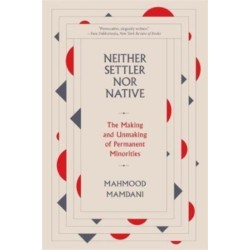
Neither Settler nor Native: The Making and Unmaking of Permanent Minorities (Bog, Paperback / softback, Engelsk)
The nation-state and the colonial state have always been the same thing: the ethnic and religious majorities of the former... Læs mere
Levering: 6 - 9 hverdage