ISEAS Forlag
Visning: Type : Alle | Sprog : Alle | Format : Alle
-
Revolutionary Spirit: Jose Rizal in Southeast Asia (Bog, Paperback / softback, Engelsk)Levering: 6 - 9 hverdage
-
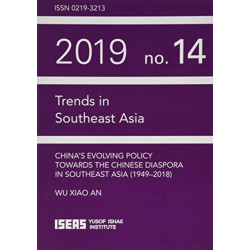
China's Evolving Policy Towards the Chinese Diaspora in Southeast Asia (Bog, Paperback / softback, Engelsk)
China's policy towards its diaspora is primarily governed by its national interests and foreign policy imperatives. In general, since the establishment of the People's Republic of China in 1949, the Chinese government has treated the diaspora as an asset, rather than a liability.
Levering: 6 - 9 hverdage -
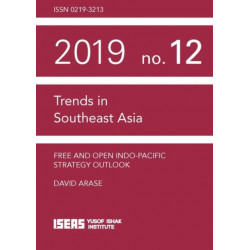
Free and Open Indo-Pacific Strategy Outlook (Bog, Paperback / softback, Engelsk)
The United States launched a new Free and Open Indo-Pacific (FOIP) strategy in late 2017 after reluctantly concluding that its patient effort to engage and socialize China to the rules-based order since 1972 had failed.
Levering: 6 - 9 hverdage -
Quality, Equity, Autonomy: Malaysia’s Education Reforms Examined (Bog, Paperback / softback, Engelsk)Levering: 6 - 9 hverdage
-
A View from the Highlands: Archaeology and Settlement History of West Sumatra, Indonesia (Bog, Paperback / softback, Engelsk)
Analyses the rise of the settlement system in the heartland of the Minangkabau region in the highlands of West... Læs mere
Levering: 6 - 9 hverdage -
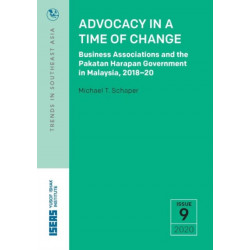
Advocacy in a Time of Change: Business Associations and the Pakatan Harapan Government in Malaysia, 2018–20 (Bog, Paperback / softback, Engelsk)
There are at least 80–100 business associations in Malaysia today, representing over 600,000... Læs mere
Levering: 6 - 9 hverdage -
The Defeat of Barisan Nasional: Missed Signs or Late Surge? (Bog, Paperback / softback, Engelsk)
Examines the 2018 Malaysian elections from three angles: campaign dynamics; important trends among major interest groups; and local-level dynamics and developments in key states. This analytical work is complemented by personal narratives from a selection of GE-14 participants.
Levering: 6 - 9 hverdage -
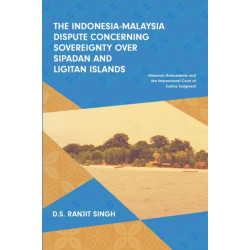
The Indonesia-Malaysia Dispute Concerning Sovereignty Over Sipadan and Ligitan Islands: Historical Antecedents and the International Court of Justice Judgment (Bog, Paperback / softback, Engelsk)
In 2002, ASEAN made history when two of its founder members - Indonesia... Læs mere
Levering: 6 - 9 hverdage -
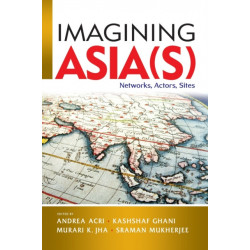
Imagining Asia(s): Networks, Actors, Sites (Bog, Paperback / softback, Engelsk)
Advances the question as to what Asia is, and as to whether there existed one or many Asia(s). The book seeks to explore Asian societies as interconnected formations through trajectories/networks of circulation of people, ideas, and objects in the longue durée.
Levering: 6 - 9 hverdage -
Malaysia's Student Loan Company: Tackling the PTPTN Time Bomb (Bog, Paperback / softback, Engelsk)Levering: 6 - 9 hverdage
-
The Free and Open Indo-Pacific Beyond 2020: Similarities and Differences Between the Trump Administration and a Democrat White House (Bog, Paperback / softback, Engelsk)
American Indo-Pacific policy will be driven by its China policy, regardless of whether there is a second-term Donald Trump administration or a first-term Joe Biden administration. This book reflects on this issue.
Levering: 6 - 9 hverdage -
Vietnam-China Agricultural Trade: Huge Growth and Challenges (Bog, Paperback / softback, Engelsk)
Challenges facing Vietnam's export of fruits and vegetables to the Chinese market include technical barriers, long risk assessment periods, restrictions on products exported through official quotas to the Chinese market, and frequent changes in China's policy on border crossings.
Levering: 6 - 9 hverdage