Left Coast Press Inc Forlag
-
Critical Qualitative Inquiry: Foundations and Futures (Bog, Paperback / softback, Engelsk)
This comprehensive volume of contemporary, original articles by leading figures in qualitative research places the critical qualitative research in... Læs mere
Levering: 6 - 9 hverdage -
Dam Projects and the Growth of American Archaeology: The River Basin Surveys and the Interagency Archeological Salvage Program (Bog, Paperback / softback, Engelsk)
This book examines the profound impacts of the Smithsonian Institution’s River Basin Surveys and the Interagency Archeological Salvage Program (1945–1969) on the development of American archaeology.
Levering: Skaffevare (forvent 14 - 30 hverdage) -
Indians in Color: Native Art, Identity, and Performance in the New West (Bog, Paperback / softback, Engelsk)
Part performance text, part art history, part cultural criticism, part autoethnography, noted cultural critic Norman Denzin... Læs mere
Levering: Skaffevare (forvent 14 - 30 hverdage) -
A Russian Perspective on Theoretical Archaeology: The Life and Work of Leo S. Klejn (Bog, Paperback / softback, Engelsk)
Russia’s foremost archaeological theorist, Leo S. Klejn, has been generally unrecognized by western scholars. In this biography and summary of his work, Stephen Leach outlines Klejn’s wide-ranging theoretical contributions on the place and nature of archaeology.
Levering: Skaffevare (forvent 14 - 30 hverdage) -
Staring at the Park: A Poetic Autoethnographic Inquiry (Bog, Paperback / softback, Engelsk)
The stunning fragmented poetic text and images comprising Staring at the Park depict the events of this difficult journey and an alternative model of evocative, artistic autoethnography.
Levering: 6 - 9 hverdage -
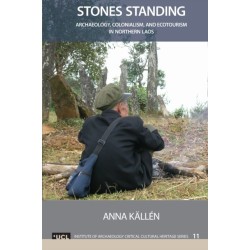
Stones Standing: Archaeology, Colonialism, and Ecotourism in Northern Laos (Bog, Paperback / softback, Engelsk)
This book is an inquiry into the relationships between archaeology, colonialism, and ecotourism at the famous standing stones of Hintang, Laos and what it shows about the power dynamics of heritage and ecotourism.
Levering: Skaffevare (forvent 14 - 30 hverdage) -
Plain Pottery Traditions of the Eastern Mediterranean and Near East: Production, Use, and Social Significance (Bog, Paperback / softback, Engelsk)
This volume reevaluates the role and social significance of plain pottery traditions in a range of early complex societies of the Near East and Eastern Mediterranean from both historically specific perspectives and from a comparative point of view.
Levering: Skaffevare (forvent 14 - 30 hverdage) -
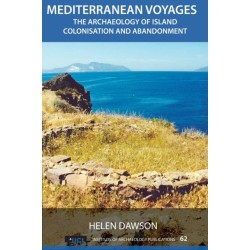
Mediterranean Voyages: The Archaeology of Island Colonisation and Abandonment (Bog, Paperback / softback, Engelsk)
This volume advances theoretical discussions of island archaeology by offering a comparative study of the archaeology of colonisation, abandonment, and resettlement of the Mediterranean islands in prehistory.
Levering: Skaffevare (forvent 14 - 30 hverdage) -
Archaeology of African Plant Use (Bog, Paperback / softback, Engelsk)
The first major synthesis of African archaeobotany in decades, this book significantly advances our knowledge of relationship between agriculture and social complexity.
Levering: Skaffevare (forvent 14 - 30 hverdage) -
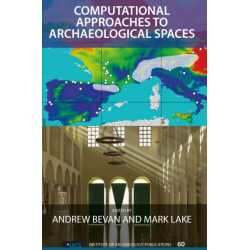
Computational Approaches to Archaeological Spaces (Bog, Paperback / softback, Engelsk)
This volume of original chapters written by experts in the field offers a snapshot of how historical built spaces, past cultural landscapes, and archaeological distributions are currently being explored through computational social science.
Levering: Skaffevare (forvent 14 - 30 hverdage) -
The Origins and Spread of Domestic Animals in Southwest Asia and Europe (Bog, Paperback / softback, Engelsk)
This benchmark volume is a valuable synthesis of our current knowledge about the origins and spread of animal domestication in the Near East and Europe.
Levering: Skaffevare (forvent 14 - 30 hverdage) -
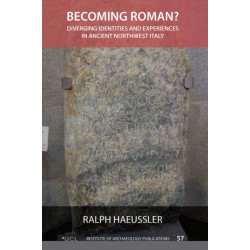
Becoming Roman?: Diverging Identities and Experiences in Ancient Northwest Italy (Bog, Paperback / softback, Engelsk)
Few empires had such an impact on the conquered peoples as did the Roman empire, yet this volume shows though the example of Northwest Italy how individuals’ decisions introduced changes in material culture, identity and behavior on a regional level to resist homogenization.
Levering: Skaffevare (forvent 14 - 30 hverdage)