Left Coast Press Inc Forlag
-
Marketing Cultural and Heritage Tourism: A World of Opportunity (Bog, Paperback / softback, Engelsk)
Packed with valuable ideas and case studies to help increase museum visitation and museum store sales, this valuable resource is a must for everyone in the business of connecting people with the cultural wealth of our museums and parks.
Levering: Skaffevare (forvent 14 - 30 hverdage) -
Professionalizing Practice. A Critical Look at Recent Practice in Museum Education: Journal of Museum Education 37:2 Thematic Issue (Bog, Paperback / softback, Engelsk)
Sponsored by the Museum Education Roundtable
Levering: Skaffevare (forvent 14 - 30 hverdage) -
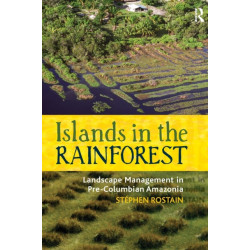
Islands in the Rainforest: Landscape Management in Pre-Columbian Amazonia (Bog, Paperback / softback, Engelsk)
'The culmination of 25 years of research on the extensive human modification of the wetlands environment of Guiana, this book demands a radical rethinking of conventional wisdom about settlemtn and landscape management in tropical lowlands over millennia.
Levering: 6 - 9 hverdage -
Body, Paper, Stage: Writing and Performing Autoethnography (Bog, Paperback / softback, Engelsk)
Tami Spry provides a methodological introduction to the budding field of performative autoethnography including examplars and exercises for the novice.
Levering: Skaffevare (forvent 14 - 30 hverdage) -
Poor and Pregnant in New Delhi, India (Bog, Paperback / softback, Engelsk)
Meticulously documents cultural values and beliefs, dietary practaices, and the nutritional and health status of mothers in Indian squatter settlements.
Levering: Skaffevare (forvent 14 - 30 hverdage) -
Chinese Export Porcelains (Bog, Paperback / softback, Engelsk)
The blue and white porcelain exported by China in the 18th and early 19th centuries is an important category of artifacts and antiques. This illustrated guide to Chinese export... Læs mere
Levering: Skaffevare (forvent 14 - 30 hverdage) -
Narrating the Closet: An Autoethnography of Same-Sex Attraction (Bog, Paperback / softback, Engelsk)
Adams makes use of interviews, personal narratives, and autoethnography to analyze lived, relational experiences of sexuality, using the closet as metaphor.
Levering: Skaffevare (forvent 14 - 30 hverdage) -
Museums and Maori: Heritage Professionals, Indigenous Collections, Current Practice (Bog, Paperback / softback, Engelsk)
This groundbreaking book explores the revolution in New Zealand museums that is influencing the care and exhibition of indigenous objects around the world.
Levering: Skaffevare (forvent 14 - 30 hverdage) -
Museum Careers: A Practical Guide for Students and Novices (Bog, Paperback / softback, Engelsk)
Expert curator Elizabeth Schlatter outlines the types of jobs available within museums, the kinds of training needed, how to secure a job, and how to move up the ladder once you are working in the field.
Levering: Skaffevare (forvent 14 - 30 hverdage) -
Connecting Kids to History with Museum Exhibitions (Bog, Paperback / softback, Engelsk)
Presents research and practice to show how history museums offer a point of entry to the past by empowering children to connect to history through... Læs mere
Levering: Skaffevare (forvent 14 - 30 hverdage) -
Messages: An Introduction to Communication (Bog, Paperback / softback, Engelsk)
A brief, inexpensive, informal introductory text for the basic course in communication, Messages features lively writing, a focus on theorists of communication, and inclusion of contemporary topics of identity, social media, and visual communication.
Levering: Skaffevare (forvent 14 - 30 hverdage) -
Landesque Capital: The Historical Ecology of Enduring Landscape Modifications (Bog, Paperback / softback, Engelsk)
This book is the first comprehensive, global treatment of landesque capital, a widespread concept to understand anthropogenic landscapes that serve important economic, social, and ritual purposes.
Levering: Skaffevare (forvent 14 - 30 hverdage)