Oxford Archaeology Forlag
Visning: Type : Alle | Sprog : Alle | Format : Alle
-
From Bridgehead to Brewery: The Medieval and Post-Medieval Archaeological Remains from Finzel's Reach, Bristol: The Medieval and Post-Medieval Archaeological Remains from Finzel’s Reach, Bristol (Bog, Hardback, Engelsk)
This richly illustrated book presents the fascinating results from a major project to examine the heritage of Finzel’s Reach, the site of the former Courage and Bristol Breweries near the centre of one of England’s greatest port cities.
Levering: 6 - 9 hverdage -
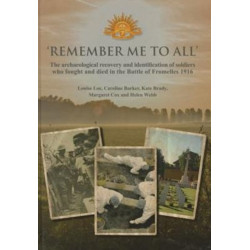
'Remember Me To All' (Bog, Hardback, Engelsk)
During the First World War, 250 soldiers were buried behind enemy lines in unmarked mass graves on the outskirts of the village of Fromelles, Northern France. This volume describes... Læs mere
Levering: 6 - 9 hverdage -
Bridging the Past: Life in Medieval and Post-Medieval Southwark: Excavations Along the Route of Thameslink Borough Viaduct and at London Bridge Station (Bog, Hardback, Engelsk)
A major two-volume study of excavations undertaken for the Thameslink project at Borough Viaduct and London Bridge Station, revealing the development of... Læs mere
Levering: 6 - 9 hverdage -
London Gateway: Settlement, Farming and Industry from Prehistory to the Present in the Thames Estuary: Archaeological Investigations at DP World London Gateway Port and Logistics Park, Essex, and on the Hoo Peninsula, Kent (Bog, Hardback, Engelsk)
Explores the archaeology and heritage of the London Gateway site.
Levering: 6 - 9 hverdage -
Road to the Manor: Excavations at Graven Hill, Oxfordshire, 2015–2016 (Bog, Paperback / softback, Engelsk)
A new farmstead was established in the late 11th century, developing in the 13th century with a series of masonry buildings arranged around a central courtyard, linked via a road to the deserted medieval village at Wretchwick.
Levering: 6 - 9 hverdage -
The late Roman cemetery at Lankhills, Winchester (Bog, Hardback, Engelsk)
Lankhills and its late Roman cemetery have played a significant role in the understanding of the military in civilian areas of Roman Britain in the fourth century, and these new excavations double the number of graves explored and add to the variety of finds represented.
Levering: 6 - 9 hverdage -
Between Villa and Town: Excavations of a Roman Roadside Settlement and Shrine at Higham Ferrers, Northamptonshire (Bog, Hardback, Engelsk)
Lying in the heart of the Nene Valley at Higham Ferrers in Northamptonshire, was a substantial Roman roadside settlement, excavated in part by Oxford Archaeology during 2002-3.
Levering: 6 - 9 hverdage -
Footprints from the Past: The South-Eastern Extramural Settlement of Roman Alchester and Rural Occupation in Its Hinterland: The Archaeology of East West Rail Phase 1 (Bog, Hardback, Engelsk)
Excavations by Oxford Archaeology in advance of a programme of... Læs mere
Levering: 6 - 9 hverdage -
New Frontier: The Origins And Development Of West London (Bog, Paperback / softback, Engelsk)Levering: 6 - 9 hverdage
-
Landscape and Prehistory of the East London Wetlands (Bog, Paperback / softback, Engelsk)
Archaeological investigations carried out during improvements to five key junctions along a stretch of the A13 trunk road through the East London... Læs mere
Levering: 6 - 9 hverdage -
Trade and Prosperity, War and Poverty (Bog, Paperback / softback, Engelsk)
Southampton was one of England's leading medieval ports, with its trade in commodities such as wine, wool and cloth making it among the most prosperous and cosmopolitan towns in the country during the 13th and 15th centuries.
Levering: 6 - 9 hverdage -
'Finished Labour of a Thousand Hands' (Bog, Paperback / softback, Engelsk)
The Combe Down Stone Quarries, which were the principal supplier of building stone for the great period of building in Bath during the 18th and 19th centuries, form a significant element of the wider landscape of the City of Bath World Heritage Site.
Levering: 6 - 9 hverdage