SAR Press Forlag
-
Recapturing Anthropology: Working in the Present (Bog, Paperback / softback, Engelsk)
The ten papers in this volume offer different versions of how and where anthropologists might work usefully in today's world, converging on the issue of how anthropology can best recapture the progressive character its basic concepts, such as ""culture"", once had.
Levering: Skaffevare (forvent 14 - 30 hverdage) -
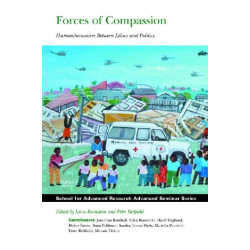
Forces of Compassion: Humanitarianism Between Ethics and Politics (Bog, Paperback / softback, Engelsk)Levering: Skaffevare (forvent 14 - 30 hverdage)
-
Indian Policies in the Americas: From Columbus to Collier and Beyond (Bog, Paperback / softback, Engelsk)
Addresses the idea that "the Indian," as conceived by colonial powers and later by different postcolonial interest groups, was as much... Læs mere
Levering: 6 - 9 hverdage -
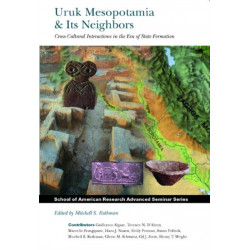
Uruk Mesopotamia & Its Neighbors: Cross-cultural Interactions in the Era of State Formation (Bog, Paperback / softback, Engelsk)
In Uruk Mesopotamia and Its Neighbors, ten field and theoretical archaeologists working in the area today offer an overview and analysis of new data and interpretations for Greater Mesopotamia during the late fifth and fourth millennia B.C.
Levering: Skaffevare (forvent 14 - 30 hverdage) -
Pharmaceutical Self: The Global Shaping of Experience in an Age of Psychopharmacology (Bog, Paperback / softback, Engelsk)Levering: Skaffevare (forvent 14 - 30 hverdage)
-
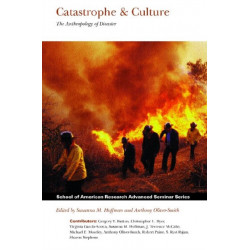
Catastrophe & Culture: The Anthropology of Disaster (Bog, Paperback / softback, Engelsk)
Using a variety of natural and technological disasters, the authors of this volume explore the potentials of disaster for ecological, political-economic, and cultural approaches to anthropology along with the perspectives of archaeology and history.
Levering: Skaffevare (forvent 14 - 30 hverdage) -
Regimes of Language: Ideologies, Polities, and Identities (Bog, Paperback / softback, Engelsk)Levering: Skaffevare (forvent 14 - 30 hverdage)
-
The Ancient City: New Perspectives on Urbanism in the Old and New World (Bog, Paperback / softback, Engelsk)
Why, how, and when did urban life begin? Ancient cities have much to tell us about the social, political, religious, and economic conditions of their times--and also about our own.
Levering: Skaffevare (forvent 14 - 30 hverdage) -
For Indigenous Eyes Only: A Decolonization Handbook (Bog, Paperback / softback, Engelsk)Levering: Skaffevare (forvent 14 - 30 hverdage)
-
Imprisoned Art (Bog, Paperback / softback, Engelsk)
The study of what has become known as Plains Indian ledger art and of Fort Marion drawings in particular, has burgeoned in the last forty years. Joyce Szabo's examination of the two... Læs mere
Levering: Skaffevare (forvent 14 - 30 hverdage) -
The Great Basin: People and Place in Ancient Times (Bog, Paperback / softback, Engelsk)
This book is about a place, the Great Basin of western North America, and about the lifeways of Native American people who lived there during the past 13,000 years. The authors highlight the ingenious solutions people devised to sustain themselves in a difficult environment.
Levering: Skaffevare (forvent 14 - 30 hverdage) -
Breathing New Life Into the Evidence of Death: Contemporary Approaches to Bioarchaeology (Bog, Paperback / softback, Engelsk)
Taking cues from current theoretical perspectives and capitalising on the strengths of new and sophisticated... Læs mere
Levering: Skaffevare (forvent 14 - 30 hverdage)