Stanford University Press Forlag
-
The Burnout Society (Bog, Paperback / softback, Engelsk)
Every epoch has its emblematic illnesses, this book argues, and our society is undergoing a silent paradigm shift that has led to the pathological exhaustion commonly referred to as "burnout."
Levering: 6 - 9 hverdage -
The Implicated Subject: Beyond Victims and Perpetrators (Bog, Paperback / softback, Engelsk)
Arguing that the familiar categories of victim, perpetrator, and bystander do not adequately account for our involvement in historical violence and contemporary inequality, this book introduces a new theory of political responsibility through the figure of the implicated subject.
Levering: 6 - 9 hverdage -
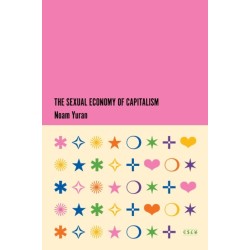
The Sexual Economy of Capitalism (Bog, Paperback / softback, Engelsk)
Economics has long modeled its theories on bakers and butchers rather than husbands, wives, lovers, and prostitutes. This book argues that exchanges involving sex and... Læs mere
Levering: 6 - 9 hverdage -
How Culture Shapes the Climate Change Debate (Bog, Paperback / softback, Engelsk)Levering: På eget lager, 1 - 2 hverdageNedsat pris!
-
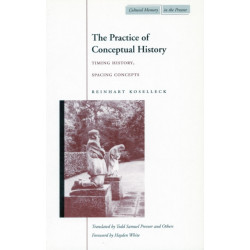
The Practice of Conceptual History: Timing History, Spacing Concepts (Bog, Paperback / softback, Engelsk)
Reinhart Koselleck is regarded as one of the most important theorists of history and historiography of the late 20th century, and is an exponent and practitioner of "Begriffsgeschichte". The 18 essays in this volume illustrate the four theses of Koselleck's concept of history.
Levering: 6 - 9 hverdage -
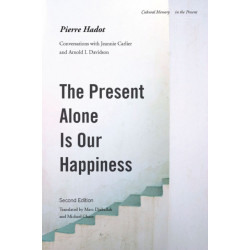
The Present Alone Is Our Happiness, Second Edition: Conversations with Jeannie Carlier and Arnold I. Davidson (Bog, Paperback / softback, Engelsk)
In this book of brilliantly erudite and precise discussions, which also serves as an... Læs mere
Levering: 6 - 9 hverdage -
What Pornography Knows: Sex and Social Protest Since the Eighteenth Century (Bog, Paperback / softback, Engelsk)Levering: 6 - 9 hverdage
-
Field Guide to the Patchy Anthropocene: The New Nature (Bog, Hardback, Engelsk)Levering: 6 - 9 hverdage
-
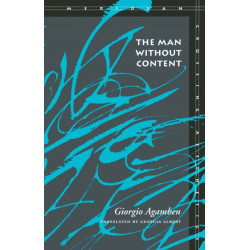
The Man Without Content (Bog, Paperback / softback, Engelsk)
This work considers the status of art in the modern era. It takes seriously Hegel's claim that art has exhausted its spiritual vocation, that it is no longer through art that Spirit principally comes to knowledge of itself.
Levering: 6 - 9 hverdage -
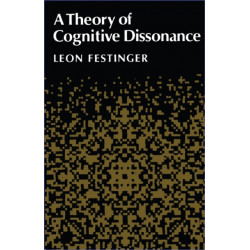
A Theory of Cognitive Dissonance (Bog, Paperback / softback, Engelsk)
Contends that a state of impasse exists within learning theory largely because some of its major assumptions stand in apparent opposition to certain well-established experimental results. This book puts forward a new theory that seems to reconcile these data and assumptions.
Levering: 6 - 9 hverdage -
Aurangzeb: The Life and Legacy of India's Most Controversial King (Bog, Paperback / softback, Engelsk)
This brief, accessible biography sheds new light on one of India's most controversial and misunderstood figures, arguing that the Mughal emperor Aurangzeb was not a Hindu-hating fanatic but rather a premodern Indian king driven by a thirst for power, piety, and justice.
Levering: 6 - 9 hverdage -
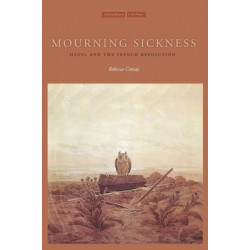
Mourning Sickness: Hegel and the French Revolution (Bog, Paperback / softback, Engelsk)
This book explores Hegel's response to the French Revolutionary Terror in relation to contemporary theories of trauma.
Levering: 6 - 9 hverdage