Stanford University Press Forlag
Visning: Type : Alle | Sprog : Alle | Format : Alle
-
On Escape: De L'evasion (Bog, Paperback / softback, Engelsk)
First published in 1935, On Escape represents Emmanuel Levinas's first attempt to break with the ontological obsession of the Western tradition. In it, Levinas not only affirms the necessity of an escape from being, but also gives a meaning and a direction to it.
Levering: 6 - 9 hverdage -
The Manchu Way: The Eight Banners and Ethnic Identity in Late Imperial China (Bog, Paperback / softback, Engelsk)
In 1644, the Manchus, a relatively unknown people inhabiting China's northeastern frontier, overthrew the Ming, Asia's mightiest rulers, and established the Qing dynasty, This book supplies a radically new perspective on the formative period of the modern Chinese nation.
Levering: 6 - 9 hverdage -
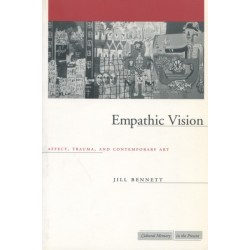
Empathic Vision: Affect, Trauma, and Contemporary Art (Bog, Paperback / softback, Engelsk)
This book analyzes contemporary visual art produced in the context of conflict and trauma from a range of countries, including Colombia, Northern... Læs mere
Levering: 6 - 9 hverdage -
Fiction Agonistes: In Defense of Literature (Bog, Paperback / softback, Engelsk)
Fiction Agonistes defends literature as a space where we experience the difference between living and imagining, life and life-like, reality and invention.
Levering: 6 - 9 hverdage -
Genealogical Fictions: Limpieza De Sangre, Religion, and Gender in Colonial Mexico (Bog, Paperback / softback, Engelsk)
Genealogical Fictions examines how the state, church, Inquisition, and other institutions in colonial Mexico used the... Læs mere
Levering: 6 - 9 hverdage -
In the Wake of Neoliberalism: Citizenship and Human Rights in Argentina (Bog, Paperback / softback, Engelsk)
Examining the ways in which "rights talk" is used and adapted locally by groups in Argentina, this book explores the relationship... Læs mere
Levering: 6 - 9 hverdage -
The Figure of the Migrant (Bog, Paperback / softback, Engelsk)
At a time when more people than ever are being constrained to move for political, economic, and environmental reasons, this book provides a new political theory of migration, one based on the social primacy of movement.
Levering: 6 - 9 hverdage -
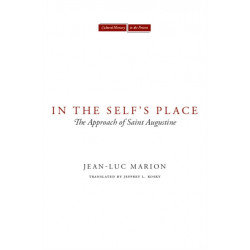
In the Self's Place: The Approach of Saint Augustine (Bog, Paperback / softback, Engelsk)
In the Self's Place is a phenomenological reading of Augustine that engages with modern and postmodern analyses of Augustinian philosophy.
Levering: 6 - 9 hverdage -
God, Death, and Time (Bog, Paperback / softback, Engelsk)
This book consists of transcripts from two lecture courses on ethical relation Levinas delivered at the Sorbonne. In seeking to explain his thought to students, he utilizes a clarity and an intensity altogether different from his other writings.
Levering: 6 - 9 hverdage -
The Mark of the Sacred (Bog, Paperback / softback, Engelsk)
"Originally published in French under the title La marque du sacre."
Levering: 6 - 9 hverdage -
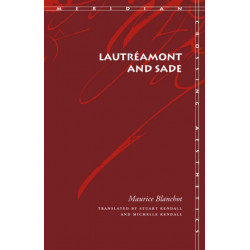
Lautreamont and Sade (Bog, Paperback / softback, Engelsk)
In this book, Blanchot forcefully distinguishes his critical project from the major intellectual currents of his day, surrealism and existentialism.
Levering: 6 - 9 hverdage -
Care Crosses the River (Bog, Paperback / softback, Engelsk)
In this accessible collection of short meditations on various topics, Blumenberg works as a detective of ideas scouring the periphery of intellectual and philosophical history for clues—metaphors, gestures, anecdotes—essential to grasping human finitude.
Levering: 6 - 9 hverdage