University of Chicago, Middle East Documentation Center Forlag
Visning: Type : Alle | Sprog : Alle | Format : Alle
-
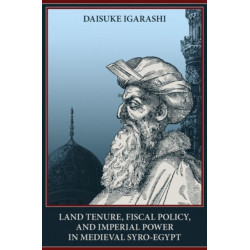
Land Tenure, Fiscal Policy and Imperial Policy in Medieval Syro-Egypt (Bog, Hardback, Engelsk)
This book aims to examine the structural changes in the state and society in Mamluk Egypt and Syria after the middle of the eighth/fourteenth century. Between 648/1250 and 922/1517, the Mamluk sultanate ruled Egypt, Syria, and the Hijaz, the central Middle East.
Levering: Skaffevare (forvent 14 - 30 hverdage) -
Commemorating the Nation: Collective Memory, Public Commemoration, and National Identity in Twentieth-century Egypt (Bog, Hardback, Engelsk)
This is a study of the relationship between public commemoration and national identity in... Læs mere
Levering: Skaffevare (forvent 14 - 30 hverdage) -
Ismaili and Fatimid Studies in Honor of Paul E. Walker (Bog, Hardback, Engelsk)
A collection of essays on Ismaili and Fatimid studies in honour of Paul E. Walker, former Director of the American Research Center in Egypt.
Levering: Skaffevare (forvent 14 - 30 hverdage) -
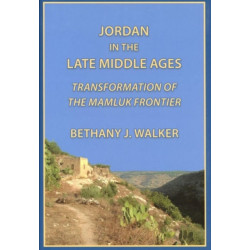
Jordan in the Late Middle Ages: Transformation of the Mamluk Frontier (Bog, Hardback, Engelsk)
This book explores the transformation of the Mamluk state from the perspective of the Jordanian frontier, considering the actions of local people in molding both the state and their own societies in the post-plague era.
Levering: Skaffevare (forvent 14 - 30 hverdage) -
The Wine of Love and Life: Ibn al-Farid's al-Khamriyah and al-Qaysari's Quest for Meaning (Bog, Hardback, Engelsk)
Ibn al-Farid has long been venerated as a Sufi saint and poet whose verse stands as a high point in Arabic poetry.... Læs mere
Levering: Skaffevare (forvent 14 - 30 hverdage) -
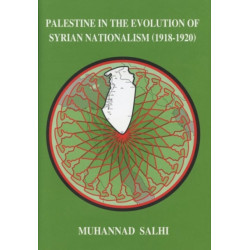
Palestine in the Evolution of Syrian Nationalism (1918-1920) (Bog, Hardback, Engelsk)
Palestine in the Evolution of Syrian Nationalism analyzes the place of Palestine in the development of Syrian nationalism from the inception of Syria as a modern nation-state following the dissolution of the Ottoman Empire at the end of the First World War.
Levering: Skaffevare (forvent 14 - 30 hverdage) -
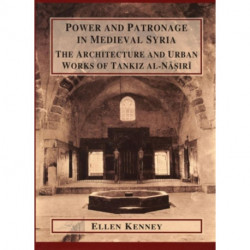
Power and Patronage in Medieval Syria: The Architecture and Urban Works of Tankiz al-Nasiri (Bog, Hardback, Engelsk)
This book investigates Tankizs building program by identifying the works that he commissioned, exploring the... Læs mere
Levering: Skaffevare (forvent 14 - 30 hverdage) -
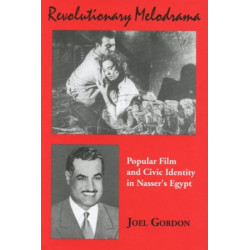
Revolutionary Melodrama: Popular Film and Civic Identity in Nasser's Egypt (Bog, Hardback, Engelsk)
Revolutionary Melodrama explores intersections between cinema and politics during the Nasser era, a period in which a military regime embarked upon the construction of a new civic identity for an independent Egypt.
Levering: Skaffevare (forvent 14 - 30 hverdage) -
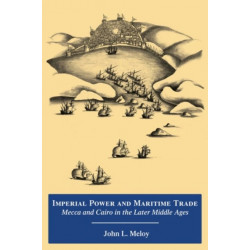
Imperial Power and Maritime Trade: Mecca and Cairo in the Later Middle Ages (Bog, Paperback / softback, Engelsk)
This new paperback is a Revised Edition with new preface. Using sources composed by late medieval Meccan scholars alongside the more well-known Mamluk material, this study presents the history of late medieval Mecca and the Sharifs who ruled the city.
Levering: Skaffevare (forvent 14 - 30 hverdage)