University of Pennsylvania Press Forlag
-
-
A Brief History of Doom: Two Hundred Years of Financial Crises (Bog, Hardback, Engelsk)
Building on insights gleaned from many years of work in the banking industry and drawing on a vast trove of data, Richard Vague argues in A Brief History of Doom that financial crises follow a pattern that makes them both predictable and avoidable.
Levering: 6 - 9 hverdage -
Arendt's Judgment: Freedom, Responsibility, Citizenship (Bog, Hardback, Engelsk)
In Arendt's Judgment: Freedom, Responsibility, Citizenship, Jonathan Peter Schwartz claims that Arendt's theory of political judgment formed the core... Læs mere
Levering: På eget lager, 1 - 2 hverdageNedsat pris! -
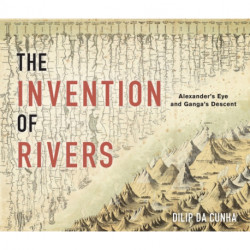
The Invention of Rivers: Alexander's Eye and Ganga's Descent (Bog, Hardback, Engelsk)
Featuring more than 150 illustrations, many in color, The Invention of Rivers integrates history, art, cultural studies, hydrology, and... Læs mere
Levering: 6 - 9 hverdage -
Botanical Poetics: Early Modern Plant Books and the Husbandry of Print (Bog, Hardback, Engelsk)Levering: 6 - 9 hverdage
-
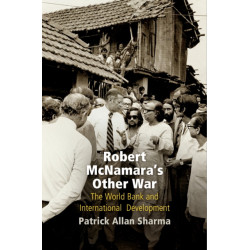
Robert McNamara's Other War: The World Bank and International Development (Bog, Hardback, Engelsk)
Robert McNamara's Other War chronicles the former defense secretary's thirteen-year presidency of the World Bank. Using previously unstudied World Bank documents, Patrick Allan Sharma recounts the World Bank's transformation under McNamara and highlights his complex legacy.
Levering: Skaffevare (forvent 14 - 30 hverdage) -
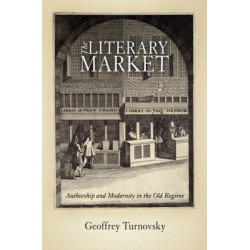
The Literary Market: Authorship and Modernity in the Old Regime (Bog, Hardback, Engelsk)
This study offers a new reading of the development of modern authorship in seventeenth- and eighteenth-century France, through a detailed... Læs mere
Levering: Skaffevare (forvent 14 - 30 hverdage) -
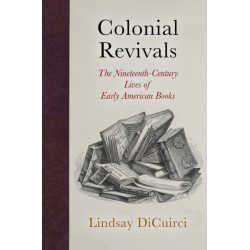
Colonial Revivals: The Nineteenth-Century Lives of Early American Books (Bog, Hardback, Engelsk)
Colonial Revivals examines the rise of American antiquarianism and historical reprinting in antebellum America. Not merely vehicles... Læs mere
Levering: Skaffevare (forvent 14 - 30 hverdage) -
Historic Real Estate: Market Morality and the Politics of Preservation in the Early United States (Bog, Hardback, Engelsk)
In Historic Real Estate, Whitney Martinko shows how early Americans debated whether, and how, to preserve... Læs mere
Levering: Skaffevare (forvent 14 - 30 hverdage) -
Translating Nature: Cross-Cultural Histories of Early Modern Science (Bog, Hardback, Engelsk)
Translating Nature recasts the era of early modern science as an age of translation across linguistic, cultural, and geographical boundaries. Contributors highlight the vital roles that Native Americans, Africans, and European Catholics played in the global history of science.
Levering: Skaffevare (forvent 14 - 30 hverdage) -
The Venetian Qur'an: A Renaissance Companion to Islam (Bog, Hardback, Engelsk)
In The Venetian Qur'an, Pier Mattia Tommasino uncovers the author, origin, and lasting influence of the Alcorano di Macometto, a book that purported to be the first printed European vernacular translation of the Qur'an.
Levering: Skaffevare (forvent 14 - 30 hverdage) -
The Classic Christian Townsite at Arminna West (Bog, Hardback, Engelsk)
An illustrated report on the 1963 excavation of a town in Lower Nubia which dated to the Christian Period which reached its zenith between c.AD 850 and 1100. Includes a general discussion of the town's history and its relations with Egypt and the rest of Nubia.
Levering: Skaffevare (forvent 14 - 30 hverdage)