University of Texas Press Forlag
-
No Way but to Fight: George Foreman and the Business of Boxing (Bog, Hardback, Engelsk)
The first biography of the heavyweight boxing champion, preacher, and celebrity pitchman who fought his way out of urban poverty and through the venal world of prizefighting to make it in America.
Levering: 6 - 9 hverdage -
The Florentine Codex: An Encyclopedia of the Nahua World in Sixteenth-Century Mexico (Bog, Hardback, Engelsk)
Scholars explore the most significant trove of Nahua culture and language: an illustrated manuscript compiled after the Spanish conquest by a Franciscan friar with many indigenous authors and painters.
Levering: 6 - 9 hverdage -
Quantum Criminals: Ramblers, Wild Gamblers, and Other Sole Survivors from the Songs of Steely Dan (Bog, Hardback, Engelsk)
A literary and visual exploration of the songs of Steely Dan. Pulling from history, lived experience, pulp... Læs mere
Levering: 6 - 9 hverdage -
Handbook of Latin American Studies, Vol. 73: Social Sciences (Bog, Hardback, Engelsk)
The 2019 volume of the benchmark bibliography of Latin American Studies.
Levering: 6 - 9 hverdage -
Mexico: Photographs by Mark Cohen (Bog, Hardback, Engelsk)
Capturing the country’s visual surrealism in striking detail, Mexico presents two hundred images by Mark Cohen, the acclaimed street photographer and author of Frame and Dark Knees.
Levering: Skaffevare (forvent 14 - 30 hverdage) -
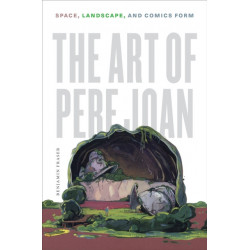
The Art of Pere Joan: Space, Landscape, and Comics Form (Bog, Hardback, Engelsk)
A close reading of the innovative, distinctive vision of Pere Joan, who has pushed boundaries in Spain's comics scene for more than four decades and stoked a new understanding of the nature of reading comics.
Levering: 6 - 9 hverdage -
As Above, So Below: Art of the American Fraternal Society, 1850-1930 (Bog, Hardback, Engelsk)
Sumptuously illustrated with more than two hundred outstanding examples from private and public collections and introduced by fraternal art collector and Talking Heads singer-songwriter David Byrne, this revelatory book surveys the golden age of lodge hal
Levering: Skaffevare (forvent 14 - 30 hverdage) -
In the Palace of Nezahualcoyotl: Painting Manuscripts, Writing the Pre-Hispanic Past in Early Colonial Period Tetzcoco, Mexico (Bog, Hardback, Engelsk)
Around 1542, descendants of the Aztec rulers of Mexico created accounts of the... Læs mere
Levering: Skaffevare (forvent 14 - 30 hverdage) -
A Procession of Them (Bog, Hardback, Engelsk)
In some countries, they call them the 'abandonados', the abandoned ones. They're the mentally ill and mentally disabled patients being warehoused in psychiatric asylums that are more... Læs mere
Levering: Skaffevare (forvent 14 - 30 hverdage) -
A Spy in the House of Loud: New York Songs and Stories (Bog, Hardback, Engelsk)
A cofounder of the dB’s, Chris Stamey re-creates the music scene in late 1970s New York City, recalling the birth of punk and other new streams of electric music as well as the making of the cult albums Stands for deciBels and Repercussion.
Levering: Skaffevare (forvent 14 - 30 hverdage) -
Rewrite Man: The Life and Career of Screenwriter Warren Skaaren (Bog, Hardback, Engelsk)
This lively biography of the screenwriter of 1980s hit movies Top Gun, Beverly Hills Cop II, Beetlejuice, and Batman illuminates issues of film authorship that have become even more contested in the era of blockbuster filmmaking.
Levering: Skaffevare (forvent 14 - 30 hverdage) -
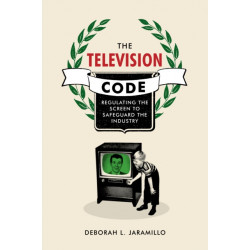
The Television Code: Regulating the Screen to Safeguard the Industry (Bog, Hardback, Engelsk)
Revisiting early debates about TV content and censorship from industry and government perspectives, this book recounts the development of the Television Code, the TV counterpart to the Hays Motion Picture Production Code.
Levering: 6 - 9 hverdage