Der er 19+ underkategorier
- Boligspørgsmål og hjemløshed
- Control, privacy and safety in society
- Dyr og samfund
- Etiske dilemmaer og debatter
- Fattigdom og utryghed
- Flygtninge og politisk asyl
- Forbrugerisme
- Fremtidsprognoser, fremtidsstudier
- Handicap: sociale aspekter
- Integration
- Menneskehandel
- Migration, immigration og emigration
- Sex, seksualitet, parforhold og samfund: generelt
- Social diskriminering og ligestilling
- Social mobilitet
- Sociale holdninger
- Sociale konsekvenser af katastrofer
- Sundhed, sygdom og afhængighed: sociale aspekter
- Vold i samfundet
Sociale konsekvenser af katastrofer
Visning: Type : Alle | Sprog : Alle | Format : Alle

-
Bemærk: Kan ikke leveres før jul.
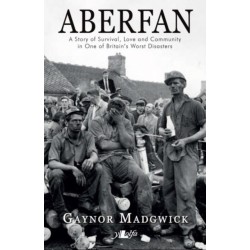
Aberfan - A Story of Survival, Love and Community in One of Britain's Worst Disasters: A Story of Survival, Love and Community in One of Britain's Worst Disasters (Bog, Paperback / softback, Engelsk)Levering: 6 - 9 hverdage -
Bemærk: Kan ikke leveres før jul.
Out of the Wreckage: A New Politics for an Age of Crisis (Bog, Paperback / softback, Engelsk)What does the good life - and the good society - look like in the twenty-first century?
Levering: 6 - 9 hverdage -
Bemærk: Kan ikke leveres før jul.
Late Victorian Holocausts: El Nino Famines and the Making of the Third World (Bog, Paperback / softback, Engelsk)Bestselling, magisterial melding of global environmental history and global political history
Levering: 6 - 9 hverdage -
Bemærk: Kan ikke leveres før jul.
Governing Disaster in Urban Environments: Climate Change Preparation and Adaption after Hurricane Sandy (Bog, Paperback / softback, Engelsk)Governing Disaster in Urban Environments provides a comprehensive account of relevant debates,... Læs mere
Levering: Print on Demand (forvent 14 - 30 hverdage) -
Bemærk: Kan ikke leveres før jul.
Emergency Preparedness for Libraries (Bog, Hardback, Engelsk)Despite the volumes of information they contain, few libraries know how to prepare for, endure, and survive any type of disaster. This completely updated second... Læs mere
Levering: Print on Demand (forvent 14 - 30 hverdage) -
Bemærk: Kan ikke leveres før jul.
The Great Famine: Northern Europe in the Early Fourteenth Century (Bog, Paperback / softback, Engelsk)The horrors of the Great Famine (1315-1322), one of the severest catastrophes ever to strike northern Europe. This work provides a comprehensive inquiry into the Famine from Ireland to western Poland, from Scandinavia to central France and western Germany.
Levering: Skaffevare (forvent 14 - 30 hverdage) -
Bemærk: Kan ikke leveres før jul.
Famine: A Short History (Bog, Paperback / softback, Engelsk)Famine remains one of the worst calamities that can befall a society. Mass starvation - whether it is inflicted by drought or engineered by misguided or genocidal economic... Læs mere
Levering: Skaffevare (forvent 14 - 30 hverdage) -
Bemærk: Kan ikke leveres før jul.
Pandemic Solidarity: Mutual Aid during the Covid-19 Crisis (Bog, Paperback / softback, Engelsk)What happens when our society is faced with an existential crisis?
Levering: Skaffevare (forvent 14 - 30 hverdage) -
Bemærk: Kan ikke leveres før jul.
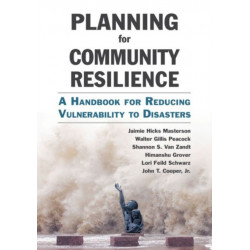
Planning for Community Resilience: A Handbook for Reducing Vulnerability to Disasters (Bog, Paperback / softback, Engelsk)How can we plan and design stronger communities? This handbook brings together the fields of planning, disaster response, and hazards management to provide a field-tested process on how to make communities disaster-resilient.
Levering: Skaffevare (forvent 14 - 30 hverdage) -
Bemærk: Kan ikke leveres før jul.
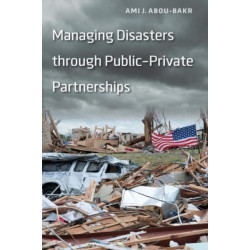
Managing Disasters through Public–Private Partnerships (Bog, Paperback / softback, Engelsk)Assesses whether public-private partnerships for the purposes of disaster resilience are viable at the federal level, identifies why attempts to... Læs mere
Levering: Skaffevare (forvent 14 - 30 hverdage) -
Bemærk: Kan ikke leveres før jul.
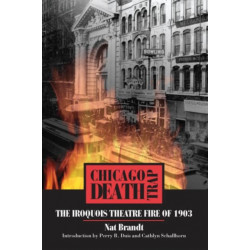
Chicago Death Trap: The Iroquois Theatre Fire of 1903 (Bog, Paperback / softback, Engelsk)On the afternoon of December 30, 1903, during a sold out matinee performance, a fire broke out in Chicago's Iroquois Theatre. This work provides a... Læs mere
Levering: 6 - 9 hverdage -
Bemærk: Kan ikke leveres før jul.
Notice to Quit: The Great Famine Evictions (Bog, Paperback / softback, Engelsk)This richly illustrated pamphlet seeks to contextualize the mass evictions by focussing on the ideological and economic factors as well as the role of religious and racial prejudice in prompting owners to rid their estates of what was known as a "surplus population."
Levering: 6 - 9 hverdage