Aristotle Forfatter
-
-
Nicomachean Ethics (Bog, Hardback, Engelsk)
Nearly all the works that Aristotle (384–322 BC) prepared for publication are lost; the priceless ones extant are lecture-materials, notes, and memoranda (some are spurious). Nicomachean Ethics is antiquity's most influential account of life's Supreme Good.
Levering: 6 - 9 hverdage -
Categories. On Interpretation. Prior Analytics (Bog, Hardback, Engelsk)
Nearly all the works Aristotle (384–322 BC) prepared for publication are lost; the priceless ones extant are lecture-materials, notes, and memoranda (some are spurious). They can be categorized as practical; logical; physical; metaphysical; on art; other; fragments.
Levering: 6 - 9 hverdage -
-
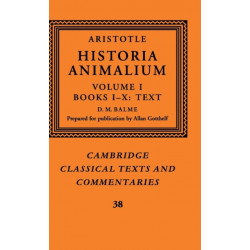
Aristotle: 'Historia Animalium': Volume 1, Books I-X: Text (Bog, Hardback, Engelsk)
David Balme's major critical edition of Aristotle's largest and perhaps least studied treatise is based on a collation of the 26 known extant... Læs mere
Levering: Print on Demand (forvent 14 - 30 hverdage) -
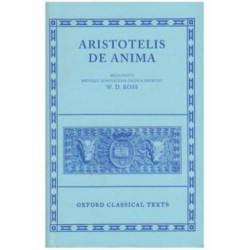
De Anima (Bog, Hardback, Engelsk)
An original Greek text.
Levering: Skaffevare (forvent 14 - 30 hverdage) -
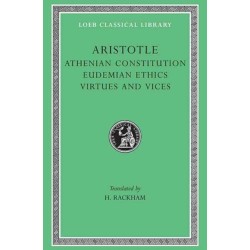
Athenian Constitution. Eudemian Ethics. Virtues and Vices (Bog, Hardback, Engelsk)
Nearly all the works Aristotle (384–322 BC) prepared for publication are lost; the priceless ones extant are lecture-materials, notes, and memoranda (some are spurious). They can be categorized as practical; logical; physical; metaphysical; on art; other; fragments.
Levering: 6 - 9 hverdage -
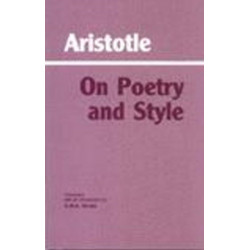
On Poetry and Style (Bog, Hardback, Engelsk)
Contains the "Poetics" and the first twelve chapters of the "Rhetoric, Book III".
Levering: Skaffevare (forvent 14 - 30 hverdage) -
Metaphysics: (Bks. 7–10) (Bog, Hardback, Engelsk)
"Metaphysics: Books 7 to 10".
Levering: Skaffevare (forvent 14 - 30 hverdage) -
Physics, Volume II: Books 5–8 (Bog, Hardback, Engelsk)
Nearly all the works Aristotle (384–322 BC) prepared for publication are lost; the priceless ones extant are lecture-materials, notes, and memoranda (some are spurious). They can be categorized as practical; logical; physical; metaphysical; on art; other; fragments.
Levering: 6 - 9 hverdage -
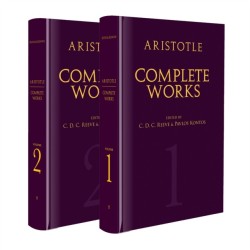
The Complete Works of Aristotle, Volume Two: The Revised Oxford Translation (Bog, Hardback, Engelsk)
Provides a standard English version of Aristotle. This work contains the substance of the original translation.
Levering: 6 - 9 hverdage -
Poetics: with the Tractatus Coislinianus, reconstruction of Poetics II, and the fragments of the On Poets (Bog, Hardback, Engelsk)
A translation of Aristotle's "Poetics". It features notes of both the "Tractatus Coislinianus", which is argued to be a summary of the lost second book of the "Poetics", and fragments of Aristotle's "Dialogue On Poets", including the texts about catharsis.
Levering: Skaffevare (forvent 14 - 30 hverdage)