Aristotle Forfatter
Visning: Type : Alle | Sprog : Alle | Format : Alle
-
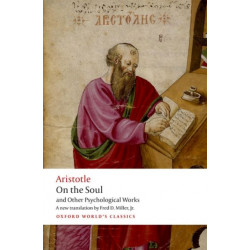
On the Soul: and Other Psychological works (Bog, Paperback / softback, Engelsk)
Aristotle's De Anima (On the Soul) is one of the great classics of philosophy. Aristotle examines the nature of the soul-sense-perception, imagination, cognition, emotion, and desire, including, memory, dreams, and processes such as nutrition, growth, and death.
Levering: 6 - 9 hverdage -
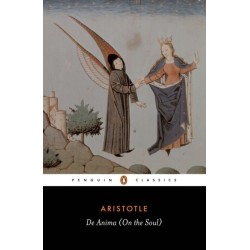
De Anima (On the Soul) (Bog, Paperback / softback, Engelsk)
For Plato the soul was the seat of being, metaphysically distinct from the body that it was forced temporarily to inhabit. In 'De Anima', Plato's student, Aristotle sought to set out... Læs mere
Levering: 6 - 9 hverdage -
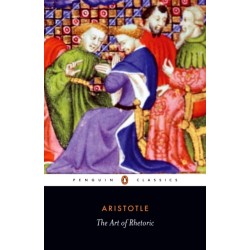
The Art of Rhetoric (Bog, Paperback / softback, Engelsk)
This text examines Aristotle's "Rhetoric" as a classic treatise on the arts of public speaking and persuasion which played a role in the civic life of Greece. These arts, which... Læs mere
Levering: 6 - 9 hverdage -
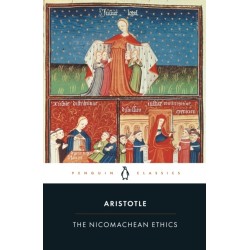
The Nicomachean Ethics (Bog, Paperback / softback, Engelsk)
Addresses the question of how to live well, and originates the concept of cultivating a virtuous character as the basis of his ethical system. In this title, the author sets out to... Læs mere
Levering: 6 - 9 hverdage -
-
-
Categories. On Interpretation. Prior Analytics (Bog, Hardback, Engelsk)
Nearly all the works Aristotle (384–322 BC) prepared for publication are lost; the priceless ones extant are lecture-materials, notes, and memoranda (some are spurious). They can be categorized as practical; logical; physical; metaphysical; on art; other; fragments.
Levering: 6 - 9 hverdage -
-
-
-
 PRIS66,- krLevering: Straks (Leveres på e-mail)Aristotle’s Poetics (Lydbog, zip_mp3, Engelsk)
Aristotle's Poetics is best known for its definition and analysis of tragedy and comedy, but it also applies to truth and beauty as they are manifested in the other arts. In our age,... Læs mere
PRIS66,- krLevering: Straks (Leveres på e-mail) -
 PRIS40,- krLevering: Straks (Leveres på e-mail)Aristotle’s Poetics (Ebog, epub, Engelsk)
Aristotle's Poetics is best known for its definition and analysis of tragedy and comedy, but it also applies to truth and beauty as they are manifested in the other arts. In our age,... Læs mere
PRIS40,- krLevering: Straks (Leveres på e-mail)