William H. F. Altman Forfatter
Visning: Type : Alle | Sprog : Alle | Format : Alle
-
Ascent to the Beautiful: Plato the Teacher and the Pre-Republic Dialogues from Protagoras to Symposium (Bog, Hardback, Engelsk)
This book is a study of Plato's most elementary dialogues, arranged in relation to Reading Order as... Læs mere
Levering: Print on Demand (forvent 14 - 30 hverdage) -
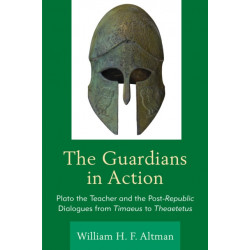
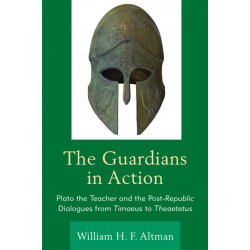
The Guardians in Action: Plato the Teacher and the Post-Republic Dialogues from Timaeus to Theaetetus (Bog, Hardback, Engelsk)
In this book, William H. F. Altman considers the pedagogical connections behind the post-Republic dialogues from Timaeus to Theaetetus in the context of their Reading Order.
Levering: Print on Demand (forvent 14 - 30 hverdage) -
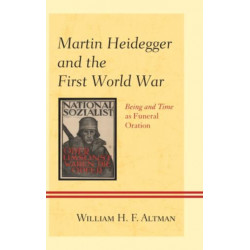
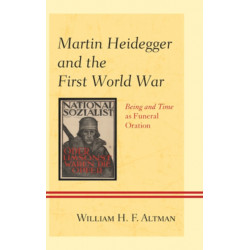
Martin Heidegger and the First World War: Being and Time as Funeral Oration (Bog, Hardback, Engelsk)
In a new approach to a vexing problem in modern philosophy, William H. F. Altman shows that Heidegger’s decision to join the Nazis in 1933 can only be understood in the context of his complicated relationship with the Great War.
Levering: Print on Demand (forvent 14 - 30 hverdage) -
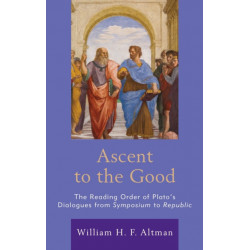
Ascent to the Good: The Reading Order of Plato’s Dialogues from Symposium to Republic (Bog, Hardback, Engelsk)
This study reconsiders Plato’s “Socratic” dialogues—Charmides, Laches, Lysis, Euthydemus, Gorgias, and Meno—as parts... Læs mere
Levering: Print on Demand (forvent 14 - 30 hverdage) -
The Revival of Platonism in Cicero's Late Philosophy: Platonis aemulus and the Invention of Cicero (Bog, Paperback / softback, Engelsk)
This book argues that Cicero deserves to be spoken of with more respect and to be studied with greater... Læs mere
Levering: Print on Demand (forvent 14 - 30 hverdage) -
Martin Heidegger and the First World War: Being and Time as Funeral Oration (Bog, Paperback / softback, Engelsk)
In a new approach to a vexing problem in modern philosophy, William H. F. Altman shows that Heidegger’s decision to join the Nazis in 1933 can only be understood in the context of his complicated relationship with the Great War.
Levering: Print on Demand (forvent 14 - 30 hverdage) -
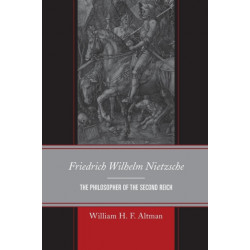
Friedrich Wilhelm Nietzsche: The Philosopher of the Second Reich (Bog, Paperback / softback, Engelsk)
By subjecting Nietzsche to a Platonic critique, author William H. F. Altman punctures his “pose of untimeliness” while making use of... Læs mere
Levering: Print on Demand (forvent 14 - 30 hverdage) -
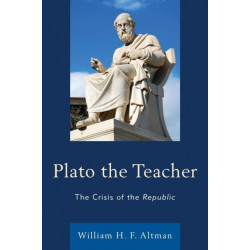
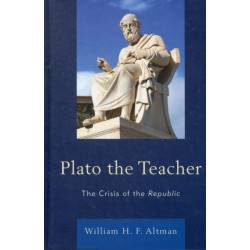
Plato the Teacher: The Crisis of the Republic (Bog, Paperback / softback, Engelsk)Levering: Print on Demand (forvent 14 - 30 hverdage)
-
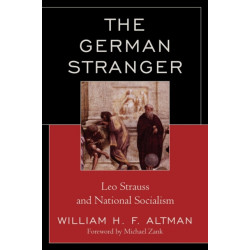
The German Stranger: Leo Strauss and National Socialism (Bog, Paperback / softback, Engelsk)Levering: Print on Demand (forvent 14 - 30 hverdage)
-
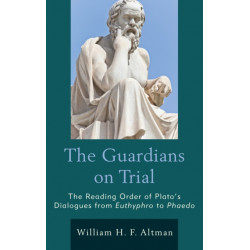
The Guardians on Trial: The Reading Order of Plato's Dialogues from Euthyphro to Phaedo (Bog, Hardback, Engelsk)
In this book, William H. F. Altman argues that it is not order of composition but reading order that makes... Læs mere
Levering: Print on Demand (forvent 14 - 30 hverdage) -
Plato the Teacher: The Crisis of the Republic (Bog, Hardback, Engelsk)Levering: Print on Demand (forvent 14 - 30 hverdage)
-
The Guardians in Action: Plato the Teacher and the Post-Republic Dialogues from Timaeus to Theaetetus (Bog, Paperback / softback, Engelsk)
In this book, William H. F. Altman considers the pedagogical connections behind the post-Republic dialogues from Timaeus to Theaetetus in the context of their Reading Order.
Levering: Print on Demand (forvent 14 - 30 hverdage)