Arc Humanities Press Forlag
Visning: Type : Alle | Sprog : Alle | Format : Alle
-
Waldef: A French Romance from Medieval England (Bog, Hardback, Engelsk)
The first ever English translation of Le Roman de Waldef, a significant early thirteenth-century representative of the French literature of early medieval England, and a fast-moving romance set against a history of pre-Conquest England.
Levering: Skaffevare (forvent 14 - 30 hverdage) -
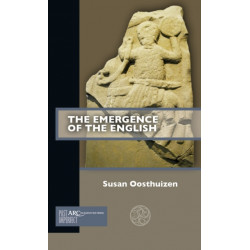
The Emergence of the English (Bog, Paperback / softback, Engelsk)
This book critically evaluates the prevailing idea that north-west European migration was central to the transformation from post-Roman to 'Anglo-Saxon' society in Britain, and explores the increasing evidence for more evolutionary change.
Levering: 6 - 9 hverdage -
Fu Poetry Along the Silk Roads: Third-Century Chinese Writings on Exotica (Bog, Hardback, Engelsk)
An exploration of the nature of cultural exchange of the exotic and Chinese influence in world culture through the study of yongwufu (rhapsodies on objects) and the connection between the early Silk Roads and Chinese poetic writing of the third century.
Levering: Skaffevare (forvent 14 - 30 hverdage) -
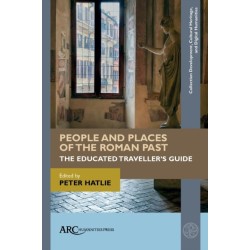
People and Places of the Roman Past: The Educated Traveller's Guide (Bog, Paperback / softback, Engelsk)
Covering the history and cultural heritage of Rome from ancient through early modern times, this book examines the Eternal City through... Læs mere
Levering: 6 - 9 hverdage -
Medieval Sicily, al-Andalus, and the Maghrib: Writing in Times of Turmoil (Bog, Hardback, Engelsk)
This volume explores a millennium of multilingual literary exchanges among the peoples of Sicily, the Iberian Peninsula, and North Africa: the Maghrib, or westernmost strongholds of medieval Islam.
Levering: Skaffevare (forvent 14 - 30 hverdage) -
Princesses Mary and Elizabeth Tudor and the Gift Book Exchange (Bog, Hardback, Engelsk)
This study examines the gift book practices of Elizabeth and Mary Tudor, both queens of England; it begins with pre-accession dedications... Læs mere
Levering: Skaffevare (forvent 14 - 30 hverdage) -
Slaveries of the First Millennium (Bog, Paperback / softback, Engelsk)
This book reinterprets the place of slavery in the transformation of the Roman Mediterranean into a world of medieval civilizations.
Levering: Skaffevare (forvent 14 - 30 hverdage) -
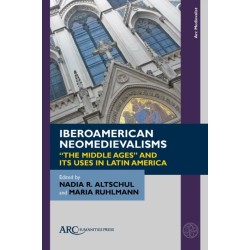
Iberoamerican Neomedievalisms: “The Middle Ages” and Its Uses in Latin America (Bog, Hardback, Engelsk)
The first ever volume fully dedicated to Iberoamerican neomedievalisms that examines the meanings and uses of “the Middle Ages” in Iberian America.
Levering: Skaffevare (forvent 14 - 30 hverdage) -
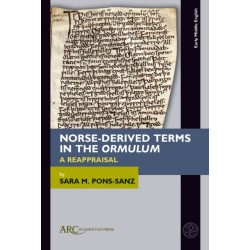
Norse-Derived Terms in the "Ormulum": A Reappraisal (Bog, Hardback, Engelsk)
A comprehensive and up-to-date re-examination of over 500 Norse-derived terms in the Ormulum, building on the Gersum typology, exploring the impact of Anglo-Scandinavian on early English.
Levering: Skaffevare (forvent 14 - 30 hverdage) -
Europe and the End of Medieval Japan (Bog, Paperback / softback, Engelsk)
This book looks afresh at a key stage in Japan’s global transformation from medieval to early modern.
Levering: Skaffevare (forvent 14 - 30 hverdage) -
Pre-Christian Baltic Religion and Belief (Bog, Paperback / softback, Engelsk)
Prussia, Lithuania, and Latvia were among the last places in Europe to be Christianized. Focusing on the deities, sacred places, and sacred rites of the Balts, this book introduces the religious world of some of Europe’s last pagan peoples.
Levering: Skaffevare (forvent 14 - 30 hverdage) -
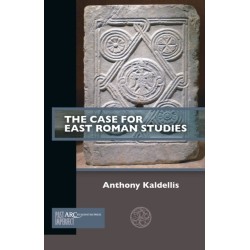
The Case for East Roman Studies (Bog, Paperback / softback, Engelsk)
A growing number of historians have realized that the terms “Byzantium” and “the Byzantines” distort the reality and identity of the society being studied. Anthony Kaldellis proposes a name change for the field of Byzantine Studies.
Levering: Skaffevare (forvent 14 - 30 hverdage)