Central European University Press Forlag
-
The Perils of Race-Thinking: A Portrait of Ale. Hrdlicka (Bog, Hardback, Engelsk)
This book mercilessly dismantles Hrdli?ka's racial system and exposes it as mysticism dressed up in the language of science.
Levering: Skaffevare (forvent 14 - 30 hverdage) -
Post-World War One Plebiscites and Their Legacies: Exploring the Right of Self-Determination (Bog, Hardback, Engelsk)
Provides a historical analysis of post-World War One plebiscites as epitomes of direct democracy and... Læs mere
Levering: Skaffevare (forvent 14 - 30 hverdage) -
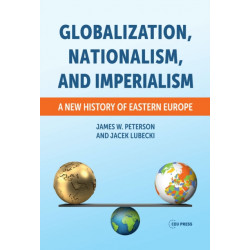
Globalization, Nationalism, and Imperialism: A New History of Eastern Europe (Bog, Hardback, Engelsk)
The authors retell the political and economic history of East-Central Europe, the post-communist Balkans, and the Baltic states through the lens of three competing forces—territorial imperialism, globalization, and nationalism.
Levering: Skaffevare (forvent 14 - 30 hverdage) -
Engineering European Unity: The Quest for the Right Solution Across Centuries (Bog, Hardback, Engelsk)
Éva B?ka surveys historical attempts at European supranational governance from the Middle Ages through the Lisbon Treaty... Læs mere
Levering: 6 - 9 hverdage -
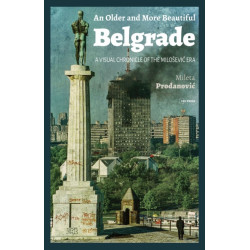
An Older and More Beautiful Belgrade: A Visual Chronicle of the Milo¿evic Era (Bog, Hardback, Engelsk)
Examines the urban collapse and transformation of Belgrade during the Miloševi? years in the 1990s, using theoretical frameworks from cultural anthropology, history, memory studies, art history, and urbanism to analyze changes to the built environment and urban landscape.
Levering: Skaffevare (forvent 14 - 30 hverdage) -
More Nights than Days: A Survey of Writings of Child Genocide Survivors (Bog, Hardback, Engelsk)
Explores the unique experiences of 91 child survivors from the Holocaust and genocides in Cambodia, Rwanda, and Bosnia, examining how children perceive traumatic events through their distinctive perspective and possess coping techniques that adults lack.
Levering: Skaffevare (forvent 14 - 30 hverdage) -
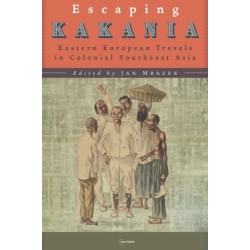
Escaping Kakania: Eastern European Travels in Colonial Southeast Asia (Bog, Hardback, Engelsk)
Escaping Kakania is about fascinating characters—soldiers, doctors, scientists, writers, painters—who traveled from their eastern European homelands to colonial Southeast Asia.
Levering: Skaffevare (forvent 14 - 30 hverdage) -
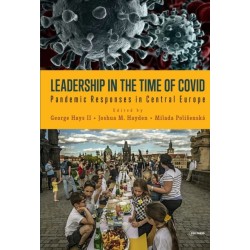
Leadership in the Time of Covid: Pandemic Responses in Central Europe (Bog, Hardback, Engelsk)
Examines how the Czech Republic, Hungary, Poland, and Slovakia (the Visegrad Four) responded to the Covid pandemic through their... Læs mere
Levering: Skaffevare (forvent 14 - 30 hverdage) -
Democracy Fatigue: An East European Epidemy (Bog, Hardback, Engelsk)
Examines how the 2008-2012 economic crisis and subsequent austerity measures demanded by the IMF and EU led to the rise of populist forces that challenge... Læs mere
Levering: 6 - 9 hverdage -
Women in Romania’s First World War (Bog, Hardback, Engelsk)
Examines the contribution of Romanian women to the national project during World War I (1916-1918), including the roles of bourgeois and middle-class women, rural... Læs mere
Levering: Skaffevare (forvent 14 - 30 hverdage) -
Belarusian Nation-Building in Times of War and Revolution (Bog, Hardback, Engelsk)
Examines how the proclamation of Belarusian independence on March 25, 1918, and the rival establishment of the Soviet Belarusian state on January 1, 1919, created two distinct and mutually exclusive national myths that continue to define contemporary Belarusian society.
Levering: Skaffevare (forvent 14 - 30 hverdage) -
The Many Lives of a Jesuit, Freemason, and Philanthropist: The Story of Tohotom Nagy (Bog, Hardback, Engelsk)
The life of Töhötöm Nagy (1908–1979), Jesuit, Mason, and secret service agent, offers fascinating insights into interwar Hungary, the Catholic Church and Vatican diplomacy, Freemasonry, and the activities of communist state security service.
Levering: Skaffevare (forvent 14 - 30 hverdage)