Central European University Press Forlag
-
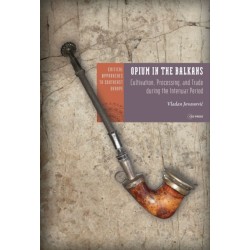
Opium in the Balkans: Cultivation, Processing, and Trade during the Interwar Period (Bog, Hardback, Engelsk)
This book focuses on the cultivation, production, and trafficking of Macedonian raw opium, tracing and contextualizing... Læs mere
Levering: 6 - 9 hverdage -
Christian Networks in the Ottoman Empire: A Transnational History (Bog, Hardback, Engelsk)Levering: Skaffevare (forvent 14 - 30 hverdage)
-
Negotiating Identity and Collective Memory in Czech Silesia: Negotiating German Past and Czech Present (Bog, Hardback, Engelsk)
This study offers an ethnographic exploration of how memory, identity, and history are contested in the city of Opava and the surrounding Hlu.ín area – former sites of Austrian and Prussian rule shaped by post-imperial legacies, displacement, and shifting national narratives.
Levering: 6 - 9 hverdage -
Monuments and Territory: War Memorials in Russian-Occupied Ukraine (Bog, Hardback, Engelsk)
Explores questions around why from the very first weeks of Russia’s large-scale attack on Ukraine in February 2022, Russian soldiers, politicians, and proxy administrators expended considerable effort interacting with monuments on newly occupied territory.
Levering: 6 - 9 hverdage -
Yiddish Culture in Greater Romania (1918-1940) (Bog, Hardback, Engelsk)
This volume examines the socio-cultural mechanisms responsible for restructuring the Yiddish cultural life after the changes brought about by the end of World War I and the creation of Greater Romania.
Levering: 6 - 9 hverdage -
The Croatian Diaspora in Argentina: From Martyrs to Memory Guardians (Bog, Hardback, Engelsk)
This study traces the Croatian diaspora’s evolution from its founding to the present. Initially marked by trauma—military defeat, exile, and reprisals—the community redefined its identity within Cold War geopolitics, first as victims of communism, later as champions of democracy.
Levering: Skaffevare (forvent 14 - 30 hverdage) -
Governing Divided Societies: Habsburg Austria’s Democratic Legacy and the Czechoslovak First Republic (Bog, Hardback, Engelsk)
The authors of this volume challenge conventional notions about Habsburg and Czechoslovak politics, arguing that they were more democratic than they often appear. They use the consociational model of democracy as a means of combining political science and history.
Levering: Kan forudbestilles (Forventes d. 31-08-2026) -
State-building: A Comparative Study of Ukraine, Lithuania, Belarus, and Russia (Bog, Hardback, Engelsk)
Looks at the process of state-building in Ukraine, Lithuania, Belarus, and Russia from a political economy and institutional perspective.
Status: Skaffevare (forvent 3 - 8 uger) -
Towns between Empires: Good Governance and “Police” in Case Studies from Transylvania, Wallachia, and Moldavia, 1500s-1800s (Bog, Hardback, Engelsk)
This volume analyses urban governance systems in early modern Romanian territories, examining how towns navigated between imperial authorities while developing innovative administrative solutions to political, social, and economic challenges.
Status: Skaffevare (forvent 3 - 8 uger) -
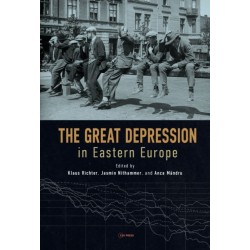
The Great Depression in Eastern Europe (Bog, Hardback, Engelsk)
As the centenary of the Great Depression approaches, this book offers a historical study of its impact on Eastern Europe.
Status: Skaffevare (forvent 3 - 8 uger) -
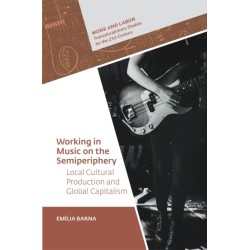
Working in Music on the Semiperiphery: Local Cultural Production and Global Capitalism (Bog, Hardback, Engelsk)
While music as labor feeds into the capitalist cultural industries, this book proves that in this sector informality greatly permeates and governs power relations and the allocations of resources.
Status: Skaffevare (forvent 3 - 8 uger) -
Liberalism After Communism: The Implications of the 1993 Elections to the Federal Assembly (Bog, Hardback, Engelsk)
Examines the emergence and development of liberal political thought in Central Europe, particularly Poland, providing a comprehensive account of protoliberal and liberal thinking before and after 1989,.
Status: Skaffevare (forvent 3 - 8 uger)