Harvard University Press Forlag
-
Roman History, Volume III: Books 36–40 (Bog, Hardback, Engelsk)
Dio Cassius (Cassius Dio), ca. AD 150–235, was born in Bithynia. Dio’s work is a vital source for the last years of the Roman republic and the first four Roman emperors.
Levering: 6 - 9 hverdage -
Frogs. Assemblywomen. Wealth (Bog, Hardback, Engelsk)
Aristophanes has been admired since antiquity for his wit, fantasy, language, and satire. Traditional Aeschylus and modern Euripides compete in Frogs. In Assemblywomen,... Læs mere
Levering: 6 - 9 hverdage -
The Learned Banqueters, Volume I: Books 1–3.106e (Bog, Hardback, Engelsk)
A series of dinner parties at which the guests quote extensively from Greek literature. The work provides quotations from works now lost, and preserves information about wide range of information about Greek culture.
Levering: 6 - 9 hverdage -
Metamorphoses (The Golden Ass), Volume II: Books 7–11 (Bog, Hardback, Engelsk)
The Metamorphoses (Golden Ass) of Apuleius is a romance combining realism and magic. Lucius wants the sensations of a bird, but by pharmaceutical... Læs mere
Levering: 6 - 9 hverdage -
Thebaid, Volume II: Books 8–12. Achilleid (Bog, Hardback, Engelsk)
Greek literary education and Roman political reality are evident in the poetry of Statius. His Silvae are thirty-two occasional poems. His masterpiece, the epic... Læs mere
Levering: Skaffevare (forvent 14 - 30 hverdage) -
Plutarch (ca. AD 45–120) wrote on many subjects. His extant works other... Læs mere
Levering: Skaffevare (forvent 14 - 30 hverdage) -
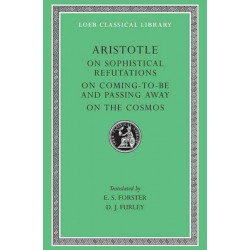
On Sophistical Refutations. On Coming-To-Be and Passing Away. On the Cosmos (Bog, Hardback, Engelsk)
Nearly all the works Aristotle (384–322 BC) prepared for publication are lost; the priceless ones extant are lecture-materials, notes, and memoranda (some are spurious). They can be categorized as practical; logical; physical; metaphysical; on art; other; fragments.
Levering: 6 - 9 hverdage -
The The Vulgate Bible: Volume II The Historical Books: Douay-Rheims Translation (Bog, Hardback, Engelsk)
This second volume of a projected six-volume set of the complete Vulgate Bible presents the Historical Books of the... Læs mere
Levering: 6 - 9 hverdage -
Casina. The Casket Comedy. Curculio. Epidicus. The Two Menaechmuses (Bog, Hardback, Engelsk)
The comedies of Plautus, who brilliantly adapted Greek plays for Roman audiences ca. 205–184 BC, are the earliest Latin works to survive... Læs mere
Levering: 6 - 9 hverdage -
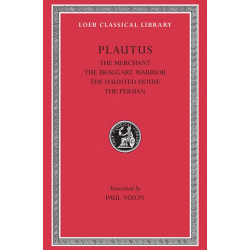
The Merchant. The Braggart Soldier. The Ghost. The Persian (Bog, Hardback, Engelsk)
The comedies of Plautus, who brilliantly adapted Greek plays for Roman audiences ca. 205–184 BC, are the earliest Latin works to survive complete... Læs mere
Levering: 6 - 9 hverdage -
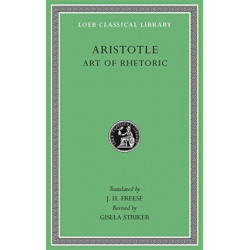
Art of Rhetoric (Bog, Hardback, Engelsk)
Aristotle (384–322 BC), the great Greek thinker, researcher, and educator, ranks among the most important and influential figures in the history of philosophy, theology, and science.... Læs mere
Levering: 6 - 9 hverdage