Harvard University Press Forlag
-
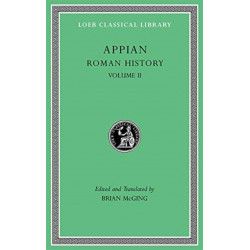
Roman History, Volume II (Bog, Hardback, Engelsk)
Appian (ca. AD 95–161) is a principal source for the history of the Roman Republic. His theme is the process by which Rome achieved her contemporary prosperity, and his method is... Læs mere
Levering: 6 - 9 hverdage -
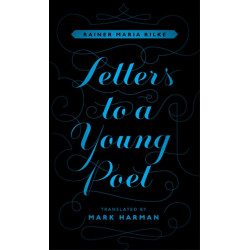
Letters to a Young Poet (Bog, Hardback, Engelsk)
These ten letters by Rainer Maria Rilke speak directly to the young, offering unguarded thoughts on such diverse subjects as creativity, solitude, self-reliance, living with... Læs mere
Levering: 6 - 9 hverdage -
Six Drawing Lessons (Bog, Hardback, Engelsk)
Art, William Kentridge says, is its own form of knowledge. It does not simply supplement the real world, and cannot be purely understood in the rational terms of academic... Læs mere
Levering: 6 - 9 hverdage -
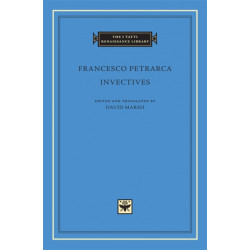
Invectives (Bog, Hardback, Engelsk)
Francesco Petrarca (1304–1374), one of the greatest Italian poets, was also a leader in the Renaissance movement to revive ancient Roman language and literature. This new critical edition of... Læs mere
Levering: 6 - 9 hverdage -
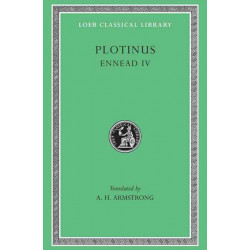
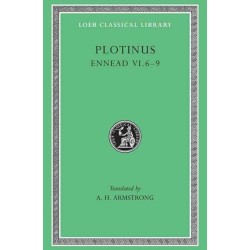
Ennead VI.6–9 (Bog, Hardback, Engelsk)
Plotinus was the first and greatest of Neoplatonic philosophers. His writings were edited by his disciple Porphyry, who published them sometime between AD 301 and 305 in six sets of... Læs mere
Levering: 6 - 9 hverdage -
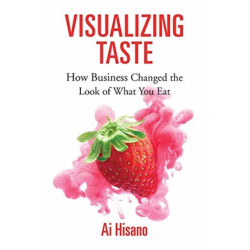
Visualizing Taste: How Business Changed the Look of What You Eat (Bog, Hardback, Engelsk)
Ai Hisano reveals how the food industry capitalized on color, fashioning a visual vocabulary that shapes what we think of the food we eat.... Læs mere
Levering: 6 - 9 hverdage -
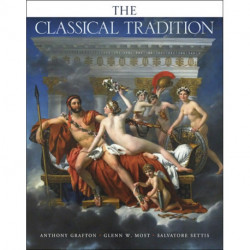
The Classical Tradition (Bog, Hardback, Engelsk)
The legacy of ancient Greece and Rome has been imitated, resisted, misunderstood, and reworked by every culture that followed. In this volume, some five hundred articles by a... Læs mere
Levering: Skaffevare (forvent 14 - 30 hverdage) -
Emma: An Annotated Edition (Bog, Hardback, Engelsk)
Perhaps the most accomplished of Jane Austen’s novels, Emma is also, after Pride and Prejudice, her most popular. Film and television adaptations testify to the world’s... Læs mere
Levering: 6 - 9 hverdage -
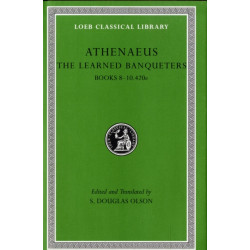
The Learned Banqueters, Volume IV: Books 8–10.420e (Bog, Hardback, Engelsk)
A series of dinner parties at which the guests quote extensively from Greek literature. The work provides quotations from works now lost, and preserves information about wide range of information about Greek culture.
Levering: 6 - 9 hverdage -
Naming Infinity: A True Story of Religious Mysticism and Mathematical Creativity (Bog, Hardback, Engelsk)
In 1913, Russian marines stormed an Orthodox monastery at Mt. Athos, Greece to haul off monks engaged in a dangerously... Læs mere
Levering: Skaffevare (forvent 14 - 30 hverdage) -
The The Vulgate Bible: Douay-Rheims Translation (Bog, Hardback, Engelsk)
The Vulgate Bible was used from the early Middle Ages through the 12th century in the Western European Christian (and, later, Catholic)... Læs mere
Levering: 6 - 9 hverdage