Harvard University Press Forlag
-
Punica, Volume I: Books 1–8 (Bog, Hardback, Engelsk)
Silius Italicus composed an epic Punica in 17 books on the Second Punic War. His poem relies largely on Livy’s prose for facts. It also echoes poets, especially Virgil, and employs techniques traditional in Latin epic.
Levering: 6 - 9 hverdage -
Early Greek Philosophy, Volume VIII: Sophists, Part 1 (Bog, Hardback, Engelsk)
Volume VIII of the nine-volume Loeb edition of Early Greek Philosophy includes the so-called sophists Protagoras, Gorgias, Prodicus, Thrasymachus, and Hippias, along with testimonia relating to the life, views, and argumentative style of Socrates.
Levering: 6 - 9 hverdage -
Letters to Friends, Volume I: Letters 1–113 (Bog, Hardback, Engelsk)
Cicero’s letters to friends span the period from 62 BC, when his political career was at its peak, to 43 BC, when he was put to death by the victorious Triumvirs.
Levering: 6 - 9 hverdage -
Why People Die by Suicide (Bog, Paperback / softback, Engelsk)
Drawing on extensive clinical and epidemiological evidence, as well as personal experience, Thomas Joiner provides the most coherent and persuasive explanation ever given of why and how people overcome life's strongest instinct, self-preservation.
Levering: 6 - 9 hverdage -
The Idea of the Muslim World: A Global Intellectual History (Bog, Paperback / softback, Engelsk)Levering: 6 - 9 hverdage
-
The Picture of Dorian Gray: An Annotated, Uncensored Edition (Bog, Hardback, Engelsk)
The Picture of Dorian Gray altered the way Victorians understood the world they inhabited, heralding the end of a repressive era. Now, more than 120 years after Wilde handed... Læs mere
Levering: 6 - 9 hverdage -
The Gnostics: Myth, Ritual, and Diversity in Early Christianity (Bog, Paperback / softback, Engelsk)
This book offers an illuminating discussion of recent scholarly debates over the concept of 'Gnosticism' and the nature of early Christian diversity.
Levering: 6 - 9 hverdage -
Walter Benjamin: Selected Writings (Bog, Paperback / softback, Engelsk)
This first volume shows that even as a young man Walter Benjamin possessed astonishing intellectual range and depth. His topics here include poetry and fiction, drama, philosophy, history, religion, love, violence, morality, mythology, painting, and much more.
Levering: 6 - 9 hverdage -
Virtual Competition: The Promise and Perils of the Algorithm-Driven Economy (Bog, Paperback / softback, Engelsk)Levering: 6 - 9 hverdage
-
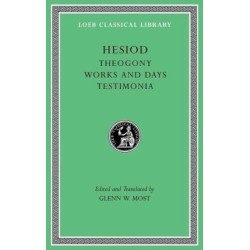
Theogony. Works and Days. Testimonia (Bog, Hardback, Engelsk)
The two extant poems of Hesiod (eighth or seventh century BC) are Theogony, in which he charts the history of the divine world, and Works and Days, in which he delivers moral precepts and practical advice for the world of men.
Levering: 6 - 9 hverdage -
Clouds. Wasps. Peace (Bog, Hardback, Engelsk)
Aristophanes has been admired since antiquity for his wit, fantasy, language, and satire. Socrates’s “Thinkery” is at the center of Clouds, which spoofs untraditional techniques for... Læs mere
Levering: 6 - 9 hverdage -
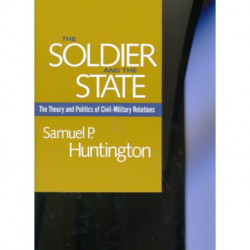
The Soldier and the State: The Theory and Politics of Civil–Military Relations (Bog, Paperback / softback, Engelsk)
In this classic work, Huntington challenges old assumptions and ideas on the role of the military in society. Stressing the... Læs mere
Levering: 6 - 9 hverdage