Harvard University Press Forlag
-
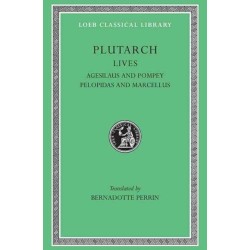
Lives, Volume V: Agesilaus and Pompey. Pelopidas and Marcellus (Bog, Hardback, Engelsk)
Plutarch (ca. AD 45–120) wrote on many subjects. His forty-six Parallel Lives are biographies planned to be ethical examples in pairs, one... Læs mere
Levering: 6 - 9 hverdage -
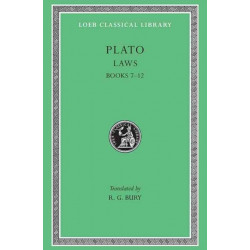
Laws, Volume II: Books 7–12 (Bog, Hardback, Engelsk)
The great Athenian philosopher Plato was born in 427 BC and lived to be eighty. Acknowledged masterpieces among his works are the Symposium, which explores love in its many... Læs mere
Levering: 6 - 9 hverdage -
The Art of Love and Other Poems: Cosmetics. Remedies for Love. Ibis. Walnut Tree. Sea Fishing. Consolation (Bog, Hardback, Engelsk)
In the didactic poetry of Face Cosmetics, Art of Love, and Remedies for Love, Ovid (43 BC–AD 17) demonstrates abstrusity and wit. His Ibis is an elegiac curse-poem. Nux, Halieutica, and Consolatio ad Liviam are poems now judged not to be by Ovid.
Levering: 6 - 9 hverdage -
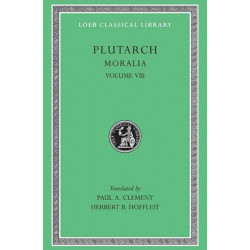
Moralia, Volume VIII: Table-talk, Books 1–6 (Bog, Hardback, Engelsk)
Plutarch (ca. AD 45–120) wrote on many subjects. His extant works other than the Parallel Lives are varied, about sixty in number, and known as the Moralia... Læs mere
Levering: 6 - 9 hverdage -
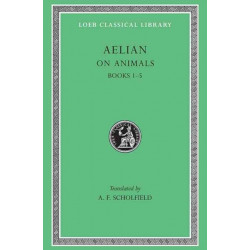
On Animals, Volume I: Books 1–5 (Bog, Hardback, Engelsk)
In On the Characteristics of Animals, Aelian (ca. 170–after AD 230) collects facts and fables about the animal kingdom and invites the reader to ponder contrasts between human and animal behavior.
Levering: 6 - 9 hverdage -
Stratagems. Aqueducts of Rome (Bog, Hardback, Engelsk)
Frontinus’ Stratagems, written after AD 84, gives examples of military stratagems and discipline from Greek and Roman history, for the instruction of Roman officers. The... Læs mere
Levering: 6 - 9 hverdage -
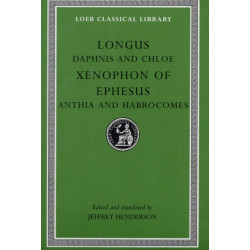
Daphnis and Chloe. Anthia and Habrocomes (Bog, Hardback, Engelsk)
Longus’ Daphnis and Chloe (second or early third century AD), in which an idealized pastoral environment provides the setting as a boy and girl discover their... Læs mere
Levering: 6 - 9 hverdage -
Library of History, Volume IV: Books 9–12.40 (Bog, Hardback, Engelsk)
Library of History is in three parts: mythical history to the Trojan War; history to Alexander’s death (323 BC); history to 54 BC. Books 1–5 and 11–20 survive complete, the rest in fragments.
Levering: 6 - 9 hverdage -
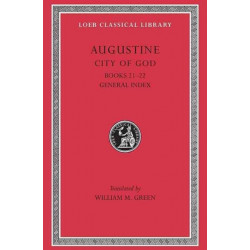
City of God, Volume VII: Books 21–22. General Index (Bog, Hardback, Engelsk)
On the City of God unfolds God’s action in the progress of the world’s history, and propounds the superiority of Christian beliefs over pagan in adversity.
Levering: Skaffevare (forvent 14 - 30 hverdage) -
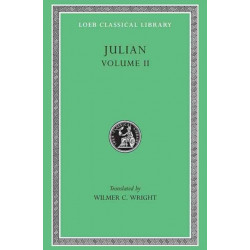
Julian, Volume II: Orations 6–8. Letters to Themistius- to the Senate and People of Athens- to a Priest. The Caesars. Misopogon (Bog, Hardback, Engelsk)
The surviving works of the Roman Emperor Julian “the Apostate” (AD 331 or 332–363)... Læs mere
Levering: 6 - 9 hverdage -
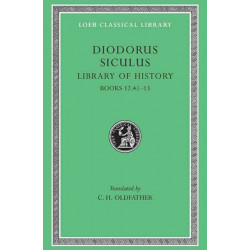
Library of History, Volume V: Books 12.41–13 (Bog, Hardback, Engelsk)
Library of History is in three parts: mythical history to the Trojan War; history to Alexander’s death (323 BC); history to 54 BC. Books 1–5 and 11–20 survive complete, the rest in fragments.
Levering: 6 - 9 hverdage -
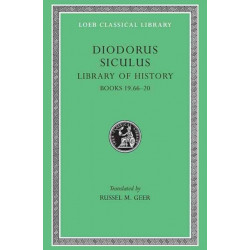
Library of History, Volume X: Books 19.66–20 (Bog, Hardback, Engelsk)
Library of History is in three parts: mythical history to the Trojan War; history to Alexander’s death (323 BC); history to 54 BC. Books 1–5 and 11–20 survive complete, the rest in fragments.
Levering: 6 - 9 hverdage