Harvard University Press Forlag
-
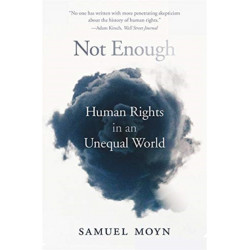
Not Enough: Human Rights in an Unequal World (Bog, Paperback / softback, Engelsk)Levering: 6 - 9 hverdage
-
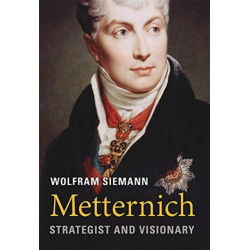
Metternich: Strategist and Visionary (Bog, Hardback, Engelsk)
Wolfram Siemann tells a new story of Clemens von Metternich, the Austrian at the center of nineteenth-century European diplomacy. Known as a conservative and an... Læs mere
Levering: 6 - 9 hverdage -
Power after Carbon: Building a Clean, Resilient Grid (Bog, Hardback, Engelsk)
The electricity sector is facing its toughest test: eliminate carbon emissions while meeting much larger demands for power and adjusting to massive... Læs mere
Levering: 6 - 9 hverdage -
Miscellanies (Bog, Hardback, Engelsk)
In the Miscellanies, the great Italian Renaissance scholar-poet Angelo Poliziano penned two sets of mini-essays focused on lexical or textual problems. He solves these with his... Læs mere
Levering: 6 - 9 hverdage -
Description of Greece, Volume II: Books 3–5 (Bog, Hardback, Engelsk)
Pausanias, one of the Roman world’s great travelers, sketches in Description of Greece the history, geography, landmarks, legends, and religious cults of all... Læs mere
Levering: 6 - 9 hverdage -
Generation of Animals (Bog, Hardback, Engelsk)
Nearly all the works Aristotle (384–322 BC) prepared for publication are lost; the priceless ones extant are lecture-materials, notes, and memoranda (some are spurious). They can be categorized as practical; logical; physical; metaphysical; on art; other; fragments.
Levering: 6 - 9 hverdage -
Natural History, Volume VII: Books 24–27 (Bog, Hardback, Engelsk)
Pliny the Elder produced in his Natural History a vast compendium of Roman knowledge. Topics included are the mathematics and metrology of the universe; world... Læs mere
Levering: Skaffevare (forvent 14 - 30 hverdage) -
Moralia, Volume XIII: Part I: Platonic Essays (Bog, Hardback, Engelsk)
Plutarch (ca. AD 45–120) wrote on many subjects. His extant works other than the Parallel Lives are varied, about sixty in number, and known as the Moralia... Læs mere
Levering: 6 - 9 hverdage -
The Learned Banqueters, Volume III: Books 6–7 (Bog, Hardback, Engelsk)
A series of dinner parties at which the guests quote extensively from Greek literature. The work provides quotations from works now lost, and preserves information about wide range of information about Greek culture.
Levering: 6 - 9 hverdage -
Discourses 1–11 (Bog, Hardback, Engelsk)
Dio Chrysostom (AD ca. 40–ca. 120) was a rhetorician hostile to philosophers, whose Discourses reflect political or moral concerns. What survives of his works make him prominent in the revival of Greek literature in the late first and early second century AD.
Levering: 6 - 9 hverdage -
Discourses 61–80 (Bog, Hardback, Engelsk)
Dio Chrysostom (AD ca. 40–ca. 120) was a rhetorician hostile to philosophers, whose Discourses reflect political or moral concerns. What survives of his works make him prominent in the revival of Greek literature in the late first and early second century AD.
Levering: 6 - 9 hverdage -
Sufi Lyrics (Bog, Hardback, Engelsk)
The poetry of Bullhe Shah, which drew upon Sufi mysticism, is considered one of the glories of premodern Panjabi literature. His lyrics, famous for their vivid style and outspoken... Læs mere
Levering: 6 - 9 hverdage