Harvard University Press Forlag
-
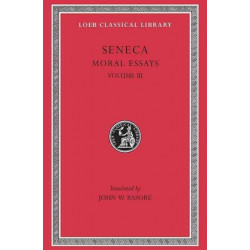
Moral Essays, Volume III: De Beneficiis (Bog, Hardback, Engelsk)
In Moral Essays, Seneca expresses his Stoic philosophy on providence, steadfastness, anger, forgiveness, consolation, the happy life, leisure, tranquility, the brevity of life, and gift-giving.
Levering: 6 - 9 hverdage -
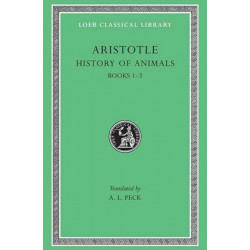
History of Animals, Volume I: Books 1–3 (Bog, Hardback, Engelsk)
Nearly all the works Aristotle (384–322 BC) prepared for publication are lost; the priceless ones extant are lecture-materials, notes, and memoranda (some are spurious). They can be categorized as practical; logical; physical; metaphysical; on art; other; fragments.
Levering: 6 - 9 hverdage -
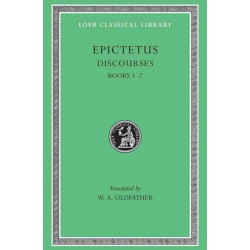
Discourses, Books 1–2 (Bog, Hardback, Engelsk)
Epictetus was a crippled Greek slave of Phrygia during Nero’s reign who heard lectures by the Stoic Musonius before he was freed. He is the author of Discourses and a smaller Enceiridion, a handbook that encapsulates the doctrines of the larger work.
Levering: 6 - 9 hverdage -
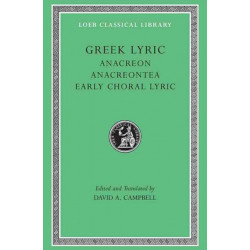
Greek Lyric, Volume II: Anacreon, Anacreontea, Choral Lyric from Olympus to Alcman (Bog, Hardback, Engelsk)
Anacreon was a composer of solo song. The Anacreonta are poems attributed to him in antiquity that are no longer considered genuine. Notable among the earliest writers of choral poetry are the seventh-century BC Spartans Alcman and Terpander.
Levering: 6 - 9 hverdage -
Natural History, Volume I: Books 1–2 (Bog, Hardback, Engelsk)
Pliny the Elder produced in his Natural History a vast compendium of Roman knowledge. Topics included are the mathematics and metrology of the universe; world... Læs mere
Levering: 6 - 9 hverdage -
Minor Latin Poets, Volume II: Florus. Hadrian. Nemesianus. Reposianus. Tiberianus. Dicta Catonis. Phoenix. Avianus. Rutilius Namatianus. Others (Bog, Hardback, Engelsk)
An anthology of Latin poetry produced during a period of four and a half centuries.
Levering: 6 - 9 hverdage -
Natural Questions, Volume I: Books 1–3 (Bog, Hardback, Engelsk)
Seneca devotes most of his Naturales Quaestiones to celestial phenomena. In Book 1 he discusses fires in the atmosphere; in 2, lightning and thunder; in 3, bodies of... Læs mere
Levering: 6 - 9 hverdage -
Fragmentary Republican Latin, Volume II: Ennius: Dramatic Fragments. Minor Works (Bog, Hardback, Engelsk)
Quintus Ennius (239–169 BC), widely regarded as the father of Roman literature, was instrumental in creating a new Roman... Læs mere
Levering: 6 - 9 hverdage -
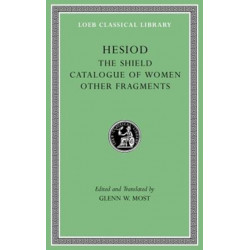
The Shield. Catalogue of Women. Other Fragments (Bog, Hardback, Engelsk)
Though attributed to Hesiod (eighth or seventh century BC) in antiquity, the Catalogue of Women, a presentation of legendary Greek heroes and episodes... Læs mere
Levering: 6 - 9 hverdage -
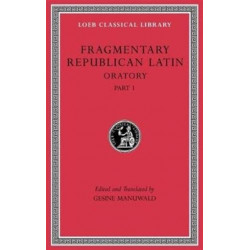
Fragmentary Republican Latin, Volume III: Oratory, Part 1 (Bog, Hardback, Engelsk)
Based on the critical edition of Malcovati, this three-volume Loeb edition of Roman Republican oratory begins with Ap. Claudius Caecus (340–273 BC)... Læs mere
Levering: 6 - 9 hverdage -
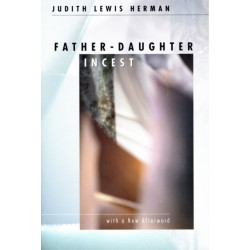
Father-Daughter Incest: With a New Afterword (Bog, Paperback / softback, Engelsk)
Through an intensive clinical study of 40 incest victims and numerous interviews with professionals in mental health, child protection, and law enforcement,... Læs mere
Levering: Skaffevare (forvent 14 - 30 hverdage) -
The Open Work (Bog, Paperback / softback, Engelsk)
This book is significant for its concept of “openness”—the artist's decision to leave arrangements of some constituents of a work to the public or to chance—and for its anticipation of two... Læs mere
Levering: 6 - 9 hverdage