Harvard University Press Forlag
-
Blockchain and the Law: The Rule of Code (Bog, Paperback / softback, Engelsk)Levering: 6 - 9 hverdage
-
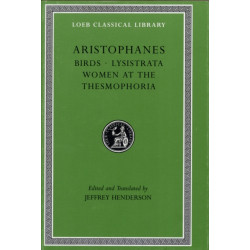
Birds. Lysistrata. Women at the Thesmophoria (Bog, Hardback, Engelsk)
Aristophanes has been admired since antiquity for his wit, fantasy, language, and satire. The protagonists of Birds create a utopian counter-Athens. In... Læs mere
Levering: 6 - 9 hverdage -
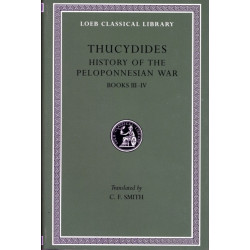
History of the Peloponnesian War, Volume II: Books 3–4 (Bog, Hardback, Engelsk)
The Peloponnesian War was really three conflicts (431–421, 415–413, and 413–404 BC) that Thucydides was still unifying into one account when he died... Læs mere
Levering: 6 - 9 hverdage -
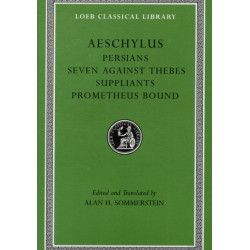
Persians. Seven against Thebes. Suppliants. Prometheus Bound (Bog, Hardback, Engelsk)
Aeschylus (ca. 525–456 BC) is the dramatist who made Athenian tragedy one of the world’s great art forms. Seven of his eighty or so plays... Læs mere
Levering: 6 - 9 hverdage -
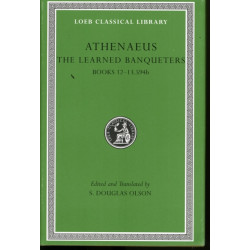
The Learned Banqueters, Volume VI: Books 12–13.594b (Bog, Hardback, Engelsk)
A series of dinner parties at which the guests quote extensively from Greek literature. The work provides quotations from works now lost, and preserves information about wide range of information about Greek culture.
Levering: 6 - 9 hverdage -
The Rise of China vs. the Logic of Strategy (Bog, Hardback, Engelsk)
As the rest of the world worries about what a future might look like under Chinese supremacy, Luttwak worries about China’s own future prospects. Applying the... Læs mere
Levering: 6 - 9 hverdage -
Lives, Volume VII: Demosthenes and Cicero. Alexander and Caesar (Bog, Hardback, Engelsk)
Plutarch (ca. AD 45–120) wrote on many subjects. His forty-six Parallel Lives are biographies planned to be ethical examples in pairs, one... Læs mere
Levering: 6 - 9 hverdage -
Ecclesiastical History, Volume II: Books 4–5. Lives of the Abbots. Letter to Egbert (Bog, Hardback, Engelsk)
Historical works by Bede (672 or 673–735) include his Ecclesiastical History of the English Nation, Lives of the Abbots of Bede’s monastery, accounts of Cuthbert, and the Letter to Egbert, Bede’s pupil.
Levering: 6 - 9 hverdage -
Nemean Odes. Isthmian Odes. Fragments (Bog, Hardback, Engelsk)
Pindar (ca. 518–438 BC), esteemed lyric poet, commemorates in complex verse the achievements of athletes and powerful rulers at the four great Panhellenic... Læs mere
Levering: 6 - 9 hverdage -
Astronomica (Bog, Hardback, Engelsk)
In Astronomica (first century AD), the earliest extant treatise we have on astrology, Manilius provides a poetic account of celestial phenomena and the signs of the zodiac. He also gives witty character sketches of persons born under certain stars.
Levering: 6 - 9 hverdage -
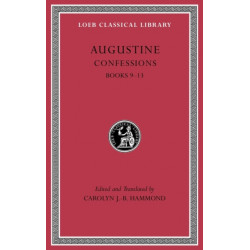
Confessions, Volume II: Books 9–13 (Bog, Hardback, Engelsk)
Confessions is a spiritual autobiography of Augustine’s early life, family, associations, and explorations of alternative religious and theological viewpoints as he... Læs mere
Levering: 6 - 9 hverdage -
History of Rome, Volume VI: Books 23–25 (Bog, Hardback, Engelsk)
Livy (Titus Livius, 64 or 59 BC–AD 12 or 17), the great Roman historian, presents a vivid narrative of Rome’s rise from the traditional foundation of the city in... Læs mere
Levering: 6 - 9 hverdage