Harvard University Press Forlag
Visning: Type : Alle | Sprog : Alle | Format : Alle
-
Athenian Constitution. Eudemian Ethics. Virtues and Vices (Bog, Hardback, Engelsk)
Nearly all the works Aristotle (384–322 BC) prepared for publication are lost; the priceless ones extant are lecture-materials, notes, and memoranda (some are spurious). They can be categorized as practical; logical; physical; metaphysical; on art; other; fragments.
Levering: 6 - 9 hverdage -
Letters to Atticus, Volume IV: Letters 282–426 (Bog, Hardback, Engelsk)
In letters to his friend Atticus, Cicero (106–43 BC) reveals himself as to no other of his correspondents except perhaps his brother, and vividly depicts a momentous period in Roman history, marked by the rise of Julius Caesar and the downfall of the Republic.
Levering: 6 - 9 hverdage -
Cyclops. Alcestis. Medea (Bog, Hardback, Engelsk)
Euripides (ca. 485–406 BC) has been prized in every age for his emotional and intellectual drama. Eighteen of his ninety or so plays survive complete, including Medea, Hippolytus,... Læs mere
Levering: 6 - 9 hverdage -
Command in War (Bog, Paperback / softback, Engelsk)
Many books have been written about strategy, tactics, and great commanders. This is the first book to deal exclusively with the nature of command itself, and to trace its development over two thousand years from ancient Greece to Vietnam.
Levering: 6 - 9 hverdage -
Lucian (ca. AD 120–190), apprentice sculptor then traveling rhetorician,... Læs mere
Levering: 6 - 9 hverdage -
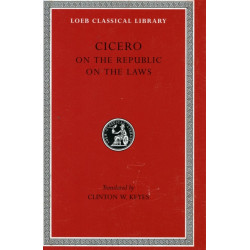
On the Republic. On the Laws (Bog, Hardback, Engelsk)
We know more of Marcus Tullius Cicero (106–43 BC), lawyer, orator, politician and philosopher, than of any other Roman. Besides much else, his work conveys the turmoil of his... Læs mere
Levering: Skaffevare (forvent 14 - 30 hverdage) -
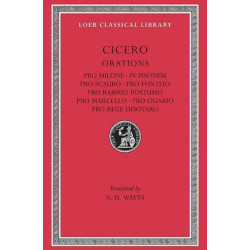
Pro Milone. In Pisonem. Pro Scauro. Pro Fonteio. Pro Rabirio Postumo. Pro Marcello. Pro Ligario. Pro Rege Deiotaro (Bog, Hardback, Engelsk)
We know more of Marcus Tullius Cicero (106–43 BC), lawyer, orator, politician and philosopher,... Læs mere
Levering: 6 - 9 hverdage -
Memorable Doings and Sayings, Volume II: Books 6–9 (Bog, Hardback, Engelsk)
Valerius Maximus compiled his handbook of notable deeds and sayings in the reign of Tiberius (AD 14–37). His professedly practical work contains a clear moral element and is informative about first-century AD Roman attitudes toward religion and morality.
Levering: 6 - 9 hverdage -
History of the Wars, Volume I: Books 1–2 (Bog, Hardback, Engelsk)
History of the Wars by Procopius (late fifth century to after AD 558) consists largely of sixth-century military history, with much information about peoples,... Læs mere
Levering: 6 - 9 hverdage -
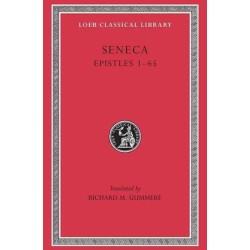
Epistles, Volume I: Epistles 1–65 (Bog, Hardback, Engelsk)
In 124 epistles Seneca (ca. 4 BC–AD 65) writes to Lucilius, occasionally about technical problems of philosophy, but more often in a relaxed style about moral and ethical... Læs mere
Levering: 6 - 9 hverdage -
History of the Wars, Volume IV: Books 6.16–7.35 (Bog, Hardback, Engelsk)
History of the Wars by Procopius (late fifth century to after AD 558) consists largely of sixth-century military history, with much information about peoples,... Læs mere
Levering: 6 - 9 hverdage -
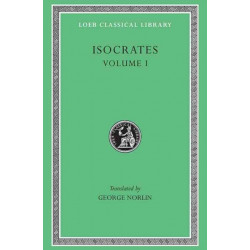
Isocrates, Volume I: To Demonicus. To Nicocles. Nicocles or the Cyprians. Panegyricus. To Philip. Archidamus (Bog, Hardback, Engelsk)
The importance of Isocrates (436–338 BC) for the study of Greek civilization of the fourth century BC is indisputable.... Læs mere
Levering: 6 - 9 hverdage