Harvard University Press Forlag
Visning: Type : Alle | Sprog : Alle | Format : Alle
-
Attic Nights, Volume III: Books 14–20 (Bog, Hardback, Engelsk)
Aulus Gellius in Attic Nights (Gellius began to write these pieces during stays in Athens) composed a collection of short chapters about notable events, words and... Læs mere
Levering: 6 - 9 hverdage -
The Lucian, Volume V: The Passing of Peregrinus. The Runaways. Toxaris or Friendship. The Dance. Lexiphanes. The Eunuch. Astrology. The Mistaken Critic. The Parliament of the Gods. The Tyrannicide. Disowned (Bog, Hardback, Engelsk)
Lucian (ca. AD 120–190), apprentice sculptor then traveling rhetorician,... Læs mere
Levering: 6 - 9 hverdage -
Natural History, Volume IV: Books 12–16 (Bog, Hardback, Engelsk)
Pliny the Elder produced in his Natural History a vast compendium of Roman knowledge. Topics included are the mathematics and metrology of the universe; world... Læs mere
Levering: 6 - 9 hverdage -
Lucian (ca. AD 120–190), apprentice sculptor then traveling rhetorician,... Læs mere
Levering: 6 - 9 hverdage -
The The Orator’s Education, Volume V: Books 11–12 (Bog, Hardback, Engelsk)
Quintilian, born in Spain about AD 35, became a renowned and successful teacher of rhetoric in Rome. In The Orator’s Education (Institutio Oratoria), a... Læs mere
Levering: 6 - 9 hverdage -
Apollonius of Tyana, Volume III: Letters of Apollonius. Ancient Testimonia. Eusebius’s Reply to Hierocles (Bog, Hardback, Engelsk)
In his Life of Apollonius Philostratus (second to third century AD) chronicles the miracles of first-century AD teacher, religious reformer, and perceived rival to Jesus of Nazareth, Apollonius of Tyana.
Levering: 6 - 9 hverdage -
Early Greek Philosophy, Volume VI: Later Ionian and Athenian Thinkers, Part 1 (Bog, Hardback, Engelsk)
Volume VI of the nine-volume Loeb edition of Early Greek Philosophy includes the later Ionian and Athenian thinkers Anaxagoras, Archelaus, and Diogenes of Apollonia, along with chapters on early Greek medicine and the Derveni Papyrus.
Levering: 6 - 9 hverdage -
Japan Rearmed: The Politics of Military Power (Bog, Hardback, Engelsk)
Modern Japan is not only responding to threats from North Korea and China but is also reevaluating its dependence on the United States, Sheila Smith shows.... Læs mere
Levering: 6 - 9 hverdage -
Marking Time: Art in the Age of Mass Incarceration (Bog, Hardback, Engelsk)
Nicole Fleetwood enters American prisons to explore the creativity flourishing there. Though isolated and degraded, incarcerated artists produce bold... Læs mere
Levering: 6 - 9 hverdage -
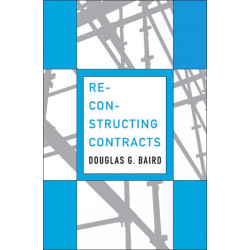
Reconstructing Contracts (Bog, Hardback, Engelsk)
Douglas Baird takes stock of the current state of contract doctrine and in the process reinvigorates the classic framework of Anglo-American contract law, showing that Oliver... Læs mere
Levering: 6 - 9 hverdage -
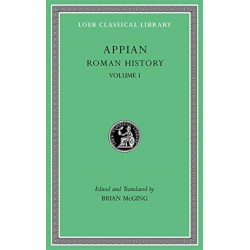
Roman History, Volume I (Bog, Hardback, Engelsk)
Appian (ca. AD 95–161) is a principal source for the history of the Roman Republic. His theme is the process by which Rome achieved her contemporary prosperity, and his method is... Læs mere
Levering: 6 - 9 hverdage -
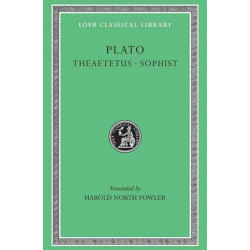
Theaetetus. Sophist (Bog, Hardback, Engelsk)
The great Athenian philosopher Plato was born in 427 BC and lived to be eighty. Acknowledged masterpieces among his works are the Symposium, which explores love in its many aspects,... Læs mere
Levering: 6 - 9 hverdage