Harvard University Press Forlag
Visning: Type : Alle | Sprog : Alle | Format : Alle
-
Mere Civility: Disagreement and the Limits of Toleration (Bog, Paperback / softback, Engelsk)Levering: 6 - 9 hverdage
-
Correspondence, Volume II (Bog, Hardback, Engelsk)
Fronto (c. 100–176 CE), a much admired orator and rhetorician, was befriended by the emperor Antoninus Pius and teacher of his adopted sons Marcus Aurelius and Lucius Verus. His... Læs mere
Levering: 6 - 9 hverdage -
Ennead III (Bog, Hardback, Engelsk)
Plotinus was the first and greatest of Neoplatonic philosophers. His writings were edited by his disciple Porphyry, who published them sometime between AD 301 and 305 in six sets of... Læs mere
Levering: 6 - 9 hverdage -
The Learned Banqueters, Volume V: Books 10.420e–11 (Bog, Hardback, Engelsk)
A series of dinner parties at which the guests quote extensively from Greek literature. The work provides quotations from works now lost, and preserves information about wide range of information about Greek culture.
Levering: 6 - 9 hverdage -
Walter Benjamin: Selected Writings (Bog, Paperback / softback, Engelsk)
Radical critic of a European civilization plunging into darkness, yet commemorator of the humane traditions of the old bourgeoisie--such was Walter Benjamin... Læs mere
Levering: 6 - 9 hverdage -
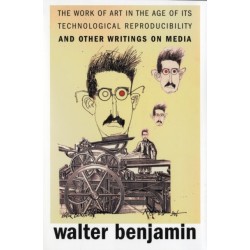
The Work of Art in the Age of Its Technological Reproducibility, and Other Writings on Media (Bog, Paperback / softback, Engelsk)
Benjamin’s famous “Work of Art“ essay sets out his boldest thoughts—on media and on culture in general. This book contains the second, and most daring, of the four versions of the “Work of Art“ essay—the one that addresses the utopian developments of the modern media.
Levering: 6 - 9 hverdage -
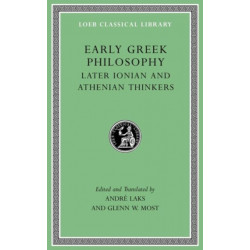
Early Greek Philosophy, Volume III: Early Ionian Thinkers, Part 2 (Bog, Hardback, Engelsk)
Volume III of the nine-volume Loeb edition of Early Greek Philosophy includes the early Ionian thinkers Xenophanes and Heraclitus.
Levering: 6 - 9 hverdage -
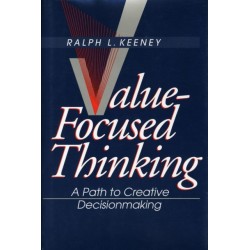
Value-Focused Thinking: A Path to Creative Decisionmaking (Bog, Paperback / softback, Engelsk)
Rather than placing emphasis on mechanics and fixed solutions, Keeney argues, we should focus on the bottom-line objectives that give... Læs mere
Levering: 6 - 9 hverdage -
Greek and Latin Poetry (Bog, Hardback, Engelsk)
Angelo Poliziano (1454–1494) was one of the great scholar-poets of the Renaissance and a leading figure in the Florence during the Age of the Medici. This I Tatti edition contains... Læs mere
Levering: 6 - 9 hverdage -
-
Experiments in Ethics (Bog, Paperback / softback, Engelsk)
Appiah explores how new empirical moral psychology relates to the age-old project of philosophical ethics, urging that the relation between empirical research and morality, now so... Læs mere
Levering: 6 - 9 hverdage -
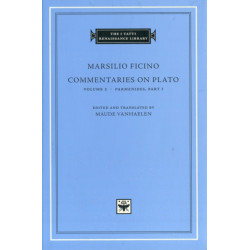
Commentaries on Plato: Volume 2 Parmenides (Bog, Hardback, Engelsk)
Marsilio Ficino, the Florentine scholar-philosopher-magus, was largely responsible for the Renaissance revival of Plato. His commentaries remained the... Læs mere
Levering: 6 - 9 hverdage