Harvard University Press Forlag
Visning: Type : Alle | Sprog : Alle | Format : Alle
-
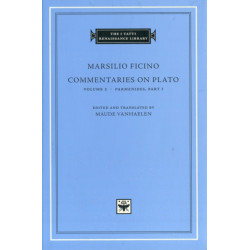
Commentaries on Plato: Volume 2 Parmenides (Bog, Hardback, Engelsk)
Marsilio Ficino, the Florentine scholar-philosopher-magus, was largely responsible for the Renaissance revival of Plato. His commentaries remained the... Læs mere
Levering: 6 - 9 hverdage -
An Aesthetic Education in the Era of Globalization (Bog, Paperback / softback, Engelsk)
The world’s most renowned critical theorist—who defined the field of postcolonial studies—has radically reoriented her thinking. Finding the neat... Læs mere
Levering: 6 - 9 hverdage -
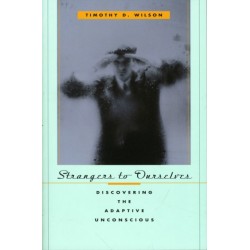
Strangers to Ourselves: Discovering the Adaptive Unconscious (Bog, Paperback / softback, Engelsk)
“Know thyself,” a precept as old as Socrates, is still good advice. But is introspection the best path to self-knowledge? Wilson makes the... Læs mere
Levering: 6 - 9 hverdage -
Third Thoughts: The Universe We Still Don’t Know (Bog, Paperback / softback, Engelsk)Levering: 6 - 9 hverdage
-
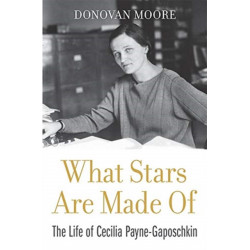
What Stars Are Made Of: The Life of Cecilia Payne-Gaposchkin (Bog, Hardback, Engelsk)
Cecilia Payne-Gaposchkin was the revolutionary scientific thinker who discovered what stars are made of. But her name is hard to find... Læs mere
Levering: 6 - 9 hverdage -
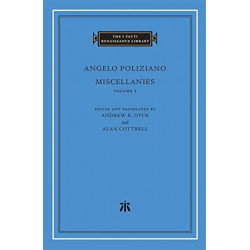
Miscellanies (Bog, Hardback, Engelsk)
In the Miscellanies, the great Italian Renaissance scholar-poet Angelo Poliziano penned two sets of mini-essays focused on lexical or textual problems. He solves these with his... Læs mere
Levering: 6 - 9 hverdage -
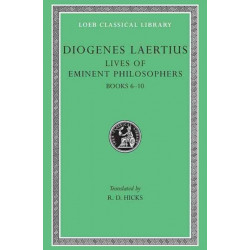
Lives of Eminent Philosophers, Volume II: Books 6–10 (Bog, Hardback, Engelsk)
Diogenes Laertius compiled his compendium on the lives and doctrines of the ancient philosophers from hundreds of sources. It ranges over three centuries, from Thales to Epicurus, portraying forty-five important figures, and is enriched by numerous quotations.
Levering: 6 - 9 hverdage -
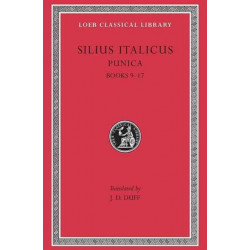
Punica, Volume II: Books 9–17 (Bog, Hardback, Engelsk)
Silius Italicus composed an epic Punica in 17 books on the Second Punic War. His poem relies largely on Livy’s prose for facts. It also echoes poets, especially Virgil, and employs techniques traditional in Latin epic.
Levering: 6 - 9 hverdage -
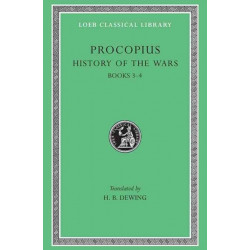
History of the Wars, Volume II: Books 3–4 (Bog, Hardback, Engelsk)
History of the Wars by Procopius (late fifth century to after AD 558) consists largely of sixth-century military history, with much information about peoples,... Læs mere
Levering: 6 - 9 hverdage -
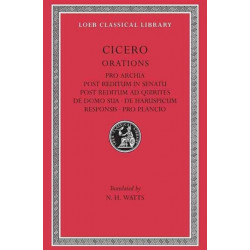
Pro Archia. Post Reditum in Senatu. Post Reditum ad Quirites. De Domo Sua. De Haruspicum Responsis. Pro Plancio (Bog, Hardback, Engelsk)
We know more of Marcus Tullius Cicero (106–43 BC), lawyer, orator, politician and philosopher,... Læs mere
Levering: 6 - 9 hverdage -
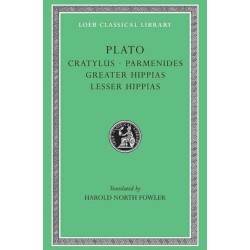
Cratylus. Parmenides. Greater Hippias. Lesser Hippias (Bog, Hardback, Engelsk)
The great Athenian philosopher Plato was born in 427 BC and lived to be eighty. Acknowledged masterpieces among his works are the Symposium, which... Læs mere
Levering: 6 - 9 hverdage -
Punica, Volume I: Books 1–8 (Bog, Hardback, Engelsk)
Silius Italicus composed an epic Punica in 17 books on the Second Punic War. His poem relies largely on Livy’s prose for facts. It also echoes poets, especially Virgil, and employs techniques traditional in Latin epic.
Levering: 6 - 9 hverdage