Harvard University Press Forlag
Visning: Type : Alle | Sprog : Alle | Format : Alle
-
The Jewish War, Volume I: Books 1–2 (Bog, Hardback, Engelsk)
The major works by Josephus are History of the Jewish War, from 170 BC to his own time, and Jewish Antiquities, from creation to AD 66. Also by him are an autobiographical Life and a treatise Against Apion.
Levering: 6 - 9 hverdage -
Moralia, Volume XVI: Index (Bog, Hardback, Engelsk)
Plutarch (ca. AD 45–120) wrote on many subjects. His extant works other than the Parallel Lives are varied, about sixty in number, and known as the Moralia (Moral Essays). They... Læs mere
Levering: Skaffevare (forvent 14 - 30 hverdage) -
Philippics 1–6 (Bog, Hardback, Engelsk)
We know more of Marcus Tullius Cicero (106–43 BC), lawyer, orator, politician and philosopher, than of any other Roman. Besides much else, his work conveys the turmoil of his time, and... Læs mere
Levering: 6 - 9 hverdage -
Philippics 7–14 (Bog, Hardback, Engelsk)
We know more of Marcus Tullius Cicero (106–43 BC), lawyer, orator, politician and philosopher, than of any other Roman. Besides much else, his work conveys the turmoil of his time, and... Læs mere
Levering: 6 - 9 hverdage -
The Logic of Collective Action: Public Goods and the Theory of Groups, With a New Preface and Appendix (Bog, Paperback / softback, Engelsk)
Olson develops a theory of group and organizational behavior that cuts across... Læs mere
Levering: 6 - 9 hverdage -
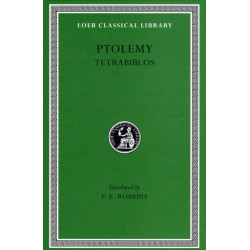
Tetrabiblos (Bog, Hardback, Engelsk)
In Tetrabiblos, a core text in the history of astrology, the preeminent ancient astronomer Ptolemy treats the practical use of astronomical knowledge: making predictions about individuals’ lives and the outcome of human affairs.
Levering: 6 - 9 hverdage -
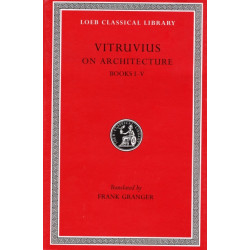
On Architecture, Volume I: Books 1–5 (Bog, Hardback, Engelsk)
On Architecture, completed by Vitruvius sometime before 27 BC and the only work of its kind to survive antiquity, serves not professionals but readers who want to... Læs mere
Levering: Skaffevare (forvent 14 - 30 hverdage) -
History of Alexander, Volume I: Books 1–5 (Bog, Hardback, Engelsk)
Quintus Curtius wrote a history of Alexander the Great. The first two of ten books have not survived and material is missing from books 5, 6, and 10. Curtius... Læs mere
Levering: 6 - 9 hverdage -
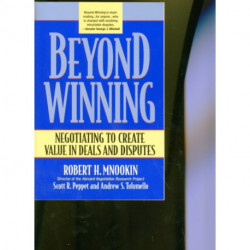
Beyond Winning: Negotiating to Create Value in Deals and Disputes (Bog, Paperback / softback, Engelsk)
Beyond Winning charts a way out of our current crisis of confidence in the legal system. It offers a fresh look at negotiation, aimed at helping lawyers turn disputes into deals, and deals into better deals, through practical, tough-minded problem-solving techniques.
Levering: 6 - 9 hverdage -
Working Space (Bog, Paperback / softback, Engelsk)
Here is a rare opportunity to view painting through the discerning eyes of one of the world’s foremost abstract painters. Stella uses the crisis of representational art in sixteenth-century Italy to illuminate the crisis of abstraction in our time.
Levering: 6 - 9 hverdage -
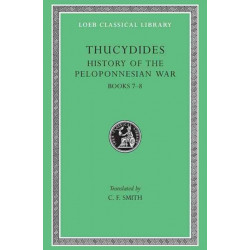
History of the Peloponnesian War, Volume IV: Books 7–8 (Bog, Hardback, Engelsk)
The Peloponnesian War was really three conflicts (431–421, 415–413, and 413–404 BC) that Thucydides was still unifying into one... Læs mere
Levering: 6 - 9 hverdage -
Roman History, Volume III: Books 36–40 (Bog, Hardback, Engelsk)
Dio Cassius (Cassius Dio), ca. AD 150–235, was born in Bithynia. Dio’s work is a vital source for the last years of the Roman republic and the first four Roman emperors.
Levering: 6 - 9 hverdage