Duke University Press Forlag
Visning: Type : Alle | Sprog : Alle | Format : Alle
-
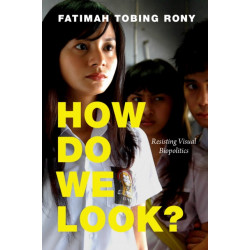
How Do We Look?: Resisting Visual Biopolitics (Bog, Paperback / softback, Engelsk)
Fatimah Tobing Rony draws on the transnational visual images of Indonesian women as a way to theorize what she calls visual biopolitics—the ways visual representation determines which lives are made to matter more than others.
Levering: 6 - 9 hverdage -
Media Hot and Cold (Bog, Paperback / softback, Engelsk)
Nicole Starosielski examines the cultural dimensions of temperature and the history of thermal media such as thermostats and infrared cameras to theorize the ways heat and cold can be used as a means of communication, subjugation, and control.
Levering: 6 - 9 hverdage -
Black Trans Feminism (Bog, Paperback / softback, Engelsk)
Marquis Bey offers a meditation on blackness and gender nonnormativity in ways that recalibrate traditional understandings of each, conceiving of black trans feminism as a politics grounded in fugitivity and the subversion of power.
Levering: 6 - 9 hverdage -
Ugly Freedoms (Bog, Paperback / softback, Engelsk)
Elisabeth R. Anker reckons with the complex legacy of freedom offered by liberal American democracy, identifying modes of “ugly freedom” that can lead to domination or provide a source of emancipatory potential.
Levering: 6 - 9 hverdage -
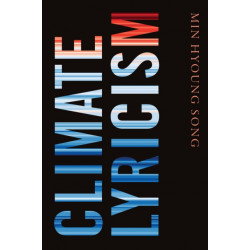
Climate Lyricism (Bog, Paperback / softback, Engelsk)
Min Hyoung Song articulates a climate change-centered reading practice that foregrounds how literature, poetry, and essays help us to better grapple with our everyday encounters with climate change.
Levering: 6 - 9 hverdage -
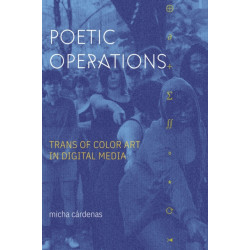
Poetic Operations: Trans of Color Art in Digital Media (Bog, Hardback, Engelsk)
Artist and theorist micha cárdenas considers contemporary digital media, artwork, and poetry in order to articulate trans of color strategies of safety and survival.
Levering: 6 - 9 hverdage -
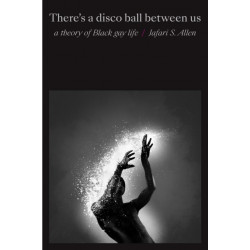
There's a Disco Ball Between Us: A Theory of Black Gay Life (Bog, Paperback / softback, Engelsk)
Jafari S. Allen offers a sweeping and lively ethnographic and intellectual history of Black queer politics, culture, and history in the 1980s as they emerged out of radical Black lesbian activism and writing.
Levering: 6 - 9 hverdage -
Rainforest Capitalism: Power and Masculinity in a Congolese Timber Concession (Bog, Paperback / softback, Engelsk)
Thomas Hendriks examines the rowdy environment of industrial timber production in the Democratic Republic of the Congo to theorize the social, racial, and gender power dynamics of capitalist extraction.
Levering: 6 - 9 hverdage -
Horn, or the Counterside of Media (Bog, Paperback / softback, Engelsk)
Henning Schmidgen reflects on the dynamic phenomena of touch in media, analyzing works by artists, scientists, and philosophers ranging from Salvador Dalí to Walter Benjamin, who each explore the interplay between tactility and technological and biological surfaces.
Levering: 6 - 9 hverdage -
Reactivating Elements: Chemistry, Ecology, Practice (Bog, Paperback / softback, Engelsk)
The contributors to Reactiving Elements explore how studying elements—as the foundations of the physical and social world—provide a way to imagine alternatives to worldwide environmental destruction.
Levering: 6 - 9 hverdage -
Listening in the Afterlife of Data: Aesthetics, Pragmatics, and Incommunication (Bog, Paperback / softback, Engelsk)
Writing at a cultural moment in which data has never been more ubiquitous or less convincing, David Cecchetto theorizes sound, communication, and data by analyzing them in the contexts of computation, wearable technologies, and digital artwork.
Levering: 6 - 9 hverdage -
All That Was not Her (Bog, Paperback / softback, Engelsk)
Todd Meyers offers an intimate ethnographic portrait of a woman he met during his fieldwork as a way to explore the complexity of the anthropologist’s personal relationships with their subjects and how to speak of and to someone who is gone.
Levering: 6 - 9 hverdage