Harvard University Press Forlag
-
Westminster’s World: Understanding Political Roles (Bog, Hardback, Engelsk)
Through interviews with 521 MPs, Searing looks at how members of the British Parliament understand their goals, their careers and their impact on domestic and global issues. He explores how Westminster's world both controls and is created by individuals.
Levering: Skaffevare (forvent 14 - 30 hverdage) -
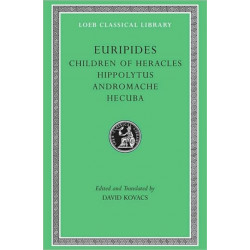
Children of Heracles. Hippolytus. Andromache. Hecuba (Bog, Hardback, Engelsk)
Euripides (ca. 485–406 BC) has been prized in every age for his emotional and intellectual drama. Eighteen of his ninety or so plays survive complete,... Læs mere
Levering: 6 - 9 hverdage -
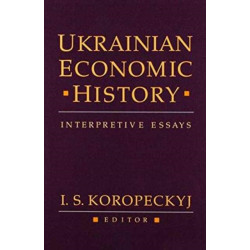
Ukrainian Economic History: Interpretive Essays (Bog, Hardback, Engelsk)
This volume contains papers presented at the Third Quinquennial Conference on Ukrainian Economics. It contains 14 essays dealing with the one thousand years... Læs mere
Levering: Skaffevare (forvent 14 - 30 hverdage) -
Ukrainian Futurism, 1914–1930: A Historical and Critical Study (Bog, Hardback, Engelsk)
Oleh Ilnytzkyj seeks to rectify the misinterpretations surrounding the Futurists and their leader Mykhail Semenko by providing the first major English-language monograph on this vibrant literary movement and its charismatic leader.
Levering: Skaffevare (forvent 14 - 30 hverdage) -
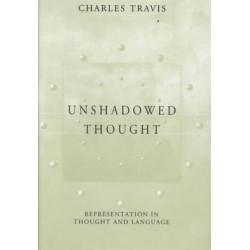
Unshadowed Thought: Representation in Thought and Language (Bog, Hardback, Engelsk)
This book mounts a sustained attack on ideas that are dear to many practitioners of analytic philosophy. It rejects the idea that thoughts are... Læs mere
Levering: Skaffevare (forvent 14 - 30 hverdage) -
War in the Wild East: The German Army and Soviet Partisans (Bog, Hardback, Engelsk)
Shepherd enters the debate over the wartime behavior of the Wehrmacht with a detailed study of the motivation and conduct of its anti-partisan... Læs mere
Levering: Skaffevare (forvent 14 - 30 hverdage) -
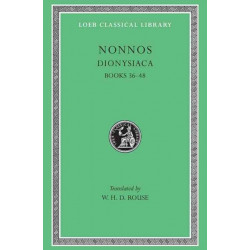
Dionysiaca, Volume III: Books 36–48 (Bog, Hardback, Engelsk)
This epic poem concerns Dionysus’ earthly career from birth at Thebes to reception on Olympus. In a poem full of mythology, astrology, and magic, Nonnos relates the god’s conquest of the East and also, sensually and explicitly, his amorous adventures.
Levering: 6 - 9 hverdage -
Autobiography and Selected Letters, Volume I: Autobiography. Letters 1–50 (Bog, Hardback, Engelsk)
Libanius, one of the last great publicists and teachers of Greek paganism, has much to tell us about the tumultuous world of the fourth century AD. His works include Orations, the first of which is an autobiography, and Letters.
Levering: 6 - 9 hverdage -
Greek Lyric, Volume III: Stesichorus, Ibycus, Simonides, and Others (Bog, Hardback, Engelsk)
The most important poets writing in Greek in the sixth century BC came from Sicily and southern Italy. They included Stesichorus, Ibycus, and Simonides, as well as Arion, Lasus, and Pratinas.
Levering: 6 - 9 hverdage -
Cyropaedia, Volume I: Books 1–4 (Bog, Hardback, Engelsk)
Cyropaedia is a historical romance on the education of the sixth-century BC Persian king Cyrus the Great that reflects Xenophon’s ideas about rulers and government.
Levering: 6 - 9 hverdage -
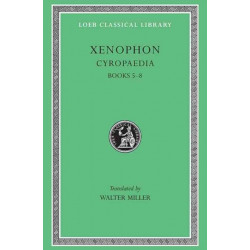
Cyropaedia, Volume II: Books 5–8 (Bog, Hardback, Engelsk)
Cyropaedia is a historical romance on the education of the sixth-century BC Persian king Cyrus the Great that reflects Xenophon’s ideas about rulers and government.
Levering: 6 - 9 hverdage -
Declamations, Volume I: Controversiae, Books 1–6 (Bog, Hardback, Engelsk)
Seneca the Elder collected ten books devoted to controversiae (some only preserved in excerpt) and at least one (surviving) of suasoriae.
Levering: 6 - 9 hverdage