Harvard University Press Forlag
Visning: Type : Alle | Sprog : Alle | Format : Alle
-
Alexandrian War. African War. Spanish War (Bog, Hardback, Engelsk)
Aulus Hirtius, friend of and military subordinate to Caesar (100–44 BC), may have written the Alexandrian War. African War and Spanish War are detailed accounts... Læs mere
Levering: 6 - 9 hverdage -
Civil War (Bog, Hardback, Engelsk)
Civil War provides a vigorous, direct, clear, third-personal, impassioned account of Caesar’s campaigns during the civil war of 49–48 BC, drawn from his three books of commentarii.
Levering: 6 - 9 hverdage -
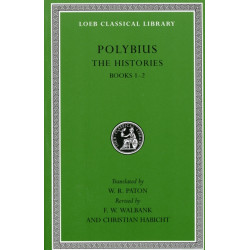
The Histories, Volume I: Books 1–2 (Bog, Hardback, Engelsk)
In his history, Polybius (ca. 200–118 BC) is centrally concerned with how and why Roman power spread. The main part of the work, a vital achievement despite the... Læs mere
Levering: 6 - 9 hverdage -
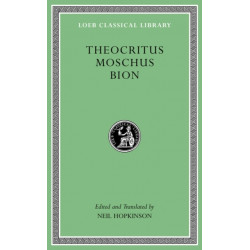
Theocritus. Moschus. Bion (Bog, Hardback, Engelsk)
Theocritus (early third century BC) was the inventor of the bucolic genre, also known as pastoral. The present edition of his work, along with that of his successors Moschus (fl.... Læs mere
Levering: 6 - 9 hverdage -
The Apostolic Fathers, Volume I: I Clement. II Clement. Ignatius. Polycarp. Didache (Bog, Hardback, Engelsk)
The writings of the Apostolic Fathers (first and second centuries AD) give a rich and diverse picture of Christian life and thought in the period immediately after New Testament times. Some were accorded almost Scriptural authority in the early Church.
Levering: 6 - 9 hverdage -
The World Viewed: Reflections on the Ontology of Film, Enlarged Edition (Bog, Paperback / softback, Engelsk)
Stanley Cavell looks closely at America’s most popular art and our perceptions of it. His explorations of Hollywood’s stars,... Læs mere
Levering: 6 - 9 hverdage -
Odyssey, Volume I: Books 1–12 (Bog, Hardback, Engelsk)
The Iliad and the Odyssey of Homer (eighth century BC) are the two oldest European epic poems. The latter tells of Odysseus’ journey home from the Trojan War and the temptations, delays, and dangers he faced at every turn.
Levering: 6 - 9 hverdage -
Anabasis (Bog, Hardback, Engelsk)
The Anabasis by Xenophon (ca. 430–ca. 354 BC) is an eyewitness account of Greek mercenaries’ challenging “March Up-Country” from Babylon back to the coast of Asia Minor under Xenophon’s guidance in 401 BC.
Levering: 6 - 9 hverdage -
Discourses, Books 3–4. Fragments. The Encheiridion (Bog, Hardback, Engelsk)
Epictetus was a crippled Greek slave of Phrygia during Nero’s reign who heard lectures by the Stoic Musonius before he was freed. He is the author of Discourses and a smaller Encheiridion, a handbook that encapsulates the doctrines of the longer work.
Levering: 6 - 9 hverdage -
Never in Anger: Portrait of an Eskimo Family (Bog, Paperback / softback, Engelsk)
Anthropologist Jean L. Briggs spent seventeen months living on a remote Arctic shore as the “adopted daughter” of an Inuit family. Through vignettes of daily... Læs mere
Levering: 6 - 9 hverdage -
Dynamism: The Values That Drive Innovation, Job Satisfaction, and Economic Growth (Bog, Hardback, Engelsk)
Nobel Laureate Edmund Phelps argues that the high level of innovation in the West was not a result of scientific... Læs mere
Levering: 6 - 9 hverdage -
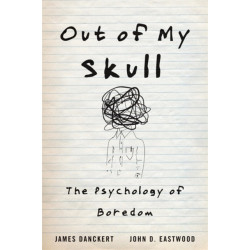
Out of My Skull: The Psychology of Boredom (Bog, Hardback, Engelsk)
Usually when we’re bored, we try to distract ourselves. But soon enough, boredom returns. James Danckert and John Eastwood argue that we can learn to handle... Læs mere
Levering: 6 - 9 hverdage