Harvard University Press Forlag
Visning: Type : Alle | Sprog : Alle | Format : Alle
-
-
Platonic Theology: Books I-IV (Bog, Hardback, Engelsk)
Platonic Theology is the visionary and philosophical masterpiece of Marsilio Ficino (1433–1499), the Florentine scholar-philosopher-magus largely responsible for the... Læs mere
Levering: 6 - 9 hverdage -
Notes Toward a Performative Theory of Assembly (Bog, Paperback / softback, Engelsk)
Judith Butler elucidates the dynamics of public assembly under prevailing economic and political conditions. Understanding assemblies as plural forms of... Læs mere
Levering: 6 - 9 hverdage -
Thematic Apperception Test (Engelsk)
Successfully used for a number of years by more than four hundred psychologists and psychiatrists, this set of pictures designed to reveal the determinants of psychological conflict is now made available in a standard edition.
Levering: 6 - 9 hverdage -
The Case against Perfection: Ethics in the Age of Genetic Engineering (Bog, Paperback / softback, Engelsk)
Genetic breakthroughs present us with a predicament: is it wrong to re-engineer our nature? Sandel explores the moral quandaries... Læs mere
Levering: 6 - 9 hverdage -
China between Empires: The Northern and Southern Dynasties (Bog, Paperback / softback, Engelsk)
After the collapse of the Han dynasty, China divided along a north-south line. Lewis traces the changes that underlay and resulted from this... Læs mere
Levering: 6 - 9 hverdage -
Japan at the Crossroads: Conflict and Compromise after Anpo (Bog, Hardback, Engelsk)
In 1960, when Japan revised the postwar treaty that allows a U.S. military presence in Japan, the popular backlash changed the evolution of... Læs mere
Levering: 6 - 9 hverdage -
The Ordinary Virtues: Moral Order in a Divided World (Bog, Paperback / softback, Engelsk)Levering: 6 - 9 hverdage
-
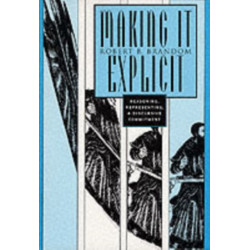
Making It Explicit: Reasoning, Representing, and Discursive Commitment (Bog, Paperback / softback, Engelsk)
Where accounts of the relation between language and mind often rest on the concept of representation, Brandom sets out an approach... Læs mere
Levering: 6 - 9 hverdage -
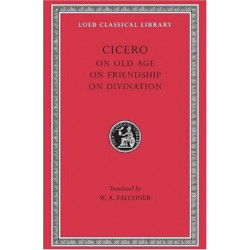
On Old Age. On Friendship. On Divination (Bog, Hardback, Engelsk)
We know more of Marcus Tullius Cicero (106–43 BC), lawyer, orator, politician and philosopher, than of any other Roman. Besides much else, his work conveys the... Læs mere
Levering: 6 - 9 hverdage -
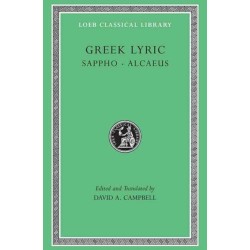
Greek Lyric, Volume I: Sappho. Alcaeus (Bog, Hardback, Engelsk)
Sappho, the most famous woman poet of antiquity, whose main theme was love, and Alcaeus, poet of wine, war, and politics, were two illustrious singers of sixth-century BC Lesbos.
Levering: 6 - 9 hverdage -
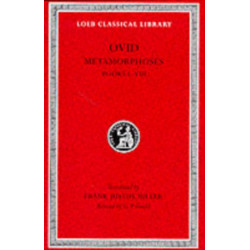
Metamorphoses, Volume I: Books 1–8 (Bog, Hardback, Engelsk)
In his most influential work, the Metamorphoses, Ovid (43 BC–AD 17) weaves a hexametric whole from a huge range of myths, which are connected by the theme of change and ingeniously linked as the narrative proceeds from earliest creation to transformation in Ovid’s own time.
Levering: 6 - 9 hverdage