Harvard University Press Forlag
Visning: Type : Alle | Sprog : Alle | Format : Alle
-
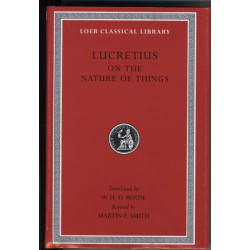
On the Nature of Things (Bog, Hardback, Engelsk)
Lucretius lived ca. 99–ca. 55 BC, but the details of his career are unknown. In his didactic poem De Rerum Natura (On the Nature of Things) he expounds Epicurean philosophy so as to dispel fear of the gods and death, and promote spiritual tranquility.
Levering: 6 - 9 hverdage -
The Black Death and the Transformation of the West (Bog, Paperback / softback, Engelsk)
Looking beyond the view of the plague as unmitigated catastrophe, Herlihy finds evidence for its role in the advent of new population controls, the... Læs mere
Levering: 6 - 9 hverdage -
Dancing in the Street: Motown and the Cultural Politics of Detroit (Bog, Paperback / softback, Engelsk)
Detroit in the 1960s was a city with a pulse: people were marching in step with Martin Luther King, Jr.; dancing in the street with... Læs mere
Levering: Skaffevare (forvent 14 - 30 hverdage) -
The Collapse of the Fact/Value Dichotomy and Other Essays (Bog, Paperback / softback, Engelsk)
In this book, one of the world’s preeminent philosophers takes issue with an idea that has found an all-too-prominent place in popular culture... Læs mere
Levering: 6 - 9 hverdage -
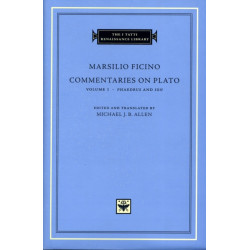
Commentaries on Plato (Bog, Hardback, Engelsk)
Marsilio Ficino (1433–1499), the Florentine scholar-philosopher-magus, was largely responsible for the Renaissance revival of Plato. This volume contains Ficino’s extended analysis and commentary on the Phaedrus.
Levering: 6 - 9 hverdage -
Constitutional Construction: Divided Powers and Constitutional Meaning (Bog, Paperback / softback, Engelsk)
The American Constitution has a dual nature. The first aspect is the degree to which it acts as a binding set of rules that can be... Læs mere
Levering: 6 - 9 hverdage -
Constitutional Identity (Bog, Hardback, Engelsk)
Jacobsohn argues that a constitution acquires an identity through experience—from a mix of the political aspirations and commitments that express a nation’s past and the desire... Læs mere
Levering: Skaffevare (forvent 14 - 30 hverdage) -
Commonwealth (Bog, Paperback / softback, Engelsk)
With Commonwealth, Michael Hardt and Antonio Negri conclude the trilogy begun with Empire and continued in Multitude, proposing an ethics of freedom for living in our common world and articulating a possible constitution for our common wealth.
Levering: 6 - 9 hverdage -
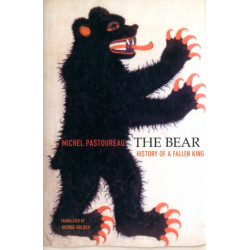
The Bear: History of a Fallen King (Bog, Hardback, Engelsk)
From antiquity to the Middle Ages, the bear’s centrality in cults and mythologies left traces in European languages, literatures, and legends. Michel Pastoureau... Læs mere
Levering: 6 - 9 hverdage -
Dialogues: Charon and Antonius (Bog, Hardback, Engelsk)
Giovanni Pontano (1426–1503), whose academic name was Gioviano, was the most important Latin poet of the fifteenth century as well as a leading statesman who served as prime minister to the... Læs mere
Levering: 6 - 9 hverdage -
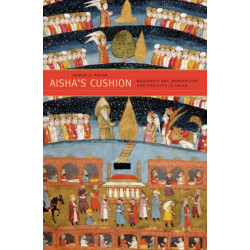
Aisha’s Cushion: Religious Art, Perception, and Practice in Islam (Bog, Hardback, Engelsk)
Westerners have a strong impression that Islam does not allow religious imagery. Elias corrects this view. Unearthing shades of meaning in... Læs mere
Levering: Skaffevare (forvent 14 - 30 hverdage) -
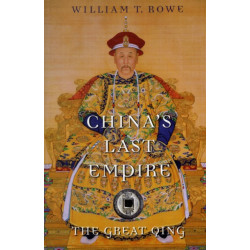
China's Last Empire: The Great Qing (Bog, Paperback / softback, Engelsk)
In a brisk revisionist history, William Rowe challenges the standard narrative of Qing China as a decadent, inward-looking state that failed to keep pace with the... Læs mere
Levering: 6 - 9 hverdage